

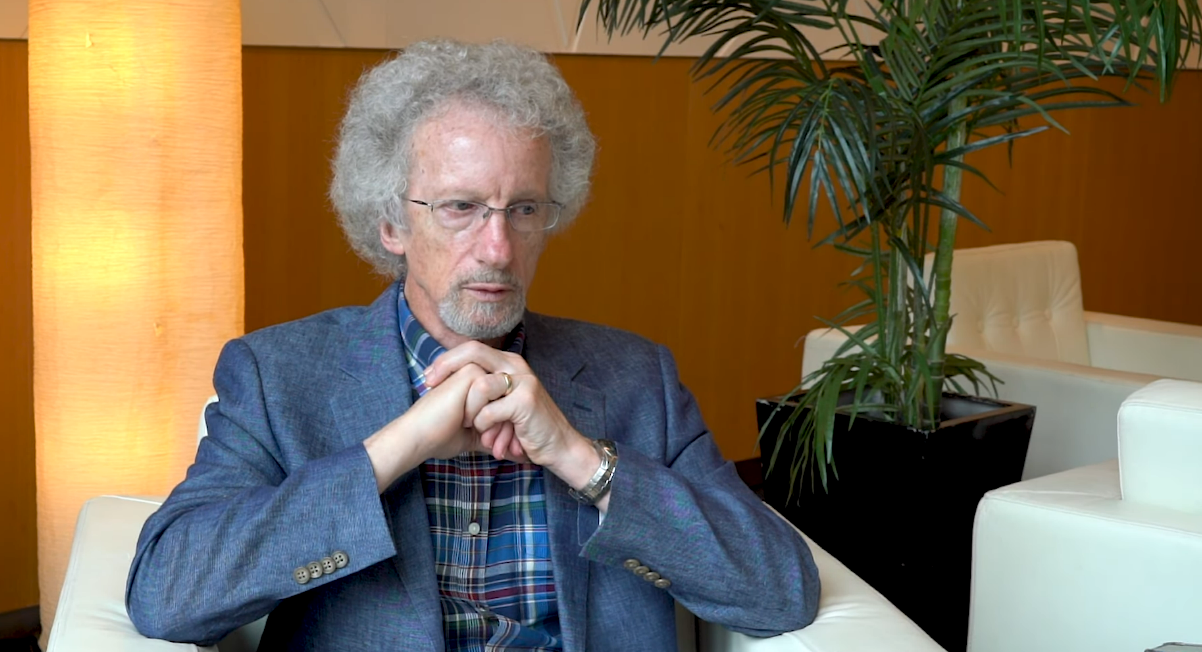
Although she has never sought attention, it found her. The wife of best-selling Christian novelist Philip Yancey, Janet Yancey, unexpectedly rose to prominence. Their decades-long marriage was rocked to its core by a confession—an eight-year affair—rather than a choice. As her husband resigned from his position in ministry and deleted his social media accounts, Janet came forth with a statement that remarkably mirrored the subdued dignity she has long upheld behind the scenes.
Janet made it apparent that she was “speaking from a place of trauma and devastation” in a succinct but deeply felt message. This statement bore the weight of betrayal without theatricality. Her voice was remarkably clear—calm, devoted, but not naïve—to many who read what she had to say. Despite acknowledging the emotional devastation, she rooted herself in the vows she made to her husband more than 55 years ago.
She did not portray her refusal to depart as a sign of weakness or unquestioning commitment. Rather, she grounded it in something incredibly resilient: a spiritual vow made long before shame or public acclaim had any bearing. Her words echoed a strength that has grown more elusive in our era of loud condemnations and quick departures. She made no attempt to downplay the harm. She just would not allow it to change her narrative.
Janet’s remarks were not meant to justify her husband’s behavior. Both heavenly and human grace were invoked personally. In spite of Philip’s forgiveness, she stated that she required God’s mercy “to forgive also, despite my unfathomable trauma.” This was almost painful. Readers, particularly those who have experienced being betrayed by the person you trusted the most, have been captivated by that statement in particular.
| Detail | Information |
|---|---|
| Name | Janet Yancey |
| Spouse | Philip Yancey (married 55+ years) |
| Notable Moment | Released public statement after husband’s 8-year affair |
| Known For | Loyalty, faith-based forgiveness, supporting husband during Parkinson’s |
| Current Status | No separation; remains in marriage |
| Credible Reference | Christianity Today – Statement from Janet Yancey |
Public declarations rarely feel so intimate, but this one did. There was no redemption arc. It made no lofty claims regarding deadlines for healing or reconciliation. It did little more than acknowledge the moment, raw and unsettled yet bound together by something other than the circumstances.
During her husband’s lengthy career, Janet was mainly unknown to the general public. When he wrote about her involvement during his recent Parkinson’s diagnosis, he would sometimes describe her in his novels with tenderness and other times with admiration. At one point, he called her his “omnicompetent” partner, someone who could keep the house, the schedule, and growing his health together.
This adds to the complexity of this occasion. because there was more than one instance of betrayal. She was getting ready to take care of him during one of his most vulnerable times when it happened. For some, that made the confession seem almost intolerable. For others, it exposed the nuanced reality of lengthy marriages: love can endure despite severe fissures, but at a price.
Janet’s remark is especially poignant because it defies conventional narratives. There was no attempt to regain dignity through show, no televised interview, and no public humiliation. Quietly, she decided to stay instead. Out of conviction, not out of denial. Furthermore, that decision alone bears a certain moral weight that encourages reflection.
Her statement about requiring grace to forgive made me pause, not because it was beautiful, but rather because it seemed remarkably honest—like someone trying to reach for something that was just out of her emotional reach.
Sometimes public stories become very personal because they reflect questions we ask ourselves, not because we know the individuals involved. If it were me, what would I do? But what would it mean to stay? What would it take to give up?
Staying did not appear to be an indication of resignation in Janet Yancey’s situation. It appeared to be someone who had already battled suffering behind closed doors before a press release made it public. Clearly, her faith is not a performance. Costly, intricate, and based on a religion that promises peace via perseverance but does not promise happiness, it is challenging.
The evangelical communities who first welcomed Philip Yancey are still coming to terms with his admission. The subtext of his publications, which were formerly frequently used in Bible studies and pulpits, has changed. Some people find the dissonance to be too much. Others find the message of grace more convincing because of its personal cost.
However, Janet Yancey’s response might have a lasting impact despite all of the public scrutiny surrounding his name. It does this because it allows for disagreement rather than because it makes things better. Hope and pain. rage and faith. Despite damaged hearts, promises are maintained.
Her name has been mentioned in discussions over the past week that she probably never wanted to be a part of. Surprisingly, though, she has come to represent a form of grace that is difficult to preach or convey. It has been lived—often in silence—for decades, in hospitals and kitchens, and in moments of profound incredulity.
This narrative has no simple conclusion. No neat ending or ethical conclusion. Janet Yancey’s voice, however, exudes a strength that looks forward, a woman who chooses to walk through destruction without allowing it to define her. By itself, something seems very uncommon. And very much human.