

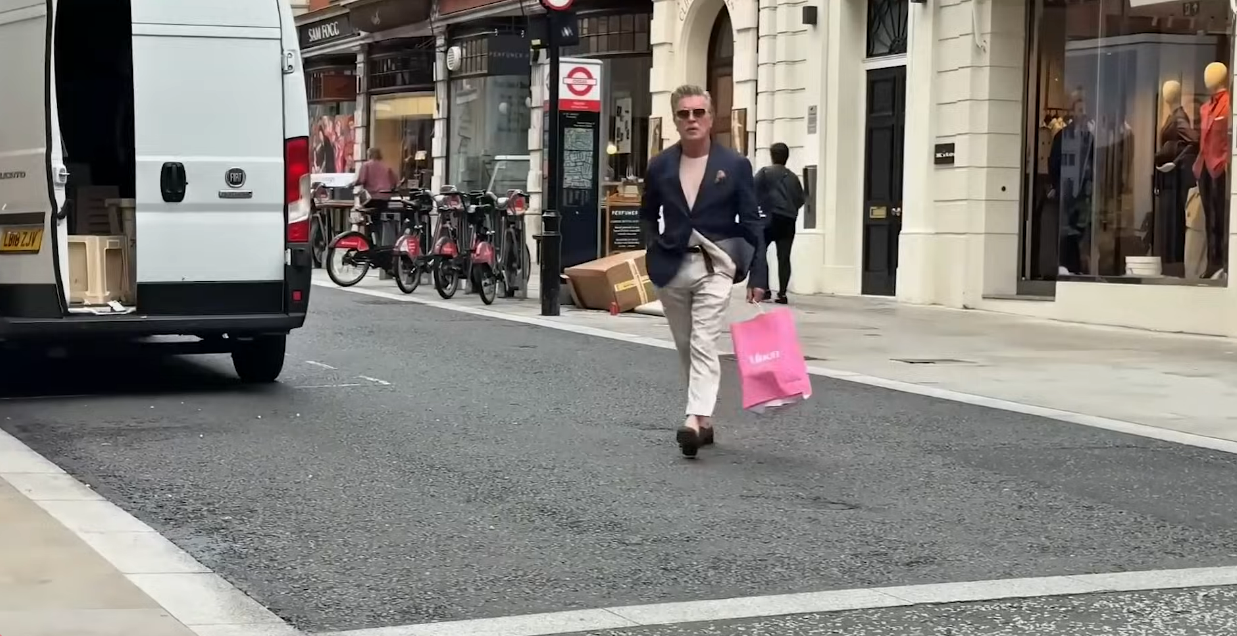
A woman in a camel coat so well-cut it moved like liquid emerged from a bakery on a clear morning. There isn’t a single label or attention-grabbing statement piece. A feeling of ease, just. There was a certain elegance about it that you noticed without knowing why. That is calm bliss, I recall thinking. Not because it was costly, but rather because it appeared to have belonged to a person with no credentials.
Quiet luxury doesn’t have to make a statement. It’s the antithesis of showmanship, based on the confidence that comes from being true to yourself rather than the person you wish others believed you to be. It reflects a mindset that is remarkably similar to the way some people approach conversation: it’s not longer, but it’s more significant; it’s not louder, but it’s more deliberate.
There has been a noticeable change in recent years. Exaggerated silhouettes, loud prints, and bags with lots of logos are all examples of conventional status symbols that have begun to seem like relics from a bygone era. When they are replaced, wealth is expressed more subtly and is determined by how it is worn rather than what is worn. clothing that is well-made, comfortable to wear, and purposefully chosen rather than just for display.
This change is especially evident in younger generations who are becoming more cautious about excessive consumption. For many, the allure lies in independence rather than fashion. The goal of wearing a finely tailored black blazer that fits like a second skin is to completely reject the performance rather than to look wealthy. The decision is based on self-respect rather than show.
In a culture that promotes more, quicker, now, quiet luxury also represents moderation, a discipline that doesn’t come easily. Refusing to follow every fad or acquire every limited-edition item is a silent act of defiance in and of itself. It’s stability over novelty, calm over mayhem. This makes quiet luxury more than just a fashion statement; it becomes a rhythm, a sort of internal harmony.
Table: Key Context on Quiet Luxury
| Key Element | Description |
|---|---|
| Core Concept | Quiet luxury emphasizes subtle elegance, quality, and intentional living |
| Style Characteristics | Neutral tones, timeless cuts, luxury fabrics, no visible logos |
| Cultural Influence | Gained traction post-pandemic; contrasts fast fashion and influencer culture |
| Notable Brands | Loro Piana, The Row, Brunello Cucinelli, Khaite |
| Broader Movement | Reflects a shift toward minimalism, privacy, and values-driven consumption |
| Linked Reference | Harper’s Bazaar – Quiet Luxury Isn’t Just a Trend |
It also has some practicality. Not only does it feel good to buy fewer, nicer, longer-lasting products, but it also makes financial and environmental sense. When a cashmere sweater lasts for years or even decades, it transforms from a piece of clothing into a friend. Surrounding oneself with items that have a calm permanence has a very powerful effect.
Importantly, this doesn’t take a lot of money. Yes, many brands that represent quiet luxury are expensive, but adopting the mindset doesn’t have to be expensive. The idea that true richness is found in intentionality can be found in thrift stores, family hand-me-downs, or investing in a single well-made object over time. Although they may have made it more popular, the wealthy did not create it.
Over dinner with an architect friend, I saw that he characterized his designs in the same way that one might characterize quiet luxury: simple lines, practical beauty, and a lack of superfluous ornamentation. “Good architecture doesn’t scream; it breathes,” he informed me. I carried that with me.
While strolling through an airport recently, I couldn’t help but think about this. People in fancy totes and branded sweat suits hurried past. However, a man with a tattered paperback in hand, a gray wool coat, and worn leather shoes walked through the room with a serene assurance. He didn’t seem to have anyone to impress or anything to sell. He simply had the appearance of being his own person.
Many people overlook this when they write off quiet luxury as a passing fad. Fashion is not the issue. Boundaries are at issue. The time has come. It’s about living in a way that makes you feel important without needing approval from others.
For those who embrace it, quiet luxury goes beyond wardrobes and encompasses everyday choices about what we purchase, how we spend our time, and who we allow into our lives. It frees up room. Peace is safeguarded. It prioritizes personal values above imposed norms. This way of thinking is so adaptable that it may be used in a CEO’s office, an artist’s studio, or a retiree’s garden.
It has a really human quality as well. To chose invisibility and something subtle is refreshingly honest in our digital world, where a lot of life is curated and tracked. Not having to perform has dignity.
A silent form of protest could also be the trend toward quiet luxury. Against waste. Not to make noise. opposing the fallacy that more is always better. People who choose less are reclaiming, not simply simplifying. That comes with a certain clarity. For those who have grown weary of the pursuit, it is very evident.
Maybe this is why silent luxury is becoming more and more appealing. It taps on something deeper—the need to feel rooted, self-assured, and at ease—rather than being a hidden club for the ultra-wealthy. Silence becomes precious when it feels like every surface is screaming for attention.
And in that quiet, luxury no longer seems like a cost. It appears to be peace.