

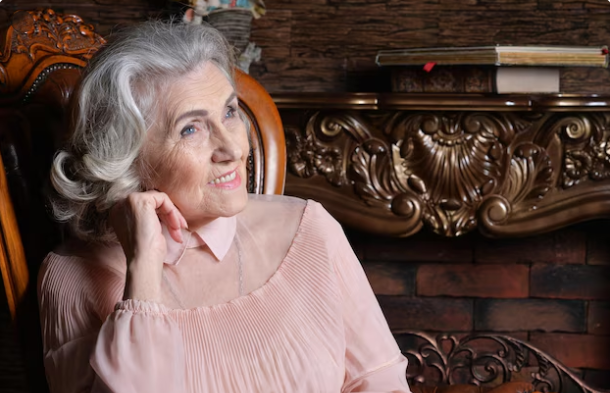
Apart from venture transactions and stock market disputes, Lily Safra’s name was rarely featured in news. Boardroom tricks and disruptive inventions did not create her wealth. It was sculpted by a string of marriages, sophisticated taste, and ultimately the legacy she decided to leave behind by giving. It gathered subtly, layer by layer. Her estimated net worth at the time of her death in July 2022 was $1.3 billion.
Born Lily Watkins in Brazil in 1934, her path to international renown started with self-reinvention rather than career aspirations. She developed become a driving force behind one of the most subtly significant charity enterprises over time and over four marriages. Most significantly, she changed from being a socialite to a caretaker of a huge fortune with a global reach when she married Edmond Safra, a Lebanese-Brazilian banker.
Lily Safra – Biographical and Financial
| Name | Lily Safra (née Watkins) |
|---|---|
| Born | 30 December 1934, Canoas, Brazil |
| Died | 9 July 2022, Geneva, Switzerland |
| Nationality | Brazilian and Monegasque |
| Estimated Net Worth | $1.3 billion (as of 2022) |
| Known For | Philanthropy, art patronage, Villa Leopolda |
| Spouses | Mario Cohen, Alfredo Monteverde, Samuel Bendahan, Edmond Safra |
| Children | Four |
| Foundation | Edmond J. Safra Foundation |
| Reference Link | www.forbes.com/profile/lily-safra |
Perhaps the most famous of her properties was Villa Leopolda, which was situated majestically on the French Riviera. Although its cost varied over time, it frequently stayed close to the half-billion dollar figure. It wasn’t just a house. It stood as a symbol of purposefully preserved affluence, with expansive vistas of the Mediterranean and a history of monarchy and businessmen. Having it was more than just a status symbol; it was a sign of her dedication to cultural preservation, which she seemed to prefer.
Her wealth went well beyond the field of architecture. Her name started to show up in auction records as she developed into a dedicated collector of fine art. She reportedly paid more than $100 million for Alberto Giacometti’s L’Homme qui marche I in 2010, which garnered international notice. Gaunt, audacious, and profoundly human, that sculpture stood out not only for its cost but also for its emotional impact. She was associating herself with timeless manifestations of beauty and existential contemplation rather than merely purchasing artwork.
Safra was not ostentatious, though. She let her charity speak for her, avoided the limelight, and did interviews infrequently. Her long-lasting impact was facilitated by the Edmond J. Safra Foundation, which was established in memory of her late husband, who perished in a fire in 1999 under terrible and still-discussed circumstances. She oversaw the foundation’s covert support of cultural preservation, education, religious tolerance, and medical research. The Hebrew University of Jerusalem, the Louvre, and Harvard University were among the organizations that received grants.
In 2019, there was one act that many people found to be especially kind. Safra promised €10 million to assist in the restoration of the famous cathedral following the tragic Notre-Dame de Paris fire. It was an instantaneous and spontaneous gesture, a manifestation of her natural desire to defend what others valued.
Her foundation kept funding vital causes, such as mental health and trauma care, even when many affluent people fled into private enclaves during the pandemic. There was little fuss about these judgments. The cameras did not move, but the money did. That tactful yet deliberate approach seemed to be a pattern that has been present throughout life.
Safra’s life was not without sadness, even though she was quite wealthy. She had to raise young children when one of her husbands committed suicide. In addition, she suffered the devastating loss of a son and then a grandchild. Although she hardly ever discussed these incidents in public, their emotional impact probably influenced her awareness of the topics she championed, including family-oriented philanthropy, mental health services, and medical facilities.
For individuals who evaluate wealth based on its leverage—how it is utilized, safeguarded, or magnified—Lily Safra provided an engaging study in silence. She didn’t want to establish an empire or control the financial markets. Her strength lay in conserving resources and strategically placing them where they might have the greatest impact. Surprisingly, she also defied the growing trend of billionaires focusing their philanthropy on themselves. She never referred to her charitable endeavors as a legacy project. Edmond’s name, not hers, was always at the center.
Her philanthropic approach contrasted with tech-driven mega-givers during the last ten years. Safra stuck to subtlety while others leaned for big statements. She viewed giving more as a silent duty than as a way to exert influence.
With her fortune, she leaves behind houses in Europe and the US, a foundation that still works around the world, and a reputation for being calculated, accurate, and emotionally astute. For anyone who only knew Lily Safra from her Forbes ranking or the occasional art headline, her actual impact would appear subtle. However, her influence is still firmly felt in educational endowments, medical research networks, and cultural organizations.