

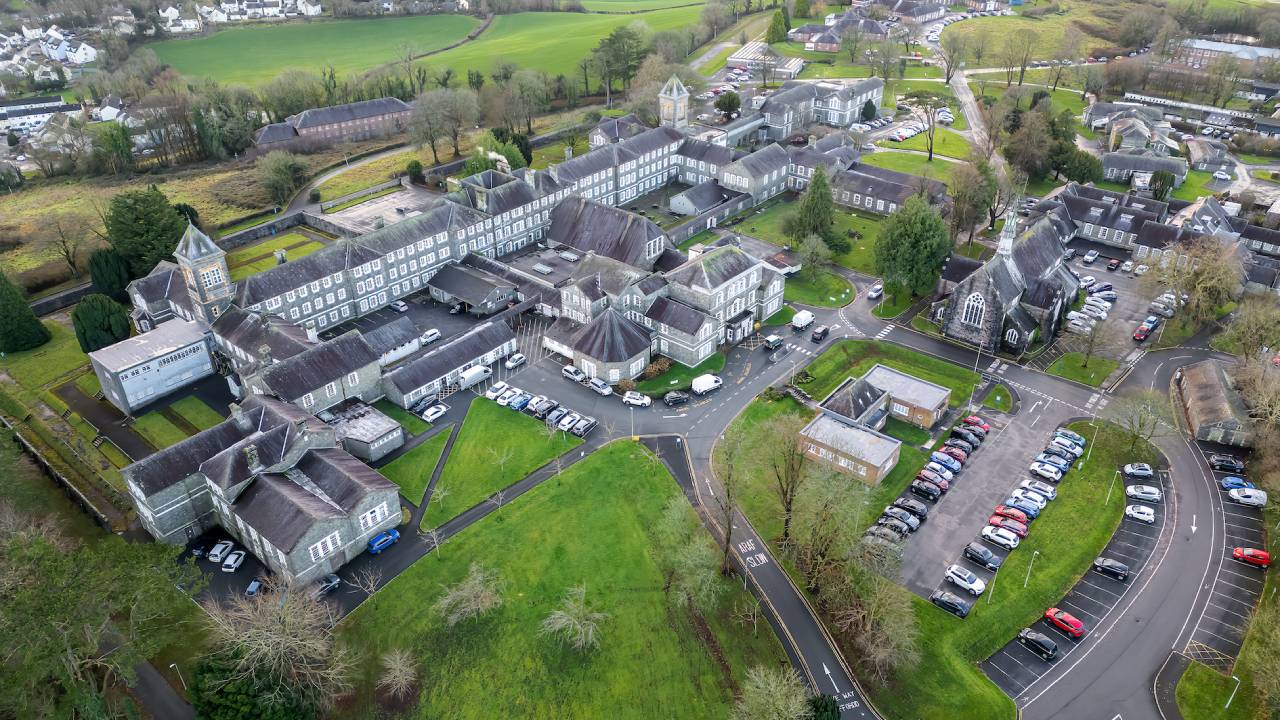
Parc Dewi Sant in Carmarthen has filled almost every available space across its 38-acre estate, attracting 80 organisations in a transformation that took the former psychiatric hospital from dereliction to one of Wales’ busiest integrated health campuses. Sixty of those tenants arrived in just two years.
What remains are two structures requiring substantial restoration, Victorian-era blocks that once housed patients when the site operated as St David’s Hospital, a county asylum that opened in the 19th century. Discussions about their future have already begun, according to the estate’s director, Mark Andrews.
Potential uses include nursing care facilities, mental health step-down accommodation, and services that complement what’s already operating across the campus. The owners are seeking partners willing to help shape those plans before committing to the significant investment restoration will demand.
Across Wales, repurposing vacant NHS estates has become a strategic priority. Health boards face mounting pressure to modernise facilities whilst managing tight budgets, and sites like Parc Dewi Sant represent an alternative to costly new-builds. The Carmarthen campus serves a catchment of 187,000 people across Carmarthenshire and sits close to Glangwili Hospital, providing services that span prevention, rehabilitation, and community support rather than acute care.
The estate closed as an NHS mental health facility in 2001. For years afterwards, it sat largely dormant.
Today, the buildings house GP surgeries alongside diabetic eye screening, antenatal clinics, weight management programmes, and smoking cessation services. Social prescribers operate from the site. So does the Hywel Dda Community Resource Team and the Parent and Infant Feeding Group. Specialist facilities include Hafen Derwen and the Cwm Seren mental health unit.
Beyond clinical services, the campus hosts the Better Health and Wellbeing Hub, Hwybod + gym, and various therapy and rehabilitation providers working across physical and mental health. The model brings disparate services under one roof, creating opportunities for collaboration that wouldn’t exist if organisations remained scattered across the town.
Meddygfa Parc, an NHS GP surgery, relocated to the campus from Carmarthen town centre last month. The move gave the practice room to expand.
“We feel incredibly fortunate to have moved to the beautiful surroundings of Parc Dewi Sant,” said Jodi Bateman from the surgery. “This exciting new chapter allows us to continue providing high-quality care in a welcoming and modern environment.”
“Our new premises provide us with the space and facilities to expand and develop the services we are able to offer, helping us to better meet the needs of our growing community.”
For Andrews, watching the estate fill up over the past two years has validated the original vision. “It has been a privilege to become custodians of such a historic and important estate in the heart of Carmarthen,” he said.
“From the outset we believed the site had enormous potential and it is incredibly rewarding to see such a vibrant community of organisations now operating here.”
“To have 80 occupiers on site, including 60 who have joined us in the past two years, is a fantastic milestone and a real testament to the vision for Parc Dewi Sant.”
Yet the hardest work may still lie ahead. Restoring the two remaining buildings will require substantial capital and a clear sense of purpose. “As the main buildings reach capacity, our focus now turns to the remaining buildings and how they can be brought back into productive use,” Andrews noted.
“We would welcome conversations with organisations that can bring complementary services and ideas to the site and help us continue building a campus that supports health, wellbeing and community life across Carmarthenshire.”
The campus will open its gates to the public on Saturday 14th March for a free Open Day. Local residents will have the chance to tour the grounds and meet some of the organisations based there—a rare glimpse inside a site that spent decades hidden behind walls, first as an asylum, then as an NHS hospital, and now as something altogether different.
Whether the remaining buildings follow the same trajectory depends on finding the right partners and the right funding. For now, the estate that once symbolised Victorian-era institutional care has become a testing ground for a very different model—one built around prevention, integration, and community access rather than isolation and treatment behind closed doors.