

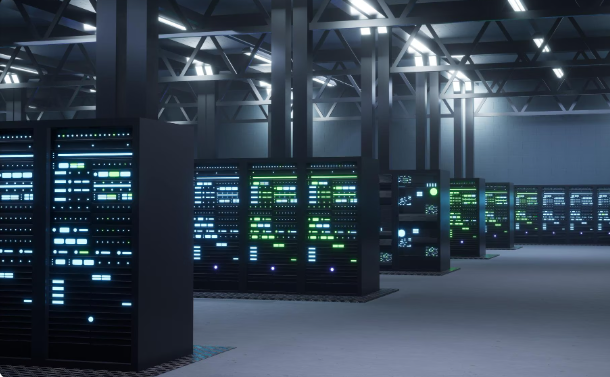
These days, whether you drive through sections of central Texas or northern Virginia, the scenery begins to take on an odd, contemporary appearance. Massive windowless structures—long, gray rectangles humming softly behind gates and cooling units—replace warehouses and retail centers. From the outside, they don’t appear to be very significant. However, thousands of servers are processing everything from financial dealings to social media feeds to AI models inside those structures. They are also consuming electricity.
The global energy grid is starting to feel the effects of the silent expansion of data centers, particularly those that power artificial intelligence. Utilities, regulators, and investors are starting to see something that average consumers may not yet experience. Power infrastructures in a number of areas are struggling to keep up with the rapid increase in electricity required to operate these digital factories. This poses an awkward query.
| Category | Information |
|---|---|
| Industry | Data Centers / Artificial Intelligence Infrastructure |
| Key Drivers | AI computing, cloud services, cryptocurrency mining |
| Global Electricity Impact | Could reach 6.7%–12% of U.S. electricity use by 2028 |
| Power Demand Growth | Expected to double in some regions by 2030 |
| Major Data Center Hubs | Texas, Virginia, California, Taiwan |
| Power Usage Intensity | AI data centers use 3–5× more electricity than traditional ones |
| Residential Impact | Electricity bills projected to rise 8–19% in some regions |
| Cooling Technologies | Liquid cooling, advanced energy management systems |
| Potential Solutions | On-site power generation, regulatory cost sharing |
| Reference Website | https://www.iea.org |
In the end, who covers the cost of all that fresh electricity?
In many regions, the monthly power bill may contain the solution. According to recent estimates, the electricity demand from AI-driven data centers may double by 2026—a surprising rate even for a sector used to quick growth. The explanation is simple: massive processing power is needed for modern AI computing. Rows upon rows of servers must run continuously in order to support global cloud platforms, run inference systems, and train big models.
Large fans, complex cooling methods, and industrial-scale air handling systems are needed to keep them cool. Modern facilities frequently use three to five times as much electricity per square foot as earlier data centers, driving power consumption into areas that were previously only used by large manufacturing enterprises.
One of the most striking examples of this expansion is Texas. New data centers arise almost instantly throughout the state, especially in the vicinity of Dallas and Austin. Trucks arrive with steel frames and cooling towers, as construction cranes loom over vacant ground. Investors perceive a chance. There is a competition among developers to acquire land close to important fiber-optic networks.
Rising electricity consumption, which could almost double statewide by 2030, is what grid operators see. Texas, which is already well-known for its convoluted electrical system, would be among the first states where residents can see the price of digital infrastructure.
Upgrades to transmission lines, substations, and power generation capacity totaling billions of dollars are being planned by utilities. These projects are not inexpensive. In the past, customers have shared the expenses of growing grid infrastructure.
This implies that residential customers occasionally wind up splitting the cost. By the middle of this decade, electricity rates in some areas are predicted to increase by 11% to 19%, in part due to infrastructure developed to serve data centers. Investors appear to think that demand will persist in any case.
Artificial intelligence has emerged as the decade’s defining technology race. Large computing resources are required by businesses developing models for the healthcare, financial, logistics, and entertainment industries. Additionally, data centers house computational resources. There is a feeling that the digital economy is subtly creating its own kind of heavy industry as the construction boom develops.
Taiwan provides yet another insightful example. The island, which is well-known throughout the world for producing semiconductors, is currently facing the power demand of AI infrastructure. Utilities have implemented tiered pricing schemes, charging higher rates for large energy users like data centers, as a result of the demand for electricity from IT enterprises. It’s an effort to keep households from bearing the entire expense. However, it is uncertain if those measures will completely alleviate the burden.
Texas, Virginia, and California account for more than one-third of all data centers in the United States. Particularly when there is a strong demand for electricity, this clustering puts pressure on the local system. In some places, locals have begun raising unpleasant questions about water consumption as well. Large amounts of water are needed for some facilities’ cooling systems, particularly in hot areas. Leaders in the industry maintain that the issue is controllable.
To cut down on energy waste, new technologies are being deployed, especially liquid cooling systems. By circulating coolant directly around chips, these systems increase efficiency and reduce the amount of electricity needed for air conditioning. In the meanwhile, several businesses are investigating on-site power generation options, such as tiny nuclear reactors, hydrogen fuel cells, and natural gas turbines. It has a futuristic sound. However, there are already a number of pilot projects in progress.
Additionally, regulators are starting to intervene. States like Oregon are investigating policies mandating data center developers to share more of the grid expansion expenses their projects cause. The concept is straightforward: if the digital economy necessitates new infrastructure, its operators ought to take a more active role in its construction. It’s unclear if those policies will become widespread.
For the time being, a combination of investor zeal and technological aspirations is driving the data center boom at full speed. The buildings themselves, silent machines humming behind fences and conducting billions of computations every second, are still mostly undetectable to the general public.