

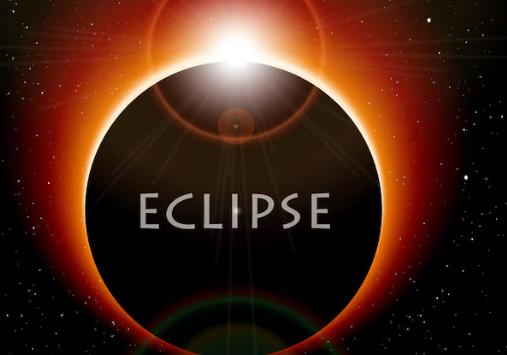
The moon usually seems reliable on a clear night. It emerges silently, pale and recognizable, floating over fields or roofs with the same gentle silver glow that humans have witnessed for millennia. However, the moon occasionally takes on a whole other personality. It gets darker. It then gradually turns crimson. On March 3, 2026, during the total lunar eclipse, that change will occur once more.
Astronomers predict that the moon will glow in a deep copper or scarlet hue for roughly 58 minutes, a phenomenon known as a “Blood Moon.” It’s easy to understand why ancient cultures occasionally saw the occurrence as an omen given the dramatic, almost mythical nature of the term. However, there is a rather sophisticated reason for the color.
| Category | Information |
|---|---|
| Event | Total Lunar Eclipse (“Blood Moon”) |
| Date | March 3, 2026 |
| Type | Total Lunar Eclipse |
| Totality Duration | Approximately 58 minutes |
| Cause of Red Color | Rayleigh scattering in Earth’s atmosphere |
| Visibility Regions | Americas, Pacific, East Asia, Australia |
| Phenomenon | Sunlight filtered through Earth’s atmosphere |
| Common Name | Blood Moon |
| Scientific Source | NASA Lunar Eclipse Research |
| Reference Website | https://science.nasa.gov |
When the Earth passes directly between the sun and the moon, a lunar eclipse takes place. The moon typically shines because sunlight bounces off its surface. However, the majority of that sunlight is blocked by Earth during an eclipse, creating a shadow on the lunar surface. The moon would just disappear into darkness if Earth had no atmosphere and space were empty.
Rather, something intriguing takes place. Sunlight is subtly bent by the planet’s atmosphere. Blue and violet light, which have shorter wavelengths, disperse outward as sunlight travels through the thin layer of air that surrounds Earth. Daytime skies appear blue due to a process called Rayleigh scattering.
Orange and red light behave differently. The atmosphere is more easily penetrated by those longer wavelengths. They keep moving outward, finally arriving to the moon, as they bend around the edge of the Earth’s shadow. The peculiar glow that emerges during totality is the outcome.
In a sense, every sunrise and sunset that occurs on Earth at that precise instant illuminates the moon during a total lunar eclipse. Imagine the reddish light gently touching the lunar surface after extending around the planet’s rim and bending through the atmosphere. It is both a poetic and scientifically correct image.
Observing a lunar eclipse frequently starts with subtlety. At first, it seems as though someone has gradually dimmed a lamp along one side of the moon. The shadow gradually gets deeper and covers more of the moon disk until there is only a faint glow left.
It can appear dark and rust-colored at times. At other times, it seems almost orange and brighter. According to astronomers, the precise shade is mostly determined by the state of the Earth’s atmosphere. The way light moves through the atmosphere can be affected by dust, humidity, and even volcanic ash.
While particles suspended high in the atmosphere can significantly darken the moon, a cleaner environment tends to generate a stronger copper glow. During the same eclipse, viewers from around the globe could notice minute color variations.
The Americas, the Pacific region, East Asia, and Australia will all be able to see the eclipse in March 2026. The incident will probably take place in the early hours before sunrise for residents of those localities.
Observing a lunar eclipse during the calm hours of the night is unique. Cities get silent. There is less traffic. Only a few sporadic lights are still shining from apartment windows in certain areas. The moon gradually darkens overhead during that silence, taking on an almost unearthly hue.
It’s difficult to ignore how many people stop to observe. Lunar eclipses are mild occurrences, in contrast to solar eclipses, which call for special glasses and cautious viewing. Outside, anyone can safely examine them with the unaided eye. No equipment is needed.
The public’s continued fascination with lunar eclipses may be explained by this accessibility. Moments like this serve as a reminder that, whether or not people are paying attention, cosmic events continue to take place above their heads in a time when artificial lighting and digital screens rule the day.
Astronomers typically emphasize that lunar eclipses are predictable. The sun, moon, and Earth all follow exact gravitational patterns that astronomers can predict decades in advance. However, the sense of amazement that comes with seeing the event never entirely fades.
The moon appears normal at the start of the night. Then, almost without warning, it transforms into something completely different: a reddish sphere suspended in the blackness, lit by sunlight that has been filtered through a planet’s atmosphere. In that instant, a silent realization occurs.
The moon is colored during an eclipse by the same atmosphere that scatters blue light during the day and paints sunsets orange and crimson every evening. Earth itself is incorporated within the celestial show.