

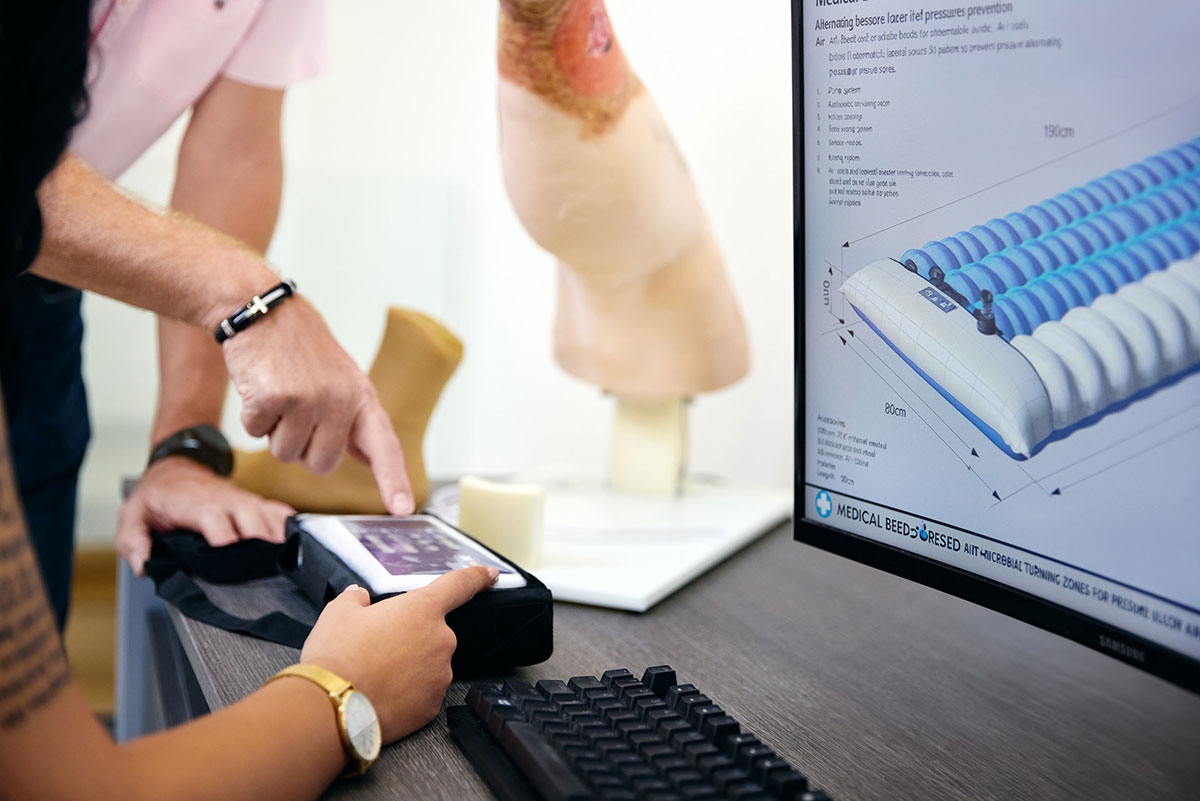
Pressure injuries affect millions of patients worldwide, yet most people don’t think about them until someone they love ends up in a hospital bed for weeks. These wounds develop when sustained pressure cuts off blood flow to the skin and tissue. For patients who can’t move themselves after surgery, strokes, or spinal injuries, the risk becomes urgent within hours.
The Hidden Cost of Immobility
Your body makes thousands of micro-adjustments while you sleep, shifting weight and changing positions without conscious thought. These movements keep blood flowing and prevent tissue damage. Immobile patients lose this protective mechanism entirely.
Stage 1 pressure injuries show as red skin that won’t blanch when pressed. Stage 2 involves open wounds and blisters. Stage 3 reaches into the subcutaneous fat. Stage 4 exposes bone, tendon, or muscle. Each stage requires more intensive treatment and extends hospital stays.
Deep-tissue pressure injuries pose additional challenges. Damage occurs in deeper layers before anything shows on the skin surface. By the time visible changes appear, significant internal damage may already exist.
Why Traditional Prevention Falls Short
Standard hospital protocol requires repositioning immobile patients every 2 hours. Manual repositioning requires two to three staff members for safe handling. In a 20-bed unit, that’s 120 to 180 staff hours daily spent just on turning patients.
Night shifts run with reduced staffing. Emergencies pull nurses away. One patient codes, and suddenly the two-hour window stretches to three or four hours for everyone else. Manual repositioning also disrupts patient sleep every two hours, when patients recovering from surgery or managing critical illness need uninterrupted rest for healing.
Engineering a Better Solution
After 30 years of development, ABeWER introduced the MultiTurn® 6 automated lateral-rotation mattress. The system turns patients 30° to each side at adjustable intervals of 30, 60, or 90 minutes, depending on risk level.
The technology combines three approaches simultaneously. Automatic lateral turning repositions the body. Alternating pressure cycles through 18 separate air tubes that inflate and deflate in programmed patterns, constantly shifting where pressure hits the skin. Continuous low-pressure management maintains baseline comfort across the entire surface.
Getting these three systems to work together required extensive engineering. Early prototypes either moved too abruptly or made excessive noise. The current system operates below 20 decibels, so patients sleep through it.
Real-World Impact
The mattress includes laser-cut air holes that allow continuous airflow over the patient’s body. This manages temperature and moisture levels around the skin. Damp conditions accelerate tissue breakdown under pressure.
Patients with upper-body mobility receive a remote control for positioning adjustments between automated cycles. For someone with paraplegia, being able to adjust their position without calling for help preserves dignity during recovery.
The system accommodates patients up to 180kg and fits standard hospital bed frames without requiring special equipment. It runs on standard 220-240V electrical systems with a straightforward setup.
Addressing Multiple Patient Populations
Spinal cord injury patients can’t feel when pressure builds up, so they face this risk for life. Surgical patients recovering from major procedures spend days or weeks immobile. ICU patients are already fighting multiple health crises – a pressure injury on top of that could be fatal. Nursing home residents with chronic conditions need consistent protection that lasts months or years.
The MultiTurn® 6 serves both prevention and treatment applications. For prevention, it addresses high-risk populations. For treatment, the system manages existing pressure injuries up to Stage 4 under medical supervision. The adjustable 30-minute turning interval provides maximum pressure relief for deep tissue injuries and complex wounds.
Beyond Technology
Healthcare facilities implementing automated turning reports that previously required nursing time for manual repositioning are now available for tasks requiring professional judgment: medication administration, wound assessment, and clinical decisions.
Documentation simplifies. Instead of charting each manual repositioning event, providers focus on assessing patient response and adjusting care plans. The automated system continuously handles the positioning protocol.
The MultiTurn® 6 carries CE certification under EU MDR 2017/745, meaning it passed testing for electrical safety, material safety for long-term skin contact, mechanical durability, and reliable 24/7 operation.
Treating a Stage 4 pressure injury takes weeks or months of intensive wound care. Preventing that same injury requires consistent pressure management from the moment immobility begins. For patients who can’t reposition themselves, automated technology provides protection that doesn’t depend on staffing levels, shift changes, or competing priorities.