


In Pontevedra, there is a section of the street where everything happen slowly. There was only the sound of shoes shuffling, polite greetings between neighbors, and the occasional dog bark—neither honking nor hurrying. You are encouraged to breathe more slowly by the tempo. You hardly notice that you’re in a city.
That level of urban tranquility was not accidental. For many years, speed was the main focus of city planning. Everyday commuting became a race against time as roads widened and automobiles became faster. However, the outcomes—clogged roads, contaminated air, disappearing public areas—told a different tale. The most intelligent cities are currently hitting pause.
In the last ten years, more and more mayors and urban planners have begun to redefine what “smart” actually means. Surprisingly, delay is becoming a highly creative success statistic. Speed restrictions are being lowered, pedestrian zones are growing, and time quality—rather than quantity—is increasingly being prioritized in design in cities like Helsinki, Oslo, and Paris.
The way individuals engage with their neighborhoods in Paris has changed as a result of Mayor Anne Hidalgo’s 15-minute city plan. She has changed the concept of mobility from one of speed to one of ease and comfort by making sure that schools, parks, food stores, and medical facilities are all easily accessible by foot or bicycle. Making every moment more meaningful is the aim, not saving time to spend it somewhere else.
Oslo adopted a remarkably similar strategy. The city core is now safer and cleaner thanks to a significant reduction in car access. Bicyclists and pedestrians may easily move across shared areas, and the statistics show that the number of traffic-related fatalities has drastically decreased. In addition to being progressive, the city’s choice to put people before cars was incredibly successful.
| Element | Details |
|---|---|
| Concept | Smart cities designing for slowness, not speed |
| Movement | Known as “Slow Urbanism” or “slow city” design |
| Goal | Improve health, safety, community, sustainability |
| Examples | Oslo, Paris, Helsinki, Pontevedra (Spain) |
| Main Strategies | Reduced speed limits, walkability, traffic calming, 15-minute cities |
| Benefits | Lower emissions, safer roads, stronger communities, vibrant public life |
| Source | Smart Cities World |
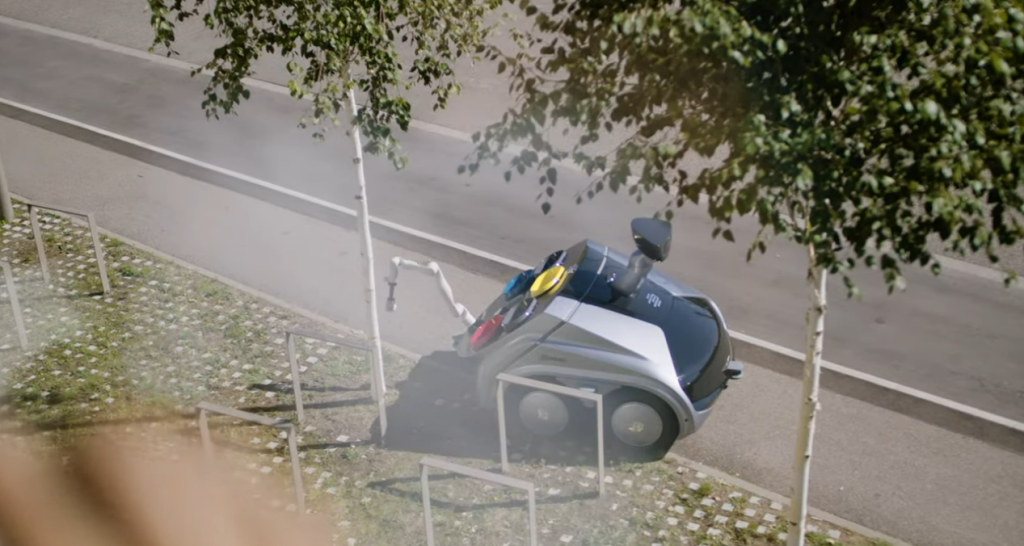
With carefully reduced speed limits and modified crossings that promote contact rather than avoidance, Helsinki’s efforts mirrored that mentality. Streets became places for presence rather than battlegrounds.
Even while these modifications might not seem noticeable at first, they have a significant influence. Foot traffic to local businesses has grown. Instead of hurrying by, people converse on street corners. Children don’t fear walking to school. These are more than just delightful side effects. They are indicators suggesting slower cities are more socially and economically resilient in addition to being healthier.
For many years, advancement was equated with speed. What type of progress do we actually want? is a question that city leaders are increasingly posing. More vehicles in each lane? or more connections in each block?
I recall getting caught in an unexpected late-autumn drizzle while walking through one of Oslo’s pedestrian-priority zones. Nobody ran for safety. Conversations went on, umbrellas were opened, and everyone adjusted. It seemed strangely grounded, as if the city was designed for existence rather than just transportation.
I kept thinking about that time. Being slow wasn’t a hassle. It served as a reminder that when we give up attempting to outrun time, it can expand.
Additionally, there is a compelling case for using slowness as an inclusive strategy. Those who are able to keep up—young people, physically fit people, and automobile owners—tend to be rewarded in fast cities. Slowness, however, encourages participation from everybody. People with disabilities, parents using strollers, and older persons are no longer negotiating difficult terrain. Instead of the other way around, the city adjusts to them.
Beyond social advantages, technology significantly enhances slowness rather than hinders it. Intentionally slowing down is now possible with smart infrastructure. Traffic is dynamically calmed by digital signage. Sensors keep an eye on air quality and noise levels to preserve a calm urban environment. Additionally, mobile apps encourage more deliberate neighborhood exploration by locals, transforming quick strolls into cultural explorations.
Even economics, which is frequently used to support speed, is changing. Car-free avenues frequently generate more revenue from retail establishments than crowded thoroughfares, according to studies. People browse more, stay longer, and spend more intentionally when they are not in a hurry. A slower city indicates a more locally based economy, not a slower one.
Slowness has also been incorporated into land-use planning in recent years. Municipalities all across the world have been motivated by the “15-minute city” idea to reconsider zoning, minimize sprawl, and design compact, livable spaces. Mega-malls and suburban growth are very different. Rather, it’s about dignified density.
Naturally, not all cities are able to implement these policies completely. There is still traffic. There will still be commutes. However, slowness can thrive in certain places, such as cultural corridors, community streets, and pocket parks, even in large metropolises. The mood and functionality of the city are affected when important sections are designed for slowness, as urban planners are discovering.
The fact that slowness need not equate to inefficiency is especially intriguing. On the contrary. When systems are carefully planned, individuals move in a steady, intentional, and orderly manner. It has nothing to do with halting motion. It’s about intentionally directing it.
Therefore, designing for slowness is not a retreat from advancement. It’s a change of direction—a reevaluation of our values in the city. These cities become lovable, not simply livable. They encourage us to observe, engage, and participate. Most significantly, they serve as a reminder that not all journeys must be hurried.
The cities that create space for quiet will probably be the ones that prosper in the years to come. They understand that ambition might take the form of a peaceful plaza, a shaded bench, or a youngster riding a bike safely to school. This is not to say that they lack ambition.