

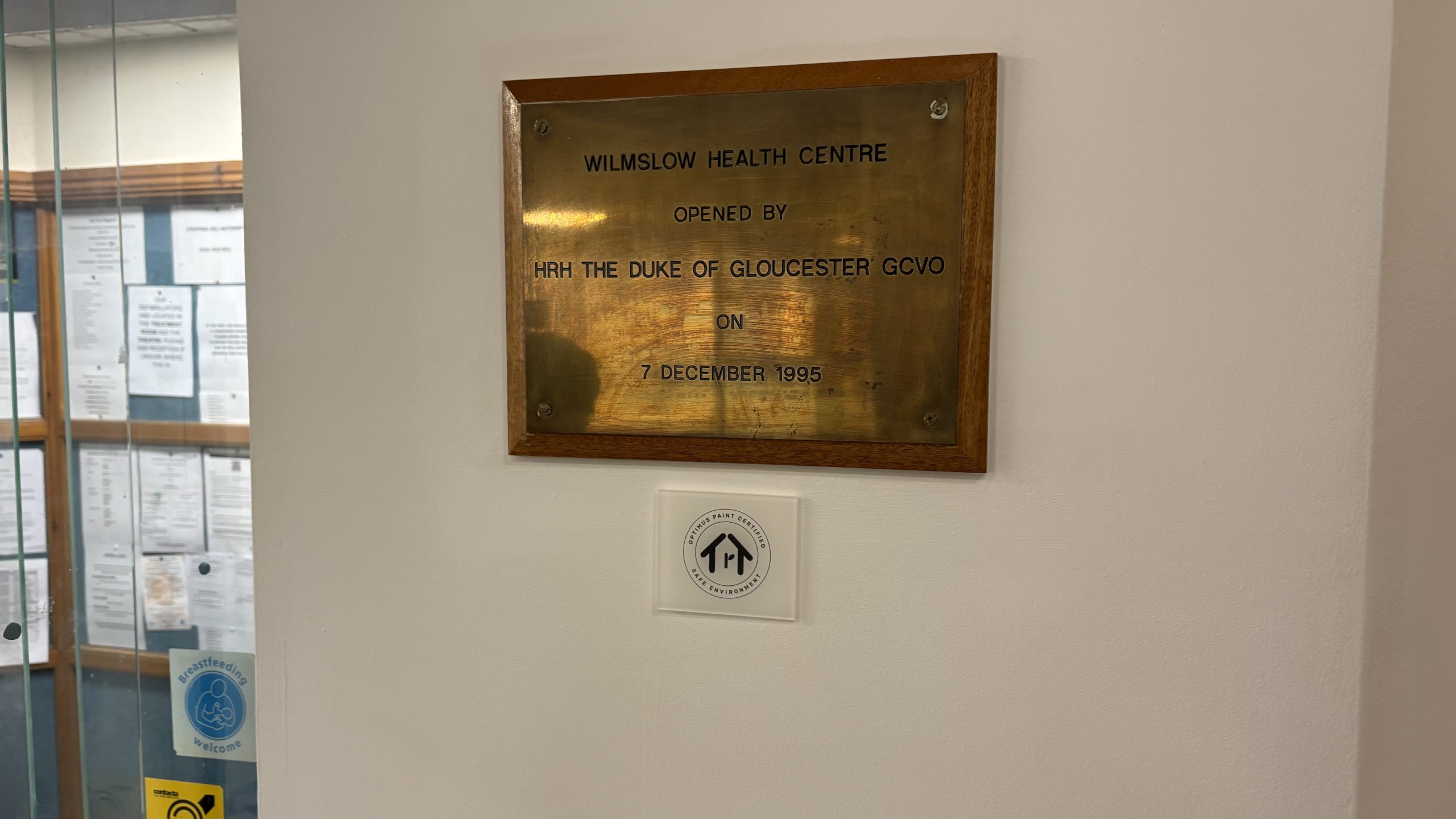
On 5th February 2026, the walls at Wilmslow Health Centre became active participants in infection control. Optimus completed installation of its Japanese nanotechnology coating system across the Cheshire clinic, marking the first deployment of the technology in a UK primary care setting.
The timing matters. NHS surgeries face relentless infection pressure.
The coating—Optimus Interior Medical Paint—transforms ordinary walls into surfaces that continuously reduce viral and bacterial activity. Tested to ISO 21702 standards, the water-based system targets both enveloped and non-enveloped viruses, alongside bacteria including MRSA and E. coli. Once applied, the surface works around the clock, complementing existing hygiene protocols without requiring repeated chemical disinfection.
Dr Amar Ahmed, who owns the practice, didn’t hide his enthusiasm. “Proud to be leading the way as the first healthcare establishment in the UK using state-of-the-art Japanese nanotechnology, Optimus Paint UK, to help reduce infection risk. Infection control has officially gone wall-to-wall…”
That wall-to-wall claim isn’t marketing hyperbole—it’s the operational reality.
Conventional paint decorates. This system does something different: it creates a preventative layer that actively reduces surface-level pathogen activity. For clinical environments where patients cycle through consultation rooms hourly, that distinction carries weight. Cleaning staff can maintain standards without the constant chemical burden. Surfaces contribute to safety rather than simply hosting risk.
Primary care settings operate under unique constraints. Unlike hospitals with dedicated infection control teams and isolation wards, GP surgeries must balance prevention with uninterrupted access. Patients arrive with everything from routine check-ups to suspected infections. The environment absorbs that constant exposure.
Optimus worked directly with the clinical leadership team to complete the application without disrupting daily operations—a requirement that would have ruled out more invasive interventions. The company documented the full process, with video content scheduled for release in coming weeks. Whether that footage will address questions about longevity, maintenance intervals, or cost remains to be seen.
The technology itself originates from Japan, where Optimus has spent over 40 years developing advanced coating systems. The medical paint represents one strand of a broader portfolio that includes anti-mould, deodorising, and thermal performance coatings. The Japanese manufacturing pedigree carries credibility in precision engineering circles, though the NHS environment will provide a different kind of stress test.
ISO 21702 certification offers scientific validation—the standard measures antiviral activity on plastics and non-porous surfaces. Achieving that benchmark suggests the coating performs under laboratory conditions. How it holds up against the wear patterns of a busy health centre, with patients leaning against walls and cleaners wiping surfaces daily, will emerge over months rather than weeks.
For Optimus, Wilmslow represents a strategic foothold. The company has outlined wider UK ambitions spanning healthcare, education, housing, and public infrastructure. Securing a primary care reference site provides tangible proof of concept. Other NHS trusts evaluating similar technology now have a working example less than an hour from Manchester.
The broader infection control landscape has shifted since the pandemic exposed vulnerabilities in public health infrastructure. Trusts face pressure to demonstrate proactive measures beyond hand sanitiser stations and laminated posters. Surface technology that operates continuously, without requiring behavioural change from staff or patients, aligns with that imperative.
What’s less certain is whether the economics stack up at scale. NHS procurement processes favour proven, cost-effective solutions. A nanotechnology coating from Japan, however innovative, must justify itself against stretched budgets and competing priorities. Wilmslow’s experience—including durability data, maintenance requirements, and any measurable impact on infection rates—will inform those calculations.
The installation also raises questions about the future of passive infection control. If walls can actively reduce pathogen loads, what other surfaces warrant similar treatment? Door handles, reception desks, waiting room chairs—all represent high-touch vectors. The technology exists. The challenge lies in deployment costs, maintenance complexity, and demonstrating tangible health outcomes.
Dr Ahmed’s practice has placed itself at the leading edge of that conversation. Whether others follow depends on what happens next in those coated consultation rooms.
Optimus plans to release further documentation in the coming weeks. By then, the coating will have endured weeks of patient footfall, cleaning cycles, and the accumulated friction of daily clinical use. The data emerging from that real-world trial will matter more than any laboratory certification.
For now, Wilmslow Health Centre stands alone as the UK’s first primary care facility with nanotechnology-coated walls. The question is whether it remains an outlier or becomes a template.