

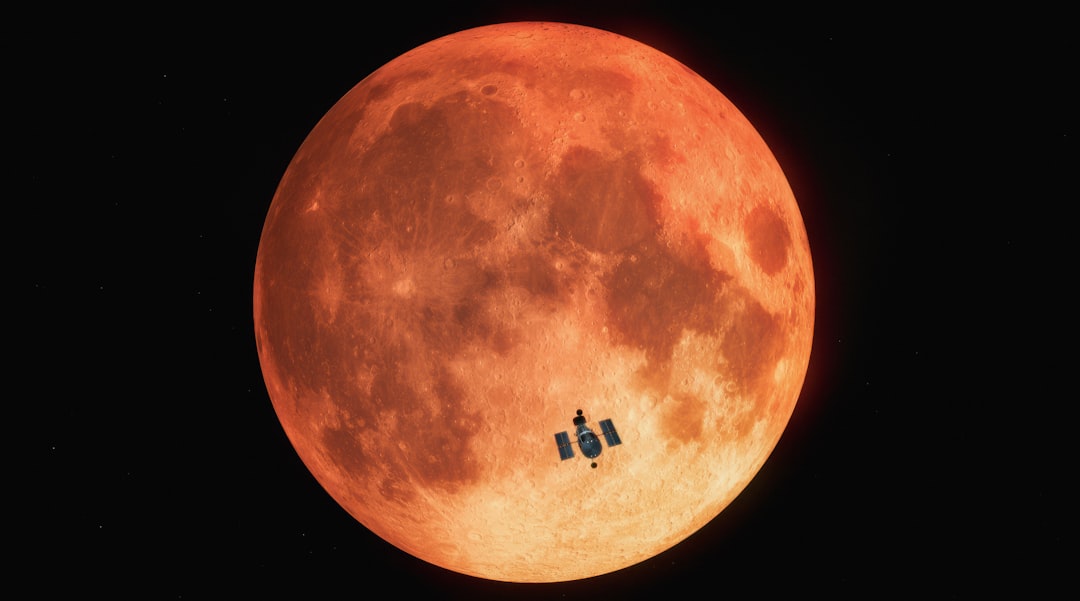
The Moon is no longer a closed chapter. For a while, it felt like one — visited, flagged, and filed away. But with NASA’s Artemis II just off the launchpad and China accelerating its own lunar program, that chapter has cracked open again. The stock markets are paying attention. So should you.
This isn’t nostalgia. It’s strategy.
What the First Space Race Was Actually About
Back in the 1960s, the U.S. and Soviet Union weren’t competing for science — they were competing for dominance. Space was the world’s most expensive billboard, and whoever put a human on the Moon first got to claim technological supremacy. Yuri Gagarin’s flight kicked the door open. Neil Armstrong’s footsteps, in 1969, slammed it shut on the Soviet side.
Then the urgency drained away almost immediately. The goal was met. Public interest wandered. Budgets shrank. Apollo 17 launched in 1972, and after that — nothing. No crewed lunar missions for over five decades.
The why is simple: there was no plan for what came next.
Why the Moon Got Shelved
Cost was brutal. Political will was thin. And honestly? The missions were mostly symbolic — impressive, historic, but with limited practical return. Once the “first to the Moon” box got checked, governments started asking a reasonable question: now what?
There wasn’t a good answer. Technology couldn’t support long-term presence. The economic case wasn’t there. So focus shifted to low Earth orbit, space stations, and eventually reusable rockets. The Moon went quiet.
Why It’s Different Now
Here’s where it gets genuinely interesting.
Artemis II didn’t just send astronauts toward the Moon — it signaled a shift in intent. NASA’s goal isn’t a one-time landing anymore; it’s a sustained presence. Think forward operating base, not a photo opportunity. The Moon becomes a testing ground for life support, autonomous systems, and logistics before the much longer haul to Mars.
China is moving fast with parallel ambitions. That geopolitical pressure alone would restart competition. But this time, SpaceX, Blue Origin, and a cluster of other private players are in the mix — cutting costs, handling cargo logistics, and reshaping what’s economically feasible. The race isn’t just government-funded anymore. It’s a joint venture between national ambition and commercial profit.
That’s a fundamentally different structure than the 1960s.
U.S. vs. China: Familiar Energy, New Rules
The parallels are obvious. Two major powers, space as a stage for technological credibility, the Moon as the prize. But the mechanics have changed.
The original race was closed — two governments, strict secrecy, no outside contractors. Today it’s messier and more collaborative in some ways, more competitive in others. Private firms shape mission design. Supply chains span continents. And the finish line isn’t a flag in the lunar soil — it’s infrastructure, long-term access, and whatever resources the Moon turns out to hold.
What Investors Should Actually Know
The return to the Moon creates real demand — but scattered, uneven demand. Robotics, advanced materials, energy systems, precision sensors, communications hardware. That’s a long industrial chain with winners and losers baked in.
More relevant to the stock markets: the connection to tech is deep. AI systems, high-performance chips, cloud infrastructure, automation — all of it feeds into mission complexity. As operations grow more autonomous and less dependent on human control in real time, the appetite for faster processing and smarter hardware grows with it. Companies already central to semiconductors and advanced engineering benefit — not directly from rocket launches, but from the downstream demand those programs generate.
The Part Where Expectations Need Managing
Space timelines slip. Budgets balloon. Engineering problems don’t care about press releases or investor presentations.
That matters when trading Nasdaq 100, where narrative moves markets before results do. A successful launch generates headlines; a delayed mission generates almost nothing. Sentiment can front-run reality by months or even years. Broad exposure to “space themes” carries that timing risk built in.
The stronger play is selective — understanding which companies are embedded in the actual supply chain versus which ones just get cited in bullish articles. Government support is the backbone of major programs, and that support shifts with administrations, budget cycles, and competing priorities.
The Next Decade, Quickly
Expect more frequent crewed and uncrewed missions. Early orbital stations and surface systems. Growing commercial cargo operations. Sharper U.S.-China competition. And a private sector that takes up more space (literally and figuratively) with each passing year.
The stock markets will track pieces of this, unevenly and with a lag. The opportunity is real — the timeline is just longer and bumpier than the headlines suggest.
Worth watching. Worth being patient with.