

There was no island at Home Reef on September 10, 2022. There was by the next morning. A mass of freshly cooled lava rising from the Pacific, trailing steam and discoloring the surrounding water with ash and pumice in an expanding plume visible from space, rather than a sandbar or a boulder breaching the surface at low tide.
The seamount, one of dozens of undersea volcanoes grouped in the Pacific Ring of Fire’s Tonga Archipelago stretch, had been building toward this for a while, building pressure underneath a surface that doesn’t reveal anything until all of a sudden it does. Eleven hours. It took the eruption about that long to create land.
| Event | Eruption of the Home Reef seamount — underwater volcano in the Tonga Archipelago, central southwest Pacific; eruption began September 10, 2022, producing a new island within 11 hours |
|---|---|
| Location | Home Reef, Tonga Archipelago — a region of exceptionally high underwater volcanic activity, sitting along the Tonga-Kermadec subduction zone northeast of New Zealand |
| Formation Speed | Land mass broke the surface within 11 hours of eruption onset — one of the faster documented instances of volcanic island formation in the modern satellite era |
| Size Progression | Approximately 4,000 square metres on September 14, growing to roughly 24,000 square metres — about 6 acres — by September 20, 2022 |
| Composition | Built from lava, steam, and ash — a mix of solid cooled rock and loose pumice that gives newly formed volcanic islands their characteristic unstable shoreline |
| Likely Lifespan | Expected to be temporary — ocean wave erosion typically reclaims islands of this type within months to years, though some have persisted for decades depending on lava volume and compaction |
| Historical Parallel | Hunga Tonga-Hunga Ha’apai, also in Tonga, formed in 2014–15 and lasted several years before the January 2022 catastrophic eruption dramatically reshaped it — demonstrating both the longevity and volatility of Pacific volcanic islands |
| Scientific Value | GNS Science (New Zealand) and international volcanologists monitor new island formations as natural laboratories — studying colonisation by microbes and pioneer species in the weeks and months following emergence |
By any standard measure, the island that appeared was not very big. It was nearly the size of a city block, covering 4,000 square meters by September 14. As the eruption continued to push material upward and outward, it had grown to something closer to 24,000 square meters, or around six acres, by September 20. NASA’s Earth Observatory revealed satellite imagery of a seething grey-brown mass encircled by discolored water.
The image appears nearly procedurally generated until you remember that the planet made it in less time than it takes to drive across most towns. The island’s distinctive instability is caused by its composition, which includes compacted ash, loose pumice, and hardened lava. When conditions permit, researchers sometimes stroll down the beach of a recently formed volcanic island, where the ground shakes beneath their feet in a way that feels more like something still figuring out what it wants to be than solid earth.
Sitting along the Tonga-Kermadec subduction zone, where the Pacific Plate plunges beneath the Australian Plate at a rate that produces more seismic and volcanic activity per kilometer than nearly anywhere else in the Pacific, the Tonga region is one of the most volcanically active oceanic regions on Earth. Throughout recorded history, new islands have emerged and vanished here, and the geography of the area is partially a catalogue of eruptions, some of which have permanently added to the archipelago and others of which have vanished over time.
The most recent significant precedent was Hunga Tonga-Hunga Ha’apai, which formed in 2014 and 2015 and persisted for a number of years prior to the disastrous eruption in January 2022 that caused one of the biggest atmospheric explosions in modern history, sending a pressure wave around the world twice and creating a tsunami that reached as far as Peru. Only eight months after that incident, the Home Reef island appeared in an area that was still being examined for the effects of the Hunga Tonga blast.
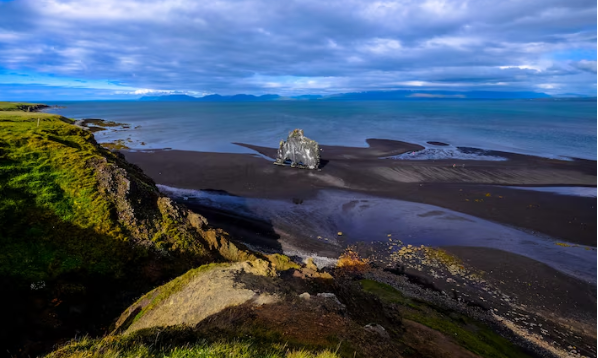
It’s actually unclear if this island will last long enough to be relevant in any way. Within months to a few years, wave erosion reclaims the majority of volcanic islands of this formation type, which are formed rapidly and are primarily made of loose pyroclastic material rather than solid basaltic lava. The ocean functions steadily and doesn’t give a damn about how long it took the volcano to form.
Despite these odds, a few islands in comparable geological settings have endured for decades, eventually compacting into more resilient landforms. The monitoring data will take some time to determine which group Home Reef’s most recent addition fits within. The satellite imaging and the eruption timing already make it evident that the formation occurred quickly enough and on a large enough scale to rank among the better-documented examples of volcanic island birth in the recent era.
Seeing these occurrences caught from orbit with a level of detail that would have been unattainable even thirty years ago gives us the impression that the planet’s geological activity has always been this spectacular; we simply had the tools to observe it in real time.
In the days and weeks following emergence, pioneer species and microbial life start to colonize bare rock on newly formed volcanic islands, which act as natural laboratories, according to GNS Science and worldwide volcanologists. Since Darwin spent time contemplating comparable issues in the Galápagos, scientists have been captivated by the subject of what arrives first and how. The Home Reef island might not last long enough to provide a complete response. For the time being, however, the Pacific has a new aspect of itself that is still boiling, settling, and under observation.