

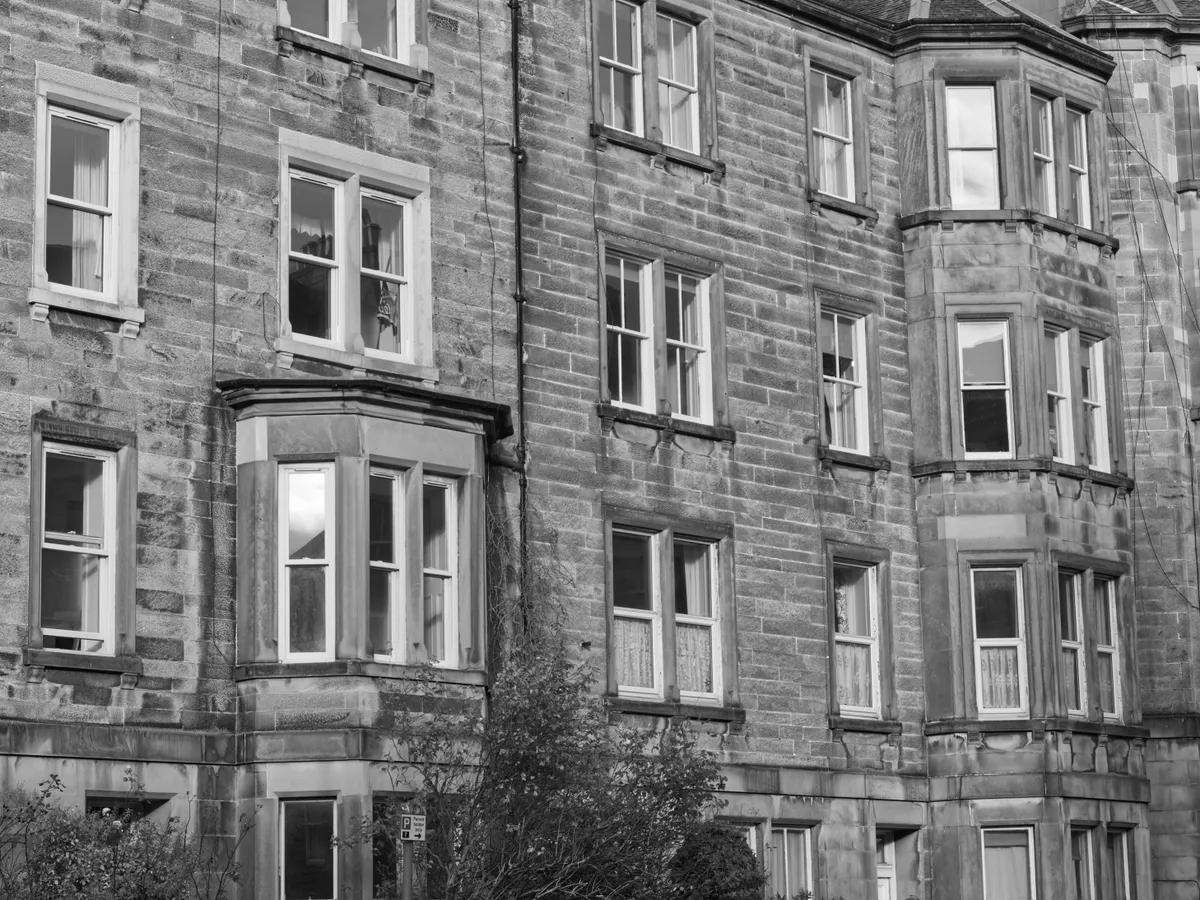
Making the move from house to apartment in Edinburgh transformed life for one couple after two years of mounting repair bills, soaring energy costs, and a rapid decline in mobility made their 1980s two-storey home unworkable.
Siobhan Ball and her wife purchased a property of just under 950 square feet on the outskirts of Edinburgh, drawn in by floor-to-ceiling windows, a small private garden, an attic, a study, and a conservatory. The price was within reach; the upkeep was not.
Repairs, heating bills, and the true cost of owning a house
The couple knew from the outset that running a house would cost more than a flat. What surprised them was how quickly the bills arrived. A storm stripped part of the roof, requiring tile replacement. The boiler needed fixing. Cracks appeared in walls. Smaller jobs came in a near-constant stream.
Energy bills compounded the strain. In their previous flat, heat rising from downstairs neighbours kept their own usage low. The house reversed that dynamic: warmth accumulated upstairs while the ground floor stayed cold, and correcting the imbalance would have required extensive renovation work.
The energy-efficiency gap between Scottish flats and houses is measurable. A Climate Xchange report on the Scottish housing market, drawing on the 2022 Scottish House Condition Survey, found that tenements and other flats carried an average energy efficiency rating three to seven percentage points higher than other housing archetypes. Between 67% and 68% of Scottish flats fell into EPC bands A to C, compared with 40% to 48% for detached, semi-detached, and terraced houses.
The house-to-apartment shift in Edinburgh and what the market shows
The broader Edinburgh property market adds context to the couple’s experience. According to the Office for National Statistics (ONS), the average house price in Edinburgh stood at a provisional £296,000 in May 2026, up 2.4% on May 2025, a slower pace than the Scotland-wide rise of 4.4% over the same period, though Edinburgh retained the highest average house price in Scotland.
Within that headline, the divergence between property types is sharp. In the year to May 2026, the average price for detached properties in Edinburgh rose by 6.6%, while the average price for flats increased by just 1.1%, ONS data show. For cash buyers specifically, the average Edinburgh price was £294,000 in May 2026 (provisional), up from a revised £288,000 a year earlier.
Those figures reflect a market in which houses are appreciating faster than flats, though they also illustrate why the running costs of the two diverge so markedly: older, detached stock tends to carry the higher maintenance burden that the couple encountered.
Accessibility became the decisive factor
About six months after moving in, Ball’s mobility began to deteriorate rapidly. She had known from an earlier diagnosis that some decline was possible, but the speed caught her off-guard. Stairs with narrow turns separated the kitchen from the bathroom on different floors, and the house layout made installing a stairlift impractical.
The garden, which had been a key selling point, went untended because Ball could no longer care for it and her wife lacked the time to step in. The couple concluded that investing further in the property made no sense.
Six weeks after selling the house, they bought a modern flat near the centre of Edinburgh, with public transport close by. Exterior maintenance costs are shared across all units in the building. A staircase exists, but outside the flat itself, so Ball can stay on one level on difficult days.
The shift from house to apartment in Edinburgh brought lower utility bills, a walkable location, and an end to sole liability for major structural repairs. The couple say they cannot imagine returning to a house.
For anyone weighing a similar move, the ONS data offer one practical signal: with Edinburgh flat prices rising at 1.1% against 6.6% for detached properties in the year to May 2026, the entry cost for the apartment route remains comparatively accessible, even as the city’s overall market continues to outprice the rest of Scotland. Whether that gap persists will depend on how quickly energy-efficiency regulations reshape demand for older house stock across the city.