


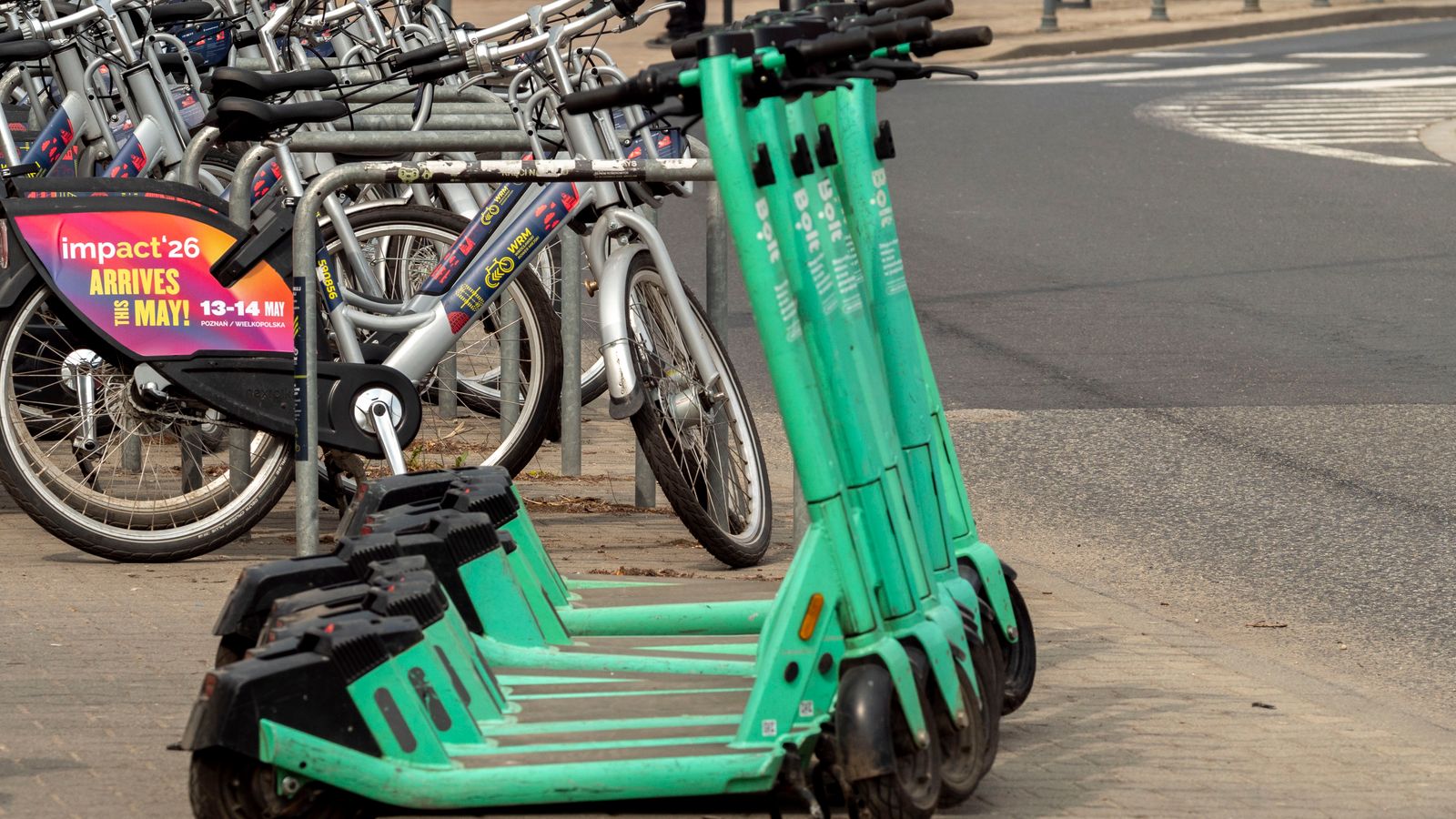
Local leaders in England would be able to licence shared e-bike schemes and require parking plans under proposals the Department for Transport published on Thursday.
Transport Secretary Heidi Alexander is set to give councils and mayors the means to stop what the department called “wild west” e-bike parking and to tackle antisocial behaviour. The department described the plan as “a small but important everyday fix”.
The powers rest on the English Devolution and Community Empowerment Act 2026, passed in April 2026, which lets ministers make regulations to licence shared micromobility schemes.
The consultation covers how that would work for shared cycles, including e-cycles, and the powers would take effect only once those regulations are made.
Under the proposals, an operator would need a parking plan as a condition of a licence. It would also need a plan for antisocial and illegal use, aimed at preventing riding while drunk, underage or on pavements, with clear consequences such as fines.
Fleet management plans are also proposed.
Minimum standards would be set nationally, and licensing authorities could add local conditions. The government does not intend to impose a single parking model.
Its preferred approach lets local leaders decide what a parking plan contains, supported by guidance on matters such as indicative parking ratios and how to identify hotspots.
The proposed scope covers schemes whose cycles are parked in public places, with some exemptions under consideration.
The government is also asking whether local leaders should be able to set fees and require operators to share data.
Its preferred option is a national minimum for data sharing that councils could add to, with licensing authorities monitoring and enforcing criminal offences linked to licensing.
The department named Lime, Voi, Beryl, Dott, Forest and Bolt as examples of shared e-bike operators.
In London, the Transport Secretary is working with the Mayor and Transport for London on devolving new powers to TfL.
In West Yorkshire, powers over street space and parking would stay with the highway authorities: Bradford, Calderdale, Kirklees, Leeds and Wakefield councils.
Lime, the UK’s largest shared e-bike operator in its own words, said the current patchwork of local arrangements is confusing for riders, councils and operators. Voi said consistent national standards backed by local licensing would let responsible operators work with councils to keep pavements clear.
Bolt said 98 per cent of its rides already end with a correctly parked bike.
Guide Dogs and the RNIB welcomed the consultation but sounded a caution. “Tackling rider behaviour will be difficult, and it’s vital the desire for local flexibility doesn’t lead to a patchwork of regulations and inconsistency in implementing them,” they said.
London’s councils and TfL have pressed for such powers before. In a letter dated 16 December 2024 to Lime and Forest, they said dockless e-bike numbers in many areas exceeded the fleet caps agreed with councils. They described operation without permission or oversight from councils or TfL as “clearly not working”.
E-scooters are treated separately. The government has committed to legislation that would allow them to be legalised as soon as parliamentary time allows, and rental e-scooters would likely be managed through the same licensing framework.
Views can be sent to the consultation by email or by post to Micromobility, Great Minster House, 33 Horseferry Road, London, SW1P 4DR. It closes on 31 December 2026.