

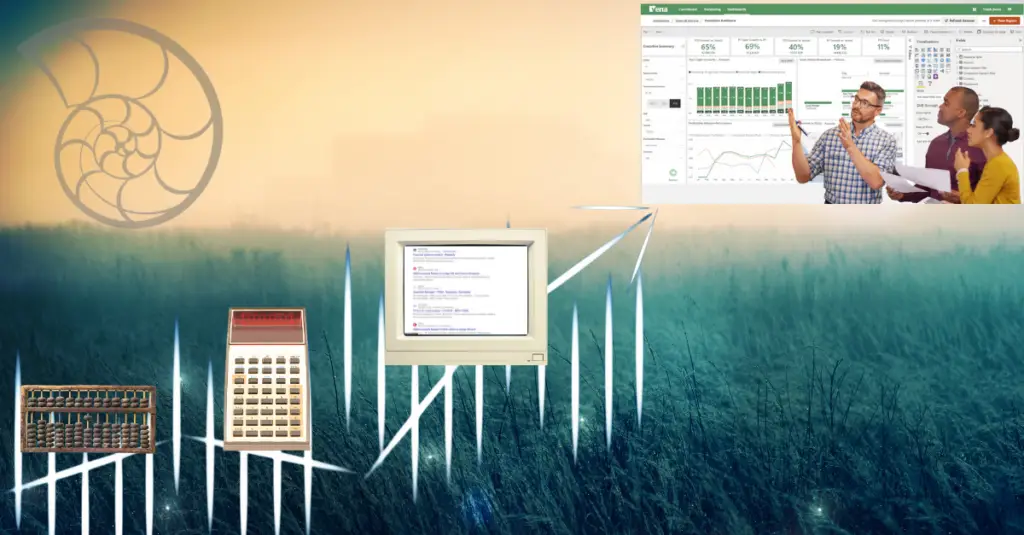
There was a time when budgeting meant Sunday evenings, a calculator, and a quiet sense of guilt. People sat at kitchen tables with notebooks or Excel sheets, trying to remember what the pharmacy purchase was for and why the grocery line had ballooned again. Manual budgeting wasn’t just a system; it was a ritual of self-discipline. It assumed that awareness followed effort. The more you touched each number, the more control you felt.
That assumption is quietly collapsing.
Passive budgeting systems — driven by automation finance tools — are replacing the hands-on method not because people became lazy, but because money itself became too fast. Transactions now arrive in clusters, subscriptions renew invisibly, and digital wallets blur the line between spending and transferring. Manual systems depend on memory and timing. Automated systems depend on flow. That difference matters more than most people realize.
The first shift happened when bank feeds became reliable. Instead of entering expenses line by line, software began pulling transactions automatically. At first, it felt like a convenience feature. Then it became the foundation. Categorization engines learned that a payment to a known merchant was probably food, transport, or utilities. The user only corrected mistakes. Over time, corrections became rare. The machine learned the household.
The spreadsheet started to look slow by comparison.
Manual budgeting assumes that planning happens before spending. Passive systems flip that logic. They observe behavior continuously and adjust allocations after patterns appear. If transport spending rises for three months, the system nudges the category upward and compensates elsewhere. If income fluctuates, buffers expand or contract automatically. The budget becomes elastic instead of moralistic.
I’ve noticed that people are more honest with software than with their own notebooks.
There is also a psychological shift underway. Manual budgeting asks for confrontation. You must look directly at your choices. Automation softens the confrontation but increases accuracy. The data is always on, always logging, always reconciling. Some critics say this creates distance from money. In practice, it often removes selective blindness. The weekly coffee total is harder to ignore when it appears without emotional editing.
Small business owners were among the earliest converts. A shop owner once told me she abandoned manual monthly budgeting after missing a tax buffer target two quarters in a row. Her revenue was fine; her timing wasn’t. Automated finance tools began allocating percentages of each incoming payment into tax, operating, and reserve buckets instantly. No meeting required. No end-of-month scramble. The system acted at the moment of inflow, not after the fact.
That timing difference is everything.
Passive budgeting also benefits from something manual systems cannot replicate: pattern memory across years. Automation tools track seasonality, income cycles, and recurring anomalies. They know December is heavier. They know April contains insurance payments. They learn that August travel spending is not an emergency but a habit. Manual budgets often treat each month as a fresh moral test. Automated systems treat it as a data point in a long story.
The change is not only technical; it is cultural. Younger earners entering the workforce have never balanced a checkbook. They expect systems to sync. They assume categorization happens automatically. Asking them to maintain a manual budget feels like asking them to develop film. The resistance is not ignorance — it is interface expectation.
There is also the question of error. Manual budgets fail quietly. A missed entry, a duplicated line, a mis-typed number — the sheet still looks orderly. Automated systems fail loudly. A broken bank connection triggers alerts. A misclassified expense shows up in dashboards. Visibility has replaced neatness as the measure of reliability.
One fintech product manager described it to me as “moving from accounting to instrumentation.” That phrase stuck. Instrument panels don’t ask pilots to calculate fuel burn mid-flight; they display it continuously. Passive budgeting systems aim to do the same with cash flow. They are less about restraint and more about situational awareness.
I remember feeling a small, uncomfortable admiration the first time I saw a system move money into savings before the account holder even noticed the paycheck had landed.
Automation finance also reduces what behavioral economists call “activation energy.” Manual budgeting requires starting — opening the file, updating entries, reviewing categories. Each step is friction. Passive systems run in the background. Decisions become defaults: round-ups go to savings, surplus goes to debt, thresholds trigger transfers. When defaults are well-designed, behavior changes without ceremony.
Of course, there are tradeoffs. Passive systems can encourage disengagement if users never review outputs. A budget you never examine becomes a black box. Some households discover months later that categories drifted in ways they didn’t intend. Automation is precise, but not inherently wise. It optimizes based on rules and history, not values.
That’s why the most effective setups are hybrid. Humans set priorities; systems execute continuously. Users decide savings targets, risk tolerance, and spending ceilings. Software handles classification, allocation, and adjustment. The division of labor is becoming clearer: intention remains manual, execution becomes automated.
Security concerns slowed adoption at first. Linking accounts felt risky. Over time, tokenization, read-only permissions, and regulatory frameworks made data connections more acceptable. Ironically, manual spreadsheets stored on laptops often proved less secure than encrypted financial platforms. The perception of safety lagged behind the reality.
There is also an equity angle. Manual budgeting rewards time, numeracy, and patience. Passive systems lower those entry barriers. A gig worker with variable income can use automated smoothing tools that create synthetic “paychecks” from irregular deposits. Someone working two jobs can rely on rules instead of late-night arithmetic. Automation, in this sense, acts as a financial assistant for people who cannot afford one.
Accountants are noticing the change too. Many now receive cleaner, categorized data from clients using automated systems than from those keeping manual records. Advisory work increases as bookkeeping friction drops. The professional role shifts upward, from data repair to strategy.
The language around money is changing along with the tools. People talk less about “tracking every expense” and more about “setting flows.” They discuss buffers, triggers, thresholds, and guardrails. It sounds more like engineering than discipline. That may be why adoption continues even among those who once prided themselves on meticulous spreadsheets.
Manual budgeting isn’t disappearing completely. Some people will always prefer tactile control, just as some photographers prefer manual lenses. But the center of gravity has moved. When financial life updates itself in real time, systems that wait for human entry feel like yesterday’s maps.
And most people, given the choice, prefer a live dashboard to a ledger.