

Standing beneath a vine-covered walkway in downtown Singapore earlier this spring, I became aware of how purposefully this area was constructed to support both human and environmental life. Rainwater trickled into planter boxes through strategically placed gaps. Cyclists rode in dedicated, smooth lanes. That area exuded thoughtful design in every way, from its structure and shading to its quiet.
This type of city planning addresses more than just climate change and traffic. It pays attention. It encourages people to freely move, relax, congregate, and breathe. By putting human dignity first in the little things, cities like Copenhagen and Melbourne are changing everyday life without resorting to large-scale projects.
| Feature | Design Focus | Observed Impact |
|---|---|---|
| Active Transit | Integrated walking, cycling, and public transit systems | Healthier lifestyles, reduced pollution, improved daily rhythms |
| Accessible Green Space | Community parks, shaded paths, biodiversity zones | Lower stress, stronger social ties, ecological benefits |
| Adaptive Tech Integration | Sensors, responsive lighting, air quality and safety monitoring | Safer, smarter environments with real-time urban responsiveness |
| Mixed-Use Zoning | Blended residential, retail, and public spaces | Less travel, livelier streets, better work-life proximity |
| Public Health-Oriented Design | Cooling structures, clean air zones, accessible nutrition | Fewer urban heat deaths, better respiratory health, active living |
Consider the “superblocks” of Copenhagen. In addition to creating incredibly welcoming public areas, these pedestrian-priority zones have significantly decreased traffic injuries. Where cars used to sit, sidewalk cafés have sprung up. In places that used to discourage even walking, I saw kids playing freely. The pace of the city shifted, becoming slower, friendlier, and noticeably safer.
Cities like Helsinki have integrated adaptive infrastructure that responds instantly to shifting light and air quality thanks to strategic partnerships. These seemingly insignificant devices are incredibly adaptable, subtly enhancing residents’ comfort and safety without drawing notice. Their purpose is to assist, not to divert.
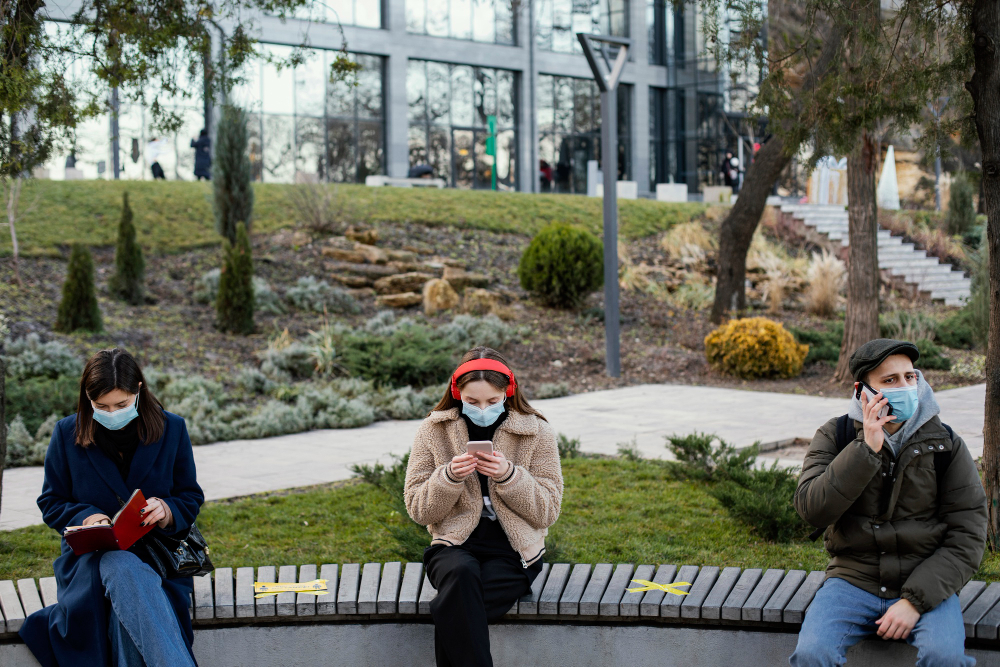
Public benches are often viewed as an afterthought. However, I saw how their placement close to transit hubs and under tree canopies in Pittsburgh dramatically changed how people used downtown areas. They lingered, read, and shared meals rather than merely sitting. Unexpectedly large behavioral changes are frequently unlocked by minor design changes.
Access to green space has become a civic necessity in light of post-pandemic stress and urban burnout. Research on mental health trends in Toronto supported the widespread belief that living close to biodiverse parks greatly lessens psychological stress. Being in nature has therapeutic benefits in addition to being calming.
Access is still uneven, though. The lack of accessible green spaces or shaded streets in low-income neighborhoods subtly exacerbates already-existing health disparities. When infrastructure is integrated with urban injustice, it becomes deeply ingrained and imperceptible. More than money is needed to address it; empathy in the form of a blueprint is required.
California’s Fontana provides a striking illustration. The city has significantly improved its public health outlook by incorporating wellness into its zoning strategy, such as limiting the density of fast food near schools and increasing the number of shaded pedestrian corridors. These were not ostentatious maneuvers. They were listening-based, pragmatic corrections.
During a recent stroll through Tampa’s WELL-certified district, I noticed that the design promoted a slower, more deliberate pace. It appeared that every crosswalk, bench, and planter anticipated how people would feel at the end of the day. The sidewalks provided pause and perspective in addition to connecting destinations.
Working remotely during the pandemic changed how we relate to physical space. This made it clear to many how important it is to live in areas that replenish rather than deplete. Everyday resilience—or lack thereof—is reflected in the built environment. Cities like Paris have responded by reorienting development to prioritize quieter neighborhoods, pedestrian access, and public terraces.
Another subdued but incredibly powerful intervention is sound design. For example, in some airport terminals in San Francisco, “audio wellness zones” are created where soothing forest sounds are used to replace noise pollution. These design decisions demonstrate how even intangible stressors can be improved through engineering.
In urban life, mobility continues to be the most obvious manifestation of freedom. Traveling around Zurich feels almost orchestral because train schedules blend in perfectly with tram and pedestrian traffic. On the other hand, cities with disjointed systems frequently ensnare their residents in delays and frustration. There is a real and avoidable psychological cost associated with ineffective transportation.
Looking ahead, the role of cities in shaping health will only intensify. Already, urban developers are partnering with healthcare networks to build hybrid spaces that double as fitness parks, nutrition hubs, and wellness centers. In Los Angeles, one such pilot combines telehealth kiosks with shaded seating and movement prompts. Public space is becoming personalized care.
I ascended a staircase that wound through a vertical herb garden while I was in Seoul. It was made for mood rather than speed. I observed how the aroma of basil and rosemary gently eased my day’s weariness with every step. I remembered the moment because of its purpose rather than its size.
Cities are not becoming more robotic by incorporating technology that responds to human needs in real time, such as responsive shade, intelligent signage, or dynamic lighting. They’re growing more conscious. The smartest cities are the ones that listen the best, not the ones that compute the most.
Even abandoned industrial zones are being reclaimed as social assets through deliberate planning and community involvement. A former railroad yard in Paris was converted into a linear park featuring edible gardens and cultural installations. It turned into a space of happiness, movement, and recollection—a real-life extension of the imagination.
Urban design isn’t just about where things go. It has to do with how individuals feel as they pass through them. A truly supportive city doesn’t just get you from A to B—it gives you something along the way. A moment of rest. A bit of shade. A stranger’s smile on a shared bench.
For cities facing rapid growth and limited resources, the temptation is often to build up quickly. But those that pause to consider how design shapes emotion, memory, and health will ultimately build more than just infrastructure—they’ll build belonging.
From shaded sidewalks in tropical climates to intentionally noisy plazas in Northern Europe, every design speaks. The ones that speak kindness, flexibility, and care are quietly rewriting what it means to live well.