

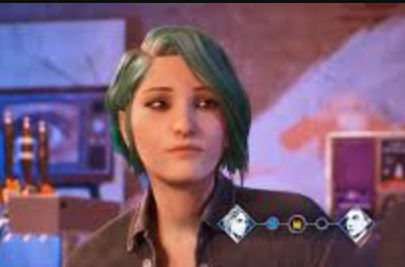
When Life Is Strange first asked players to choose between saving a person or saving a town, it was a moment of genuine narrative gravity. The stakes were high, the emotions immediate, and for many, Chloe Price—loud, broken, loyal—was the anchor that made that decision nearly impossible. Sacrificing Arcadia Bay to save Chloe felt selfish but real; letting her die for the greater good felt noble but unbearable. That was the point.
Now she’s back.
The reveal that Life Is Strange: Reunion will reintroduce Chloe Price in the wake of Double Exposure feels, at best, narratively complicated. At worst, it undermines the emotional finality the first game so carefully constructed. Max’s return already pushed against the idea that the first game’s ending was supposed to mean something permanent. Now, with Chloe reinserted via multiversal sleight-of-hand, the threads feel loose—more marketable than meaningful.
Key Factual Context Table
| Title | Life Is Strange: Reunion |
|---|---|
| Developer | Deck Nine Games (following Double Exposure) |
| Timeline Connection | Follows events of Double Exposure |
| Returning Characters | Max Caulfield, Chloe Price |
| Mechanic Introduced | Parallel timelines rather than time rewind |
| Canon Status | Direct sequel to Bay/Bae ending of original game |
| Release Timeline | TBD (Announced after Double Exposure) |
| Criticisms Raised | Canon inconsistency, character erosion, nostalgia overuse |
| External Link | Official Site |
Part of the tension comes from how Double Exposure treated Chloe’s absence. If she had died, the game allowed Max to mourn—quietly, ambiguously, but respectfully. If Chloe had lived, the game hand-waved their relationship away in a dismissive shrug: they broke up, things moved on, and Max now has other love interests to explore. That kind of tonal dodge might work in slice-of-life fiction. But Life Is Strange built itself on the weight of decisions. Reducing that choice to a minor footnote felt strikingly unearned.
Reunion seems poised to undo even that uneasy compromise. Max’s new ability—less rewind, more cross-dimensional drift—gives writers the tool to bring Chloe back without committing to a single timeline. It’s clever on paper, but narratively risky. In a medium where player choice is sacrosanct, bringing Chloe back without clarity about which version is real, or what choices still matter, erodes the trust that made the original game so emotionally gripping.
When I first saw the teaser of Chloe gazing into the eerie horizon—older now, quieter but still recognizably herself—I felt something unexpected: not joy or even nostalgia, but hesitation.
We knew these characters best in their teenage state of beautiful disarray. Chloe was the chaos to Max’s order, the cigarette smoke in the classroom, the bang of a slamming car door, the clumsily uttered “hella” that became a badge of fandom pride. Watching her return as a grown woman—still perhaps rough around the edges, but reshaped for modern sensibilities—raises a hard question: can you age a character like Chloe without diminishing her spark?
In Double Exposure, that very question already loomed over Max. Her dialogue often straddled the line between mature reflection and diluted mimicry. The awkward Gen Z phrasing of the original game was no longer cute—it was brittle, misplaced. Chloe risks a similar fate in Reunion. If she talks like she used to, it may feel like cosplay. If she doesn’t, it may feel like betrayal.
Even deeper, there’s the looming sense that Chloe’s return isn’t being written for Chloe, or Max, or even the story. It’s for us—for the people who tweeted #BaeOverBay, who wrote fanfic, who bought the vinyl soundtrack and pinned a Polaroid to their bedroom wall. Chloe has become a kind of mascot. But she was never meant to be safe, or soft, or eternal. Her death meant something because it was one of the few narrative deaths players actively chose.
Now that meaning feels at risk.
Of course, I understand the appeal. Reuniting Max and Chloe is bound to excite. There’s comfort in seeing old friends again, even if they’re digital. The soundtrack will be moody and perfect. The environment will glow with painterly detail. There may even be genuine moments of connection, the kind that Life Is Strange still manages better than most. But will it feel earned?
More concerning is the pacing. The proximity between Double Exposure and Reunion raises questions. Was this always the plan? A narrative diptych designed to lure fans with Max before springing Chloe as the final hook? Or is it damage control, a pivot to nostalgia after lukewarm reception? Either scenario risks transparency. And transparent storytelling—storytelling that feels more like strategy than art—is where great characters go to die.
Chloe Price did not ask to be immortal. Her entire arc was about impermanence—loss, recklessness, being left behind. Giving her a second or third life in new timelines might be mechanically justified, but emotionally it’s dissonant. Even in fiction, some ghosts shouldn’t be disturbed.
The strength of Life Is Strange was never in its mechanics. It was in its gut. The moments that linger—Max clutching her camera, Chloe scribbling in her notebook, a storm threatening everything—worked because they mattered. They were tethered to consequence. Reunion’s greatest risk is that it untethers everything.
I hope I’m wrong.
I hope the game finds a way to balance reverence with reinvention. I hope Chloe’s return adds depth, not dilution. But with each new installment that rewrites, reframes, and retcons, the original narrative becomes harder to hear beneath the static. Reunion may reunite Max and Chloe, but it might also finally separate them from the story that made us care.