

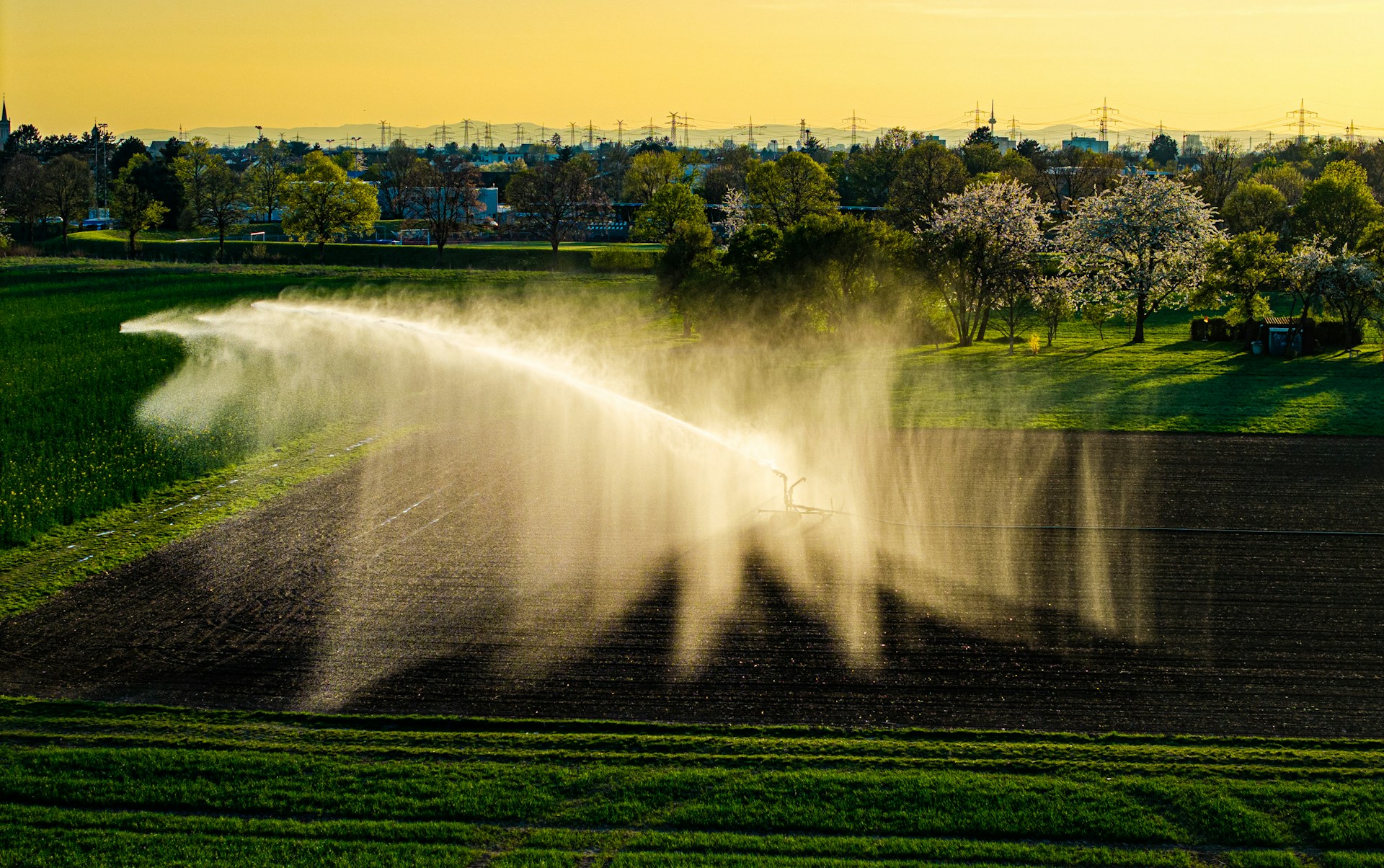
The irrigation industry stands at a technological inflection point. After six decades of relative stasis, the sector is experiencing accelerated transformation driven by water scarcity, smart technology adoption, and evolving contractor business models. Market analysts project the global smart irrigation sector will expand from $2 billion in 2025 to $5.8 billion by 2034, representing a 12.68% compound annual growth rate.
This rapid evolution isn’t happening in boardrooms alone. It’s unfolding in contractor operations and online forums where industry professionals share real-world experiences. Recent discussions, from irrigation companies like Irrigreen, provide ground-level perspective on how these trends are manifesting in daily operations.
1. The Contractor Business Model Is Fundamentally Shifting
The irrigation contractor profession is experiencing its most significant structural change since the 1960s. According to the 2025 Green Industry Outlook survey, 44% of contractors reported increased demand in 2025, up from 34% the previous year. More significantly, 57% saw increased demand specifically for smart irrigation systems.
This demand surge is forcing contractors to reconsider business models built around parts proliferation. Traditional pricing calculated profit through material markup on installations requiring 40 to 50 spray heads per property. Precision digital systems typically need six to eight heads for equivalent coverage, fundamentally altering the revenue equation.
Industry professionals report that typical residential installations now take one to two days with precision systems compared to three to four days for traditional multi-head installations. The compression happens across trenching, component installation, and testing phases. Contractors completing jobs in two days instead of four effectively double their crew capacity.
Successful contractors are reconceiving profit around time efficiency rather than parts count. The same team can complete ten precision installations per month versus five traditional installations, distributing fixed overhead across more jobs while potentially increasing annual revenue with identical payroll.
One contractor comparing the approaches noted that installing nine precision heads versus 40-plus traditional heads represents significant efficiency gains. Total material expense often matches traditional installations once all pipe, fittings, valves, and wire are factored. Labor savings prove unambiguous.
2. Water Conservation Moves From Optional to Mandatory
Regional water scarcity is transitioning from environmental concern to economic constraint. Western U.S. states facing chronic drought are implementing strict outdoor water use regulations. California, Arizona, Nevada, and Texas, where outdoor irrigation accounts for 50 to 70% of summer residential water consumption, see both regulatory pressure and homeowner demand driving high-efficiency adoption.
Municipal utility rebate programs amplify this trend. Several cities offer financial incentives for precision irrigation, recognizing that subsidizing residential efficiency costs less than infrastructure expansion. These rebates sometimes cover several hundred dollars per installation.
Independent university testing validates savings claims. The Center for Irrigation Technology at Fresno State found precision digital systems used roughly half the water of conventional sprinklers while maintaining equivalent soil moisture and turf health. For average households, that translates to 15,000 to 30,000 gallons saved annually.
Industry leaders in digital irrigation track water savings across their installed base, with some companies reporting hundreds of millions of gallons conserved, equaling the annual water consumption of thousands of households. This data-driven approach validates environmental benefits while helping homeowners tangibly see their conservation contribution.
3. Smart Home Integration Becomes Table Stakes
Modern irrigation systems increasingly function as components within broader smart home ecosystems. Voice activation through Amazon Alexa, Apple HomeKit compatibility, and mobile app control have shifted from premium features to baseline expectations, particularly among homeowners under 45.
This extends beyond remote control. Modern systems incorporate weather forecasts, automatically adjusting or skipping watering based on precipitation, temperature, and humidity. Unlike traditional timers running blindly through storms, weather-responsive systems only water when conditions warrant, eliminating the wasteful scenario of sprinklers activating during rainstorms.
Advanced systems from providers like Rachio, Hunter Industries, Rain Bird, and emerging digital irrigation companies combine multiple data inputs, pulling weather history for specific geographic coordinates and comparing water amounts since the last schedule. The systems then adjust up or down based on actual conditions rather than assumptions.
These platforms also examine zone-level characteristics including grass type, sun exposure, and soil conditions. These factors feed into calculations determining water needed, what was consumed by the turf, and what was lost due to evaporation. Users can adjust system sensitivity at master or zone levels, customizing based on goals ranging from maximum water savings to optimal lawn health.
This sophisticated automation appeals to tech-oriented homeowners already managing lighting, thermostats, and security through centralized platforms. The seamless integration makes smart irrigation a natural extension of the connected home rather than requiring a separate management system.
4. The DIY Installation Market Expands
Professional installation has traditionally dominated due to system complexity, trenching requirements, and technical knowledge needed for proper setup. That’s shifting dramatically. The introduction of smaller, more affordable systems and comprehensive DIY kits has lowered entry barriers for residential users willing to invest time rather than professional labor fees.
Approximately 50% of some digital irrigation installations are now completed by property owners rather than professional contractors, according to industry discussions. This DIY adoption rate would have been unthinkable with traditional multi-head systems requiring extensive trenching and complex zone balancing.
The dramatic component reduction makes owner installation feasible: six to eight heads versus 40-plus simplifies both physical work and design challenges. Mobile app-based design further democratizes installation. Homeowners can trace property boundaries using satellite imagery, designate no-spray zones like patios and driveways, and generate installation plans without specialized training. Apps guide placement decisions, showing predicted coverage areas and identifying optimal installation points.
Industry veterans note that reduced infrastructure drives DIY accessibility. Using approximately 80% less trenching compared to traditional systems dramatically reduces installation time and complexity. Less digging equals less time to install and fewer opportunities for errors.
This DIY trend creates complex dynamics for contractors. It represents potential revenue loss as homeowners self-install systems contractors would traditionally provide. However, it also expands the total addressable market by making irrigation accessible to price-sensitive customers who would otherwise continue manual hose watering. Many DIY installers become future service customers when troubleshooting or expanding systems.
5. Agricultural Technology Cascades to Residential Markets
Agricultural irrigation innovations are cascading into residential landscaping as costs decline. Soil moisture sensors, once exclusively agricultural tools costing thousands, are becoming affordable for residential use. Integration with smart controllers enables truly responsive watering based on measured conditions rather than calculations alone.
The global smart irrigation market projection of $4.86 billion by 2032 reflects this technology transfer. IoT-powered systems enable data-informed water management across farms and urban landscapes. Connectivity protocols including LoRaWAN, NB-IoT, and 5G ensure reliable real-time data flow.
Artificial intelligence and machine learning are making irrigation predictive rather than reactive. AI systems analyze historical weather patterns, soil conditions, and plant types to predict optimal watering times. These adaptive schedules improve efficiency over time as systems learn from data. Industry experts suggest predictive irrigation can reduce consumption by up to 50% compared to fixed-schedule systems.
6. Labor Challenges Drive Technology Adoption
The irrigation sector faces persistent labor challenges. According to industry surveys, while more contractors report finding adequate workers in 2025 (37%) versus 2024 (29%), availability remains constrained. Technology adoption helps contractors accomplish more with existing crews through fewer components, simplified maintenance, and remote diagnostics.
Training requirements compress with digital systems. New crew members contribute productively faster than mastering traditional overlap patterns. Industry professionals note that the level of mechanical skill required for precision installations is relatively low. The work primarily involves straightforward plumbing tasks, no electrical expertise for systems with plug-and-play cables, and mobile apps handle the complex design work that traditionally required years of experience.
7. Manufacturing Reshoring Gains Momentum
Supply chain disruptions during 2020-2022 exposed overseas manufacturing vulnerabilities, prompting irrigation technology companies to reshore production. Recent U.S.-based manufacturing announcements in the Midwest represent this trend toward domestic capability, aligning with broader manufacturing reshoring movements affecting multiple industries.
Reshoring offers advantages beyond supply chain resilience. Reduced shipping distances lower carbon footprint and costs. Proximity to engineering teams facilitates rapid prototyping and quality control. Domestic production responds quickly to market feedback, allowing faster incorporation of contractor input.
Trade policy uncertainty regarding potential tariffs makes domestic manufacturing economically predictable. Companies can control costs and avoid supply chain price shocks that plagued overseas production.
This strategy also creates marketing differentiation. “Made in USA” appeals to customers valuing domestic production, supports local employment, and aligns with sustainability messaging by reducing international shipping impact.
Case Study: How One Digital Irrigation Company Embodies These Trends
Irrigreen, a Minnesota-based precision irrigation technology company, provides a concrete example of how these seven trends manifest in practice.
Contractor Model Evolution: John Brine, Vice President of Operations at Irrigreen, recently conducted a Reddit AMA with irrigation professionals. “Contractors report typical residential installations taking one to two days with precision systems compared to three to four days for traditional multi-head installations,” Brine explained. This efficiency stems from 80% less trenching, fewer components, and simplified testing.
Water Conservation Data: Irrigreen tracks water savings across installations, reporting over 500 million gallons conserved, equaling the annual consumption of approximately 4,000 households. This data validates conservation claims while helping homeowners justify investment.
Smart Integration: During a separate discussion, Brine detailed how systems pull weather history and compare water amounts since the last schedule, adjusting accordingly. The system examines zone characteristics including grass type, sun exposure, and soil type to calculate needs and losses.
DIY Adoption: “Over the past 4 years we have seen a really high mix (at times up to 50%) of DIY’ers taking on their irrigation projects,” Brine noted. “This is largely due to the simplicity of the design… The fact that we use on average 80% less trenching is a huge factor.”
Technical Accessibility: Addressing labor challenges, Brine emphasized: “The level of mechanical skill that is required is pretty low… No electrical experience required… Simple plumbing tasks… The mobile app takes the rest.”
Domestic Manufacturing: In August 2025, Irrigreen announced Wisconsin manufacturing for third-generation heads incorporating contractor feedback: horizontal inlets, enhanced SmartRinse technology, and modular construction enabling tool-free servicing.
Contractor Support: The Pro Select Partner Program expanded to all 50 states and Puerto Rico with fivefold year-over-year growth, providing technical support, marketing funds, and remote design tools.
Companies like Irrigreen demonstrate how precision irrigation innovators simultaneously address multiple industry trends, creating both disruption and opportunity as the sector transitions from traditional to digital technology. While different manufacturers approach these challenges through varying technological strategies, the core objectives of water conservation, contractor efficiency, and homeowner accessibility remain consistent across the industry.
Industry Outlook: Convergence Ahead
These trends are converging toward a transformed irrigation industry. Water scarcity will intensify, making efficiency mandatory. Smart home integration will deepen. Labor constraints will persist. DIY markets will expand.
Contractor businesses adapting to emphasize time efficiency position themselves for sustainable growth. The market has spoken through growth rates: smart irrigation expanding at 12.68% CAGR while traditional grows at roughly half that pace.
For homeowners, these trends translate to improving technology at declining costs, expanding installation options, and growing financial incentives. The equation increasingly favors precision systems that reduce water bills and maintenance while potentially increasing property value.
The irrigation industry’s 60-year stasis has ended. The question for remaining holdouts isn’t whether precision irrigation will displace traditional methods, increasingly, that appears inevitable, but rather how quickly individual contractors and manufacturers will adapt their business models to capitalize on the efficiency advantages.
After six decades of mechanical sprinklers, the industry is evolving. Water scarcity isn’t going away, and the technologies being developed to address it continue to advance rapidly.