

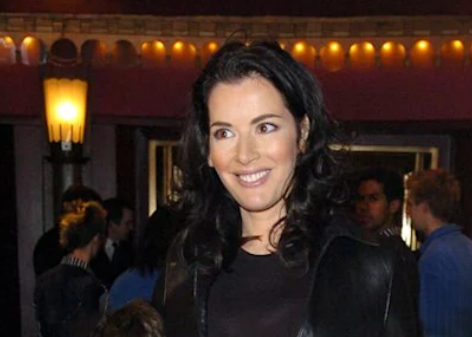
At one point, she made the almost belligerent statement that inherited riches might cause more harm than good. For someone who is typically associated with luxury, it was a comment that many found quite daring. However, Nigella Lawson has always struck a balance between extravagance and purpose, even in the midst of clementines and whipped cream.
Discussions about Nigella have subtly resurfaced in the weeks after she was announced as the next judge on The Great British Bake Off. However, this goes beyond simply changing careers or setting up a baking tent. It tells the story of a public figure who has changed throughout time while maintaining a remarkable consistency in her principles.
Nigella Lawson – Key Biographical Context
| Full Name | Nigella Lucy Lawson |
|---|---|
| Date of Birth | January 6, 1960 |
| Nationality | British |
| Profession | Food writer, TV chef, author, presenter |
| Career Start | Debut cookbook “How To Eat” (1998) |
| TV Highlights | “Nigella Bites”, “Nigellissima”, “Cook, Eat, Repeat” |
| Family | Two children: Cosima (32), Bruno (29) |
| Recent Role | New judge on The Great British Bake Off |
| Reference | www.bbc.co.uk/food/chefs/nigella_lawson |
Nigella converted intellectualism into emotional appeal by drawing on her literary experience. Her food writing captures settings, rituals, and moods rather than just recipes. She was recounting late-night pantry raids and lonely pasta bowls with the intimacy of a diary long before it was trendy to associate food with emotion.
Her father was Chancellor of the Exchequer, therefore she was raised in a politically charged atmosphere that could have easily led to a life of inherited expectations. Rather, she created a voice that was remarkably intimate. Her first book “How To Eat” signified not only a technique but a way of thinking: to take sensory detail seriously and to use food to recover little moments.
Many people rediscovered Nigella during the pandemic thanks to inadvertently amusing clips, such as her now-famous pronunciation of “microwave.” Beneath the memes, however, was a deeper realization: long before digital culture caught up, she had been giving people a sense of being seen and fed.
However, she took care to protect her private life. Cosima and Bruno, her now-adult children, were brought up out of the spotlight. They had not selected this visibility, she clarified, emphasizing quietly. This deliberate seclusion felt particularly intentional, a parenting style that valued independence above exposure.
She kept a personal distance that many public figures find difficult to establish by making calculated decisions. Her daughter’s statement, “It’s better to be a real person,” struck her as both a reflection and a source of support. In an interview, Nigella reiterated the quotation, letting it convey years of self-control, grief, and repressed love.
She seldom ever solicited sympathy after her first husband, John Diamond, passed away from throat cancer in 2001. Rather, she incorporated that sorrow into her voice, which was distinctly textured but never maudlin. She continued to work, write, and eat. It was especially remarkable that she insisted on going despite her lack of performative resilience.
Nigella’s path is especially creative for aspiring food media personalities and early-career chefs. She joined kitchens via writing, mood, and recollection rather than through dining establishments or strict training. This helped to create a brand that is still remarkably adaptable and works well on stage, TV, or in print.
Some wrote off her argument that she shouldn’t leave her kids with a financial buffer as bluster. She added, however, that they would have to fend for themselves after finishing their schooling. It was not a performative notion of personal responsibility. Her recipes also reflected this, encouraging involvement more than perfection.
According to reports, the Chelsea mansion she currently resides in was originally stables, which subtly complements her aesthetic of practical reinvention placed on top of home comfort. Despite being well planned, her public appearances never seem forced. She hardly ever acts happy. She just lets it come out.
There is minimal chance that she will imitate Prue Leith as she gets ready to take her position on Bake Off. Nigella has a slower, more reflective tempo. Her criticisms will probably sound less like evaluations and more like encouragements. However, by incorporating emotional intelligence, she will probably enhance the show’s ambience rather than merely embellish it.
Bake Off is evolving, but it goes beyond just bringing in a famous person. It’s inviting a person who has spent decades teaching others how to discover clarity, warmth, and comfort without striving for perfection.