

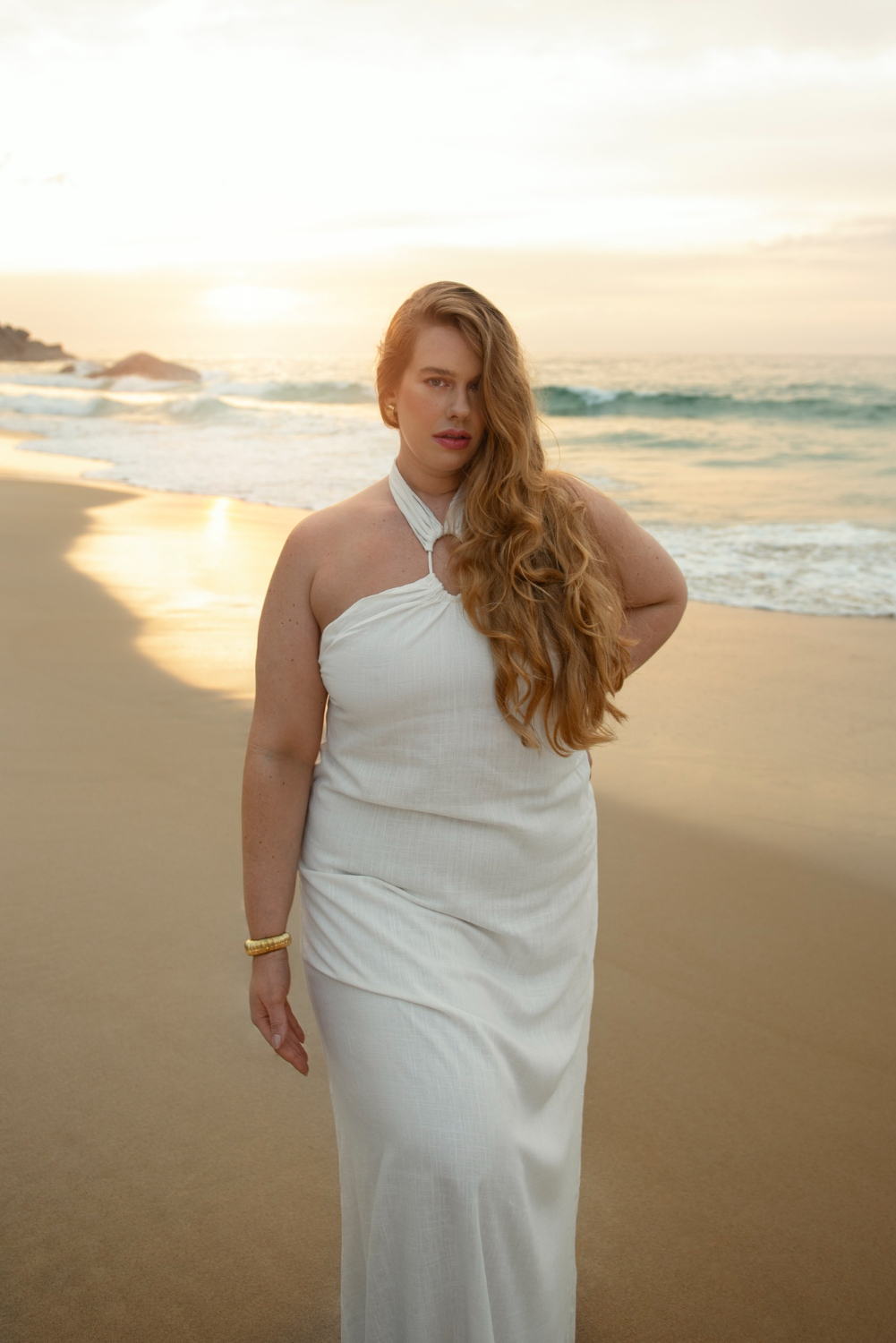
I once stood outside a changing room while a friend emerged holding three dresses and wearing the same tight smile. “They don’t make clothes for real people,” she muttered, half joking. The dresses weren’t terrible. They simply weren’t made with her proportions in mind. The disappointment wasn’t loud. It was tired.
For many searching for a plus size wedding dress carries that quiet fatigue.
The first shift that changes everything is learning to treat the label as irrelevant. Sizes vary wildly between brands. A 16 in one store may resemble a 20 in another. The number stitched into the seam tells you nothing about how the garment will sit on your shoulders or skim your hips. What matters is proportion — how the dress aligns with your actual shape.
Trying on multiple sizes of the same style can feel humbling at first, but it is practical. A slightly looser fit that can be tailored often looks more refined than a dress that clings out of stubborn loyalty to a number. Once you detach from the label, shopping becomes analytical rather than emotional.
Silhouette deserves more attention than trend.
Certain shapes are often recommended for curvier bodies — A-line, wrap, empire waist — and for good reason. They offer structure without rigidity. But advice becomes limiting when it hardens into rule. The real test is movement. Can you sit without tugging at the hem? Can you raise your arms comfortably? Do you feel balanced when you walk?
The right silhouette doesn’t hide curves; it respects them.
Fabric is another quiet determinant. Stretch blends offer flexibility and comfort. Heavier materials create smoother lines and prevent clinging. Lightweight fabrics may look elegant on a hanger but behave unpredictably once worn. I have watched women fall in love with a colour only to abandon it because the fabric refused to cooperate.
The difference between confidence and self-consciousness can be a quarter-inch of lining.
Special occasions intensify everything. Weddings, milestone birthdays, formal dinners — they carry emotional weight. When searching for a plus size wedding dress or a gown for a black-tie event, the stakes feel higher. Support, structure, and secure fastenings matter as much as design. You want to focus on the ceremony, not whether the bodice will shift when you sit.
I remember attending a wedding where a guest adjusted her strapless gown every few minutes, and I couldn’t help noticing how much of her evening was spent negotiating with fabric rather than enjoying the celebration.
Group dressing adds another layer. Bridesmaid scenarios, coordinated family portraits, formal galas — these moments can feel restrictive if flexibility is absent. A shared colour palette or fabric creates cohesion, but allowing variations in neckline, sleeve length, or waist detail makes a world of difference. When choosing plus size bridesmaid dresses, adaptability often determines whether the experience feels inclusive or merely compliant.
Tailoring, meanwhile, is underappreciated.
There is a persistent belief that a dress should fit perfectly off the rack. In reality, tailoring is a refinement tool. Hemming a skirt to the right length, adjusting straps, subtly shaping the waist — these alterations transform garments from acceptable to personal. Budgeting for adjustments is not indulgent; it is practical.
Environment shapes the experience more than we admit. A spacious fitting room, a supportive friend, a sales assistant who understands proportion — these details ease tension. Conversely, poor lighting and cramped spaces can distort perception and confidence alike.
And then there are the finishing touches.
Undergarments provide foundation, literally. The right support improves posture and silhouette. Shoes alter balance and hemline. A jacket or statement necklace can shift a simple dress into something distinctively yours. Styling is not about distraction; it is about completion.
Ultimately, dress shopping should return to its original purpose: self-expression. Trends will continue to shift. Cuts will evolve. But comfort paired with authenticity remains constant. A dress that allows you to move freely, breathe deeply, and stand upright without second-guessing is doing its job.
When that alignment happens — fabric, fit, feeling — confidence arrives quietly.
And it stays.