

Thirty years of data analyzed by researchers from Harvard University and the U.S. Department of Treasury yielded a striking conclusion: young people who participated in structured mentorship programs earned 15% more between the ages of 20 and 25 than peers who lacked such guidance. The income patterns of these mentored youth tracked more closely with those of their mentors than with their own families—a finding that suggests mentorship can reduce the socioeconomic gap by roughly two-thirds.
Big Brothers Big Sisters of America released the study in January 2025, revealing additional findings: mentored youth were 20% more likely to attend college and demonstrated better school attendance and behavioral outcomes within 18 months of entering a program. With program costs averaging $2,000 to $3,000 per participant annually, the researchers calculated that governments could recover their investment within seven years through increased tax revenue from higher lifetime earnings.
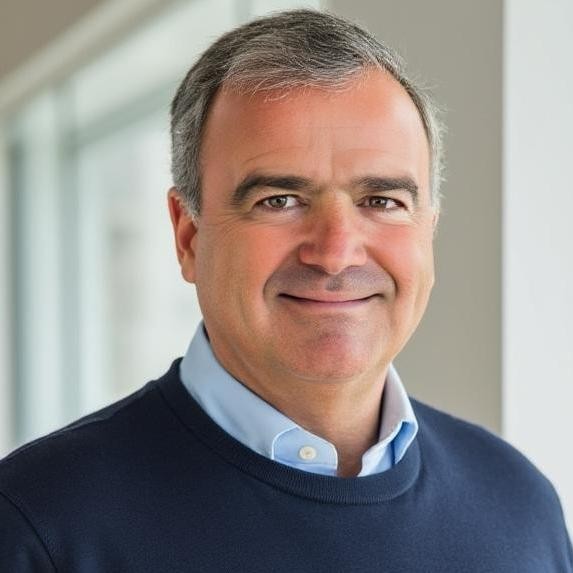
JP Conte, managing partner of family office Lupine Crest Capital and former leader at a San Francisco-based private equity firm, has built much of his philanthropic work around these same principles. His involvement with Sponsors for Educational Opportunity (SEO) Scholars extends beyond financial contributions to hands-on engagement with students considering careers in finance.
“I go to New York every year to give a presentation about private equity to SEO students, showing them that they, too, can have a future in this industry,” Conte has shared.
The Hidden Barrier That Achievement Alone Cannot Overcome
Academic credentials and raw talent take students only so far. For first-generation college students and those from households without professional networks, an invisible obstacle often blocks advancement: they don’t know what they don’t know about workplace expectations, career navigation, and professional norms.
JP Conte understands this barrier from experience. Raised in Brooklyn and New Jersey as a first-generation American, he was the first in his family to earn a college degree. His father, Pierre, had fled France following the Nazi occupation and found work as a tailor and clothing salesman serving Wall Street clients. Those professional relationships created unexpected opportunities for the younger Conte.
“They gave me internships, mentoring, good advice, and it really helped close the information gap, which exists when your parents don’t go to college or aren’t on that track,” Conte has explained.
For students without such fortunate connections, mentors can provide what researchers describe as surrogate professional guidance—offering the career context and workplace wisdom that more privileged peers absorb at family dinner tables.
Starting Early Produces Better Results
The Harvard-Treasury study tracked youth who entered mentoring relationships between ages 10 and 14, following them into adulthood through linked tax records. The longitudinal approach confirmed what JP Conte had concluded through his own charitable work: intervention at the college level often comes too late to reshape trajectories.
“A light went off, and I said, ‘By the time the student gets to university, especially some of these universities, they’re now focused on the money issue.’ And I came to the conclusion that I need to start sooner, in high school or earlier, to really help change the trajectory,” Conte has recalled.
His work with SEO Scholars addresses this timing problem directly. The program enrolls students in eighth or ninth grade and supports them through college graduation—an eight-year commitment that yields a 100% college acceptance rate and an 85% graduation rate, compared to approximately 20% among demographically similar students nationally.
Participants receive more than 600 additional hours of academic instruction through after-school sessions, Saturday classes, and summer programming. But the academic component represents only part of the value. One-on-one mentorship from college advisors and working professionals exposes students to career possibilities and professional expectations that might otherwise remain invisible.
“These are kids who, voluntarily in eighth grade, agree to go into this program and do after-school work, work on Saturdays, work during the summer, and extra tutoring to supplement their public school education,” Conte has said. “Plus, they agreed to mentoring to get them to go to college.”
Returns That Compound Over Careers
The research from Harvard and Treasury carries weight beyond individual philanthropy. For employers contending with talent shortages and high turnover, mentorship programs produce quantifiable results. MentorcliQ’s analysis found that 98% of Fortune 500 companies now maintain formal mentoring programs, and those companies report median profits more than double those without such initiatives.
Retention numbers reinforce the pattern. Millennials with mentors stay with their employers at twice the rate of those without—68% remain beyond five years, compared to 32% of unmentored peers. Among Gen Z workers, 83% consider workplace mentorship important for their careers, yet only 52% report having access to a mentor.
JP Conte brings the same operational discipline to his charitable endeavors that defined his decades in private equity. When SEO Scholars in the Bay Area struggled with limited reach, he advocated for leadership changes that transformed the organization’s capacity.
“We multiplied the number of students served in the Bay Area by five to seven times,” Conte has noted. “A lot of nonprofits aren’t run crisply.”
The Conte First Generation Fund, which he established at 11 universities including Colgate and Harvard, extends this approach by combining financial support with mentorship resources for students whose backgrounds mirror his own.
The Harvard-Treasury researchers estimated that mentored youth would accumulate roughly $56,000 in additional lifetime earnings compared to their unmentored counterparts. For J-P Conte, that figure captures something he witnessed long before economists quantified it: the accumulated weight of doors opened, advice offered, and futures redirected.
“I’ve always felt the need to give back when I achieved a certain amount of resources and wealth and opportunity to help others,”Conte has said.