

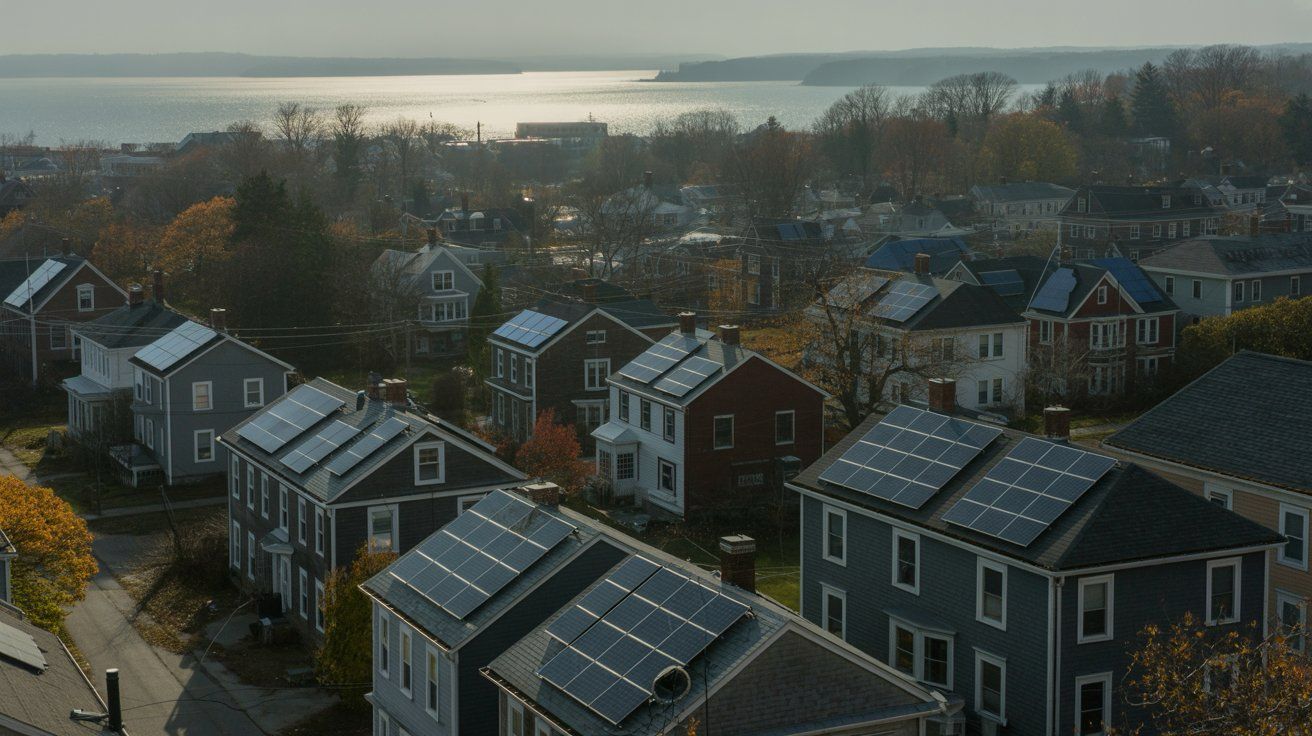
The house in Westbrook had been in the family for 40 years. Three layers of wallpaper, two generations of plumbing patches, and no insulation in the attic. The family was spending about $2,800 a year on heating oil and had applied for weatherization assistance through a local agency nine months earlier. They were still waiting.
Yehuda Gittelson found out about the house through Warm Homes Maine, the weatherization volunteer program he’s worked with since moving to Portland. He spent a Saturday in early March air-sealing around the attic hatch, caulking window frames, and adding weatherstripping to the exterior doors. “You could see daylight through the threshold of the back door,” he said. “It wasn’t subtle. And these folks had been on a waiting list for most of a year.”
Maine is the most heating oil-dependent state in the country. Fifty-two percent of households rely on fuel oil as their primary heat source, a figure that climbs considerably in rural counties. A house built in the 1940s uses roughly 800 gallons of oil per winter, costing about $2,800 a year at current prices. Low-income households that heat with oil and propane bear a heating burden of nearly 10 percent of income, among the highest in any national analysis.
The state aims to weatherize 35,000 homes and businesses by 2030. MaineHousing’s Weatherization Assistance Program provides grants for insulation, air sealing, window and door replacement, and heating system improvements for income-eligible households. The Home Energy Assistance Program (HEAP) helps cover heating costs directly. More than 45,000 Maine households received HEAP payments in 2025, totaling about $23 million. WAP serves far fewer, because weatherization requires contractors, inspectors, scheduling, and physical installation, a more resource-intensive process than direct bill assistance.
The distinction is where the policy conversation goes quiet. “The energy policy discussion tends to focus on targets,” Gittelson said, “but the target number doesn’t tell you much about the waiting list. People are on there for months. And some of those houses, every month matters.” Fuel assistance covers a portion of a household’s heating costs this winter. Weatherization reduces what it spends every winter after that. Comprehensive weatherization cuts energy bills by 20 to 40 percent, which for an oil-heated Maine home translates to $1,200 to $1,600 in annual savings. Households on heating assistance tend to remain on it. Households that get weatherized often come off the list.
The contractor capacity problem compounds the backlog. Efficiency Maine, which administers major weatherization incentive programs statewide, reported average wait times close to three months as demand for services outpaced the supply of certified contractors. The Central Heating Improvement Program, which provides emergency assistance for failing heating systems, was unfunded as of mid-2025. The weatherization contractor workforce faces the same hiring constraints as the broader clean energy trades, a point that rarely surfaces in the program-level policy conversation.
Housing stock makes the work harder. Most homes in greater Portland were built between the 1940s and 1970s, when energy was cheap, and building codes didn’t address thermal performance. Older construction presents more complex air-sealing challenges than new builds and often requires more diagnostic work before improvements begin. Volunteer programs like Warm Homes Maine handle simpler measures, such as air sealing, weatherstripping, and accessible insulation. Major envelope work, basement insulation, blown-in wall insulation, and full attic remediation require a licensed contractor and a program slot.
Gittelson has done enough volunteer visits to develop a rough sense of what he’ll find. Attic bypasses around plumbing chases, open soffits pulling cold air into living spaces, and weatherstripping worn through over the years. “The houses that need the most work are almost always the ones where the people inside have the fewest options,” he said. “They’re not calling a contractor. They’re wearing extra layers and hoping the furnace makes it through February.” He’s seen the same pattern in Washington County as in Portland, the same deferred maintenance, the same gap between what the house needs and what anyone has come to do.
Maine’s 35,000-home goal implies roughly 4,400 weatherizations per year starting in 2024. Whether contractor capacity can support that pace is the same workforce math constraining solar, though the housing stock problem is older and the energy burden more concentrated. Federal weatherization funding has fluctuated, and the programs that rely on it have had to manage expansion and contraction simultaneously.
“Solar gets the attention because it’s new,” Gittelson added. “Weatherization has been around forever. People assume it’s been handled. A lot of it hasn’t.”