

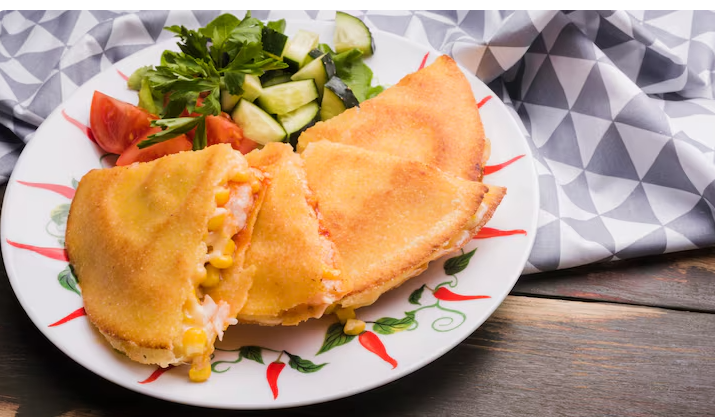
There is a certain kind of news that hits Chicago Costco members harder than national economic stories ever could, and the quiet disappearance of the combo calzone from food courts across the city is one of those stories. As of mid-May 2026, the warehouse club has begun phasing out its $6.99 calzone in favor of a new menu item that has been tested for years in international markets. offered by the bucket of crispy, breaded chicken strips. It was five. On the side, honey mustard. Same $6.99 price point. The shift is especially noticeable in Chicago, where Costco has decided to conduct one of the most well-known domestic trials of the new product. Whether the rest of the country eventually follows depends, as it usually does, on what members in Lincoln Park, Niles, and Oak Brook think after a few months of eating it.
The calzone never quite found its footing, and the reasons are not entirely mysterious. When Costco discontinued its supreme combination pizza a few years ago, a casualty of pandemic-era operational simplification, members were genuinely upset. The combo pizza had been one of those small, beloved details of the Costco experience that members talked about with the kind of brand loyalty most chains would pay millions to manufacture.
The calzone was meant to fill that gap. It did so awkwardly. The ratio of dough to filling felt strange. The microwave reheat quality at home was unimpressive. Although tasty, the flavor profile never generated the same level of devotion as the combo pizza. After trying it and eating it, members discreetly returned to the rotisserie chicken section.
In contrast, the new chicken strips are coming to Chicago with a lengthy history of success abroad. For many years, breaded chicken strips have been available at Costco warehouses in Australia, Japan, and some parts of Europe, where they often rank among the most well-liked food court items. In the obvious way that characterizes Costco’s food approach, the portions are generous. Five big strips of breaded chicken breast. A honey mustard clamshell that might actually be divided among several individuals. A total caloric load of approximately 1,640 calories, which puts it firmly in the bracket of food court items that members will defend as “good value” while quietly acknowledging that the whole serving is meant for sharing.
The Chicago test is being conducted in particular warehouses, and availability will be introduced gradually rather than all at once. The Lincoln Park location on North Clybourn Avenue has been one of the most-visited test sites, partly because of its proximity to a dense residential population and partly because it has historically been a strong food court traffic location. Oak Brook and Niles, two suburban warehouses, have also started carrying the new product. Calling ahead has become standard advice on the various Costco-focused Reddit threads and Facebook groups that track these rollouts in unusual detail. The chicken strips are arriving, but not everywhere at once, and not on a published timeline.
What makes the food court news matter beyond the immediate question of what’s for lunch is what it reveals about Costco’s food strategy. The warehouse club has long maintained one of the strictest pricing disciplines in retail, with its $1.50 hot dog combo serving as the most famous example. Food court pricing increases are treated, internally, as significant brand decisions. The $6.99 price point on the new chicken strips is identical to what the calzone cost, which is itself a quiet signal. With this menu adjustment, the corporation is not attempting to increase margins. Finding a product that members genuinely want at the same price point is the goal. That commercial wager is more intriguing than it would seem at first.
Additionally, I continue to find this story’s cultural component intriguing. One of the few commercial locations in America where pricing, quality, and portion size are still clearly geared toward middle-class household budgeting is Costco’s food court. Due to labor cost pressures and inflation, the majority of chain restaurants have been subtly increasing prices, reducing portions, or doing both. For its customers, Costco’s stance has turned the food court into an almost ideological arena. In that way, the choice of what should replace the calzone is more important than a standard menu modification. Members aren’t only choosing whether or not they enjoy chicken strips. They are assessing if they are still understood by the warehouse club.
By the standards of food court launches, early responses in Chicago have been encouragingly conflicting. The texture of the strips and the breaded chicken itself have been praised; one reviewer on a well-known Chicago food blog called them “noticeably better than what you’d expect at a warehouse club.” There has been less unanimous praise for the honey mustard sauce, with some members advocating for a barbecue or ranch substitute. As could be expected, the portion size has been described as both generous and excessive in nearly equal amounts. Longtime Costco observers believe that the chicken strips have a significantly higher chance of sticking around on the menu than the calzone ever did.
Even while it is slight, the shift is real for Chicago members who developed emotional patterns around the calzone. At warehouse clubs, food court goods become staples. They develop into the dependable item you pick up after shopping, the lunch you share with your child before heading home, or the little ritual of an otherwise transactional errand. That’s what the calzone never fully became. Maybe the chicken strips. Whether they do will probably be determined over the next months as Chicago’s response determines whether the test grows or shrinks. By 2027, the strips will likely be available in food courts all around the nation if they are successful here. Costco will discreetly move on to something else if they don’t. In any case, the food court equipment continues to grind.