

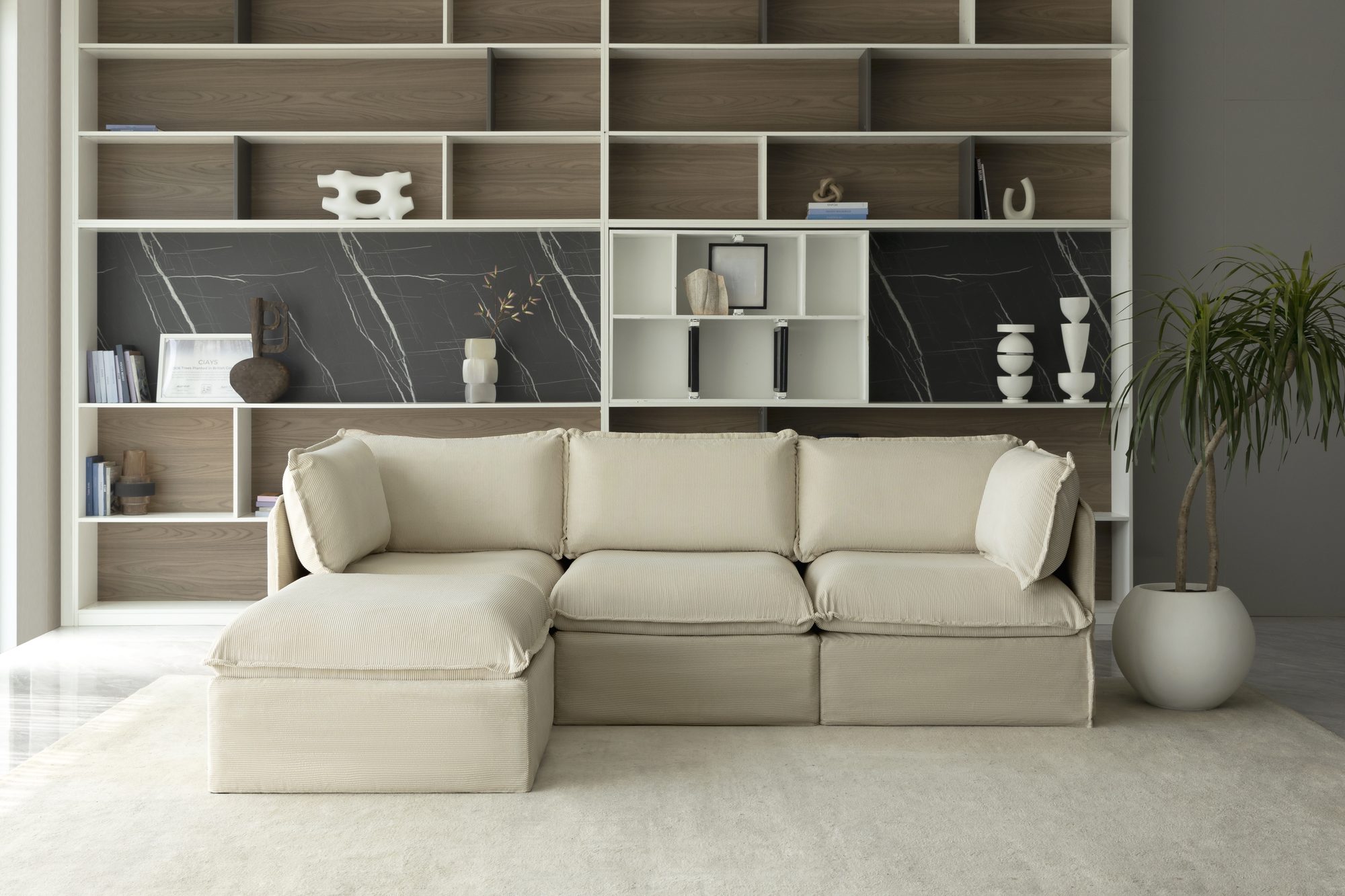
A sofa can seem solid under showroom lights and then meet a very different reality once it moves into someone’s home. Spills, pet hair, apartments that get rearranged, and families that keep growing all reveal the distance between how sofas are typically marketed and how they are really used. The company set out to narrow that distance with a furniture system centered on washable covers, modular design, performance fabrics, and durable construction.
An Old Tradeoff Anabei Refused to Accept
Furniture buyers have long been asked to pick a side: good looks or everyday practicality. A beautifully designed sofa is not necessarily simple to clean, and a piece made to take a beating can come across as too utilitarian for a carefully put-together home. For much of the market, design and durability have been treated as rivals instead of goals that belong together.
The company takes another route. Its product strategy begins with the belief that the seating people use every day should hold up in active households, meaning homes with kids, pets, food spills, constant use, and room layouts that may shift over the years.
Under its parent company, CABA Design, the company created a sofa system defined by one central feature: covers that are machine-washable on both the cushions and the frame. Configurations start at $699, which puts performance-focused furniture within reach of more households. Anabei’s approach folds cleaning into the design of the product instead of leaving it as a separate maintenance headache.
How a Washable Cover Extends a Sofa’s Life
Because the covers come off, owners can clean the sofa’s visible surfaces without depending solely on spot treatment or professional upholstery cleaning. In homes where spills, muddy paws, crumbs, and daily contact are a given, that capability counts.
It also reshapes how shoppers can think about how long a sofa will last. One stained surface does not have to make the whole piece less useful. With covers that can be taken off and washed, ordinary household messes turn into routine care rather than lasting damage.
Anyone reading Anabei reviews or Anabei sofa reviews will find this among the most practical things to assess. What matters is not just whether the furniture looks good when it shows up, but whether it can be kept up after months and years of steady use.
Fabric That Handles Wear and Still Looks Refined
The fabrics across the sofa system are engineered to resist liquids, stains, and daily wear. They are intended for households that lean on their furniture heavily, including families with young children and homes with pets.
That fabric approach operates in tandem with the washable covers. The performance upholstery offers resistance at the surface before a deeper cleaning is required, and the removable covers add another care option once everyday use starts to accumulate.
Fabric selection carries extra weight for pet owners. In homes with animals, furniture has to deal with fur, claws, moisture, and repeated contact. Anabei performance fabrics are made to support that level of use while still suiting a polished interior.
Steel Underneath the Upholstery
Under the upholstery, the sofa system relies on powder-coated steel frame construction. That choice of material serves the larger aim of making furniture meant for repeated use rather than for short-term display.
The frame matters because what you can see is only part of what makes a sofa last. The upholstery may need cleaning, but the structure also has to stay stable through daily sitting, rearranging, and years of use. Powder-coated steel gives the piece a sturdier foundation beneath its washable exterior.
Pairing a durable frame with washable covers and performance fabrics covers both cosmetic and structural concerns. That layered construction is key to how Anabei couch reviews and sectional reviews ought to judge the furniture.
Seating Designed to Change Shape Over Time
Modular construction is another defining element of the product system. Rather than offering fixed configurations only, the brand sells seating that can be assembled, expanded, and rearranged as a space evolves.
That flexibility tackles a familiar frustration with buying furniture. A sofa that suits one apartment may not fit the next home, and a sectional that works for one stage of household life might need to grow later on. Anabei’s modular sofa system gives buyers more control long after the initial purchase.
It also supports sustainability by keeping furniture in use longer. A sofa that can adjust to a new layout is less likely to be replaced just because a room changes. Combined with washable covers and durable materials, modularity lets the original purchase stay useful through more household transitions.
Why Selling Direct Helps Explain the Product
The company sells through a direct-to-consumer model, which gives it more control over how products are presented, which configuration options are offered, and how the buying experience runs. Shoppers can review materials, layouts, and care features directly through the brand instead of relying on a traditional showroom.
This is important because performance furniture needs to be explained clearly. Buyers have to understand how the covers wash, how the fabric performs, how the modules connect, and how the frame holds up to regular use. Selling direct helps build those details into the purchase process.
The model also reinforces the brand’s accessibility position. CABA Design’s background in manufacturing and supply chain gives the company a foundation for quality control, delivery efficiency, and consistent design.
Longevity as the Real Measure of Sustainability
Conversations about sustainable furniture often focus on materials alone, but how long a product lasts matters too. A sofa that can be cleaned, reconfigured, and maintained over time can ease the pressure to replace furniture that still works because of stains, room changes, or surface wear.
No single feature carries the practical load in this system. Washable covers handle care. Performance fabrics handle daily use. Powder-coated steel handles structure. Modularity handles changing spaces.
For families, pet owners, and homeowners who care about design, that combination makes the furniture easier to judge on the terms of real ownership. Anabei furniture reviews should center on those practical questions: how the sofa cleans, how it wears, how it adapts, and whether it still fits the household once life changes.
About Anabei
Anabei is a direct-to-consumer furniture company that operates under parent company CABA Design. It specializes in machine-washable, modular sofa systems made with removable covers, powder-coated steel frames, and performance fabrics engineered for stain resistance, durability, and easy care. Learn more about Anabei on the company’s direct-to-consumer platform.