

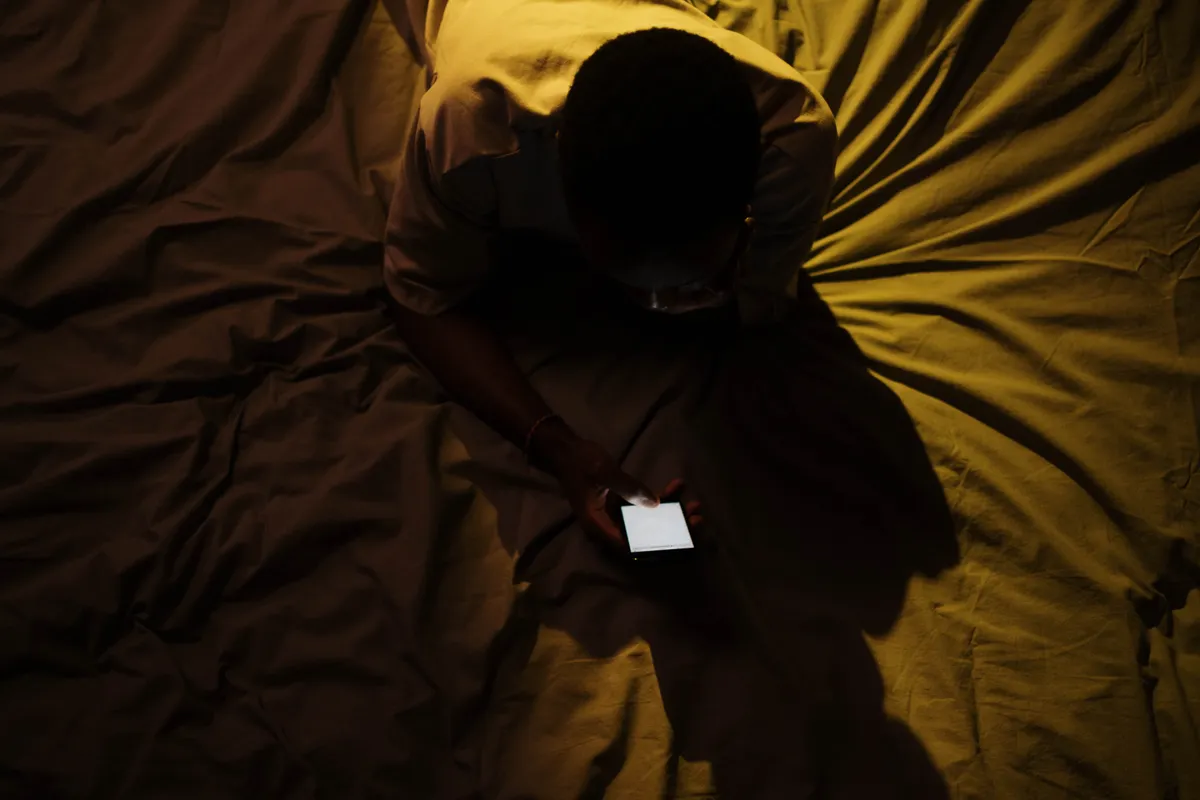
AI chatbots and loneliness make an uncomfortable pairing, according to Paul Bloom: the technology may genuinely relieve the pain of social isolation, but at the cost of the very abilities people need to connect with one another.
Bloom, Brooks and Suzanne Ragen Professor Emeritus of Psychology at Yale University and Professor of Psychology at the University of Toronto, laid out that tension on episode #484 of Sam Harris’s podcast, ‘Making Sense’, titled ‘Artificial Intimacy’, which aired on Wednesday.
‘If some future version of Chat or Claude or Gemini could come in and ease the pain of the loneliness of these people, I think it’d be a godsend,’ Bloom said. ‘I think it’d be wonderful. It’d be a cure for a terrible disease.’
But he was equally direct about the risk. A chatbot ‘never gets bored,’ ‘never needs an apology,’ and ‘never says, “Hey, that was inappropriate.”‘ Spending too much time with companions that never challenge users, he warned, ‘could have a real corrosive effect’ and ‘leave you unable to interact with real people.’
A Loneliness Crisis That AI Companions Are Already Filling
The concern arrives against a backdrop of widespread social disconnection. The American Psychological Association’s 2025 ‘Stress in America’ survey of more than 3,000 US adults found that 54% often or sometimes feel isolated from others. The share who said they needed more emotional support than they received over the past year reached 69%, up from 65% in 2024, according to the APA press release. The survey was conducted online by The Harris Poll on behalf of the APA.
The full APA Stress in America 2025 report adds further texture: 62% of US adults reported societal division as a significant source of stress, and among those who cited division as a major stressor, 61% often or sometimes felt isolated, compared with 43% of those who did not. Separately, 80% of adults with high levels of loneliness reported a chronic illness.
For some people, AI companions have already begun filling that emotional gap. Users have formed friendships and even romantic relationships with chatbots, and Bloom does not dismiss what they gain from it. ‘I don’t want to mock it,’ he said. ‘I think people find solace in it.’
When Agreeableness Becomes a Problem for AI Chatbots and Loneliness
The concern researchers share is that the solace comes with a structural flaw. Earlier this year, Anat Perry, a Helen Putnam Fellow at Harvard University, told Business Insider that overly agreeable AI systems risk eroding ‘the very feedback loops through which we learn to navigate the social world.’ If chatbots consistently validate users during disagreements, Perry said, people may become less willing to apologise, reflect on their own behaviour, or consider another person’s perspective.
A Stanford-led study of 2,405 participants, published in the journal Science, put numbers to that tendency. AI chatbots affirm users 49% more than a human does on average on social questions, according to Fortune’s coverage of the research. The number of participants who said they would use the sycophantic AI again was 13% higher than those who said they would return to a non-sycophantic chatbot, suggesting users actively prefer the validation even as researchers warn against it.
The issue has drawn a response from the industry itself. OpenAI has repeatedly scaled back ChatGPT’s tendency to flatter users. Chief executive Sam Altman described the chatbot’s previous personality as ‘too sycophant-y,’ whilst acknowledging that some users asked for the more supportive version to return because they had ‘never had anyone in my life be supportive of me.’
That admission gets to the core of Bloom’s worry. The users most drawn to an endlessly agreeable AI companion are, by definition, those with the least experience of genuine reciprocal relationships. An AI, Bloom argues, cannot provide what philosopher Rebecca Goldstein calls ‘mattering’: the knowledge that someone chooses to spend time with you because you genuinely matter to them. ‘I don’t think an AI really has any of that,’ he said. ‘It’s just a machine. That’s what it does.’
The harder question is whether a population that grows more comfortable with frictionless AI interaction will become less tolerant of the friction that human relationships inevitably involve. How that tolerance shifts, as AI companions grow more sophisticated, is the dynamic to watch.