

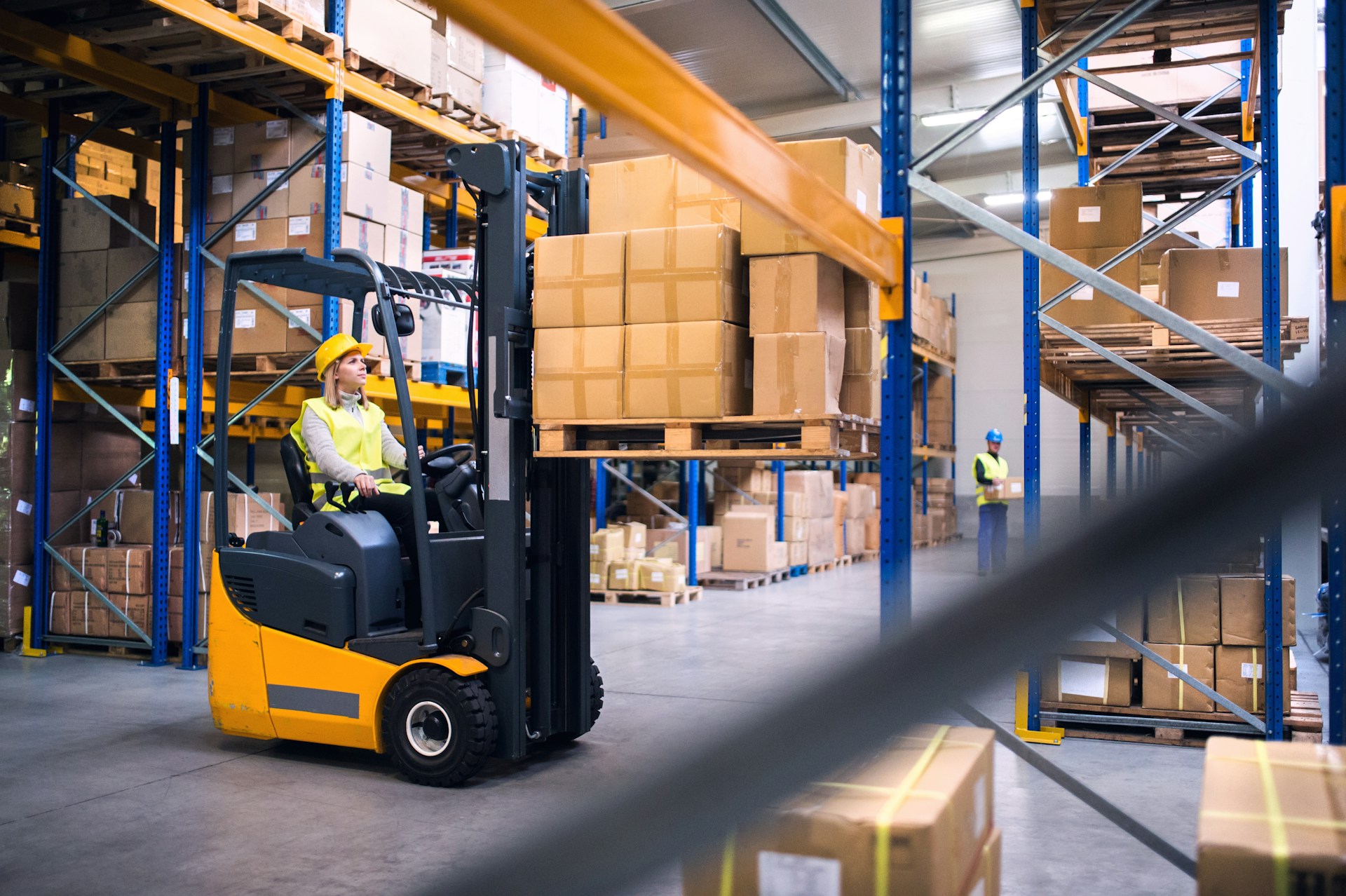
Walk through any busy warehouse and you’ll spot one almost immediately. Counterbalance forklifts are everywhere — distribution centres, manufacturing plants, construction sites, logistics hubs. They shift heavy loads fast. But that power cuts both ways.
Counterbalance forklift truck training exists precisely because capability without competence is dangerous. And we’re not talking about learning to steer. Proper training builds the kind of situational awareness that stops accidents before they start.
What Makes a Counterbalance Forklift Different
The design is elegant in its simplicity. A rear-mounted counterweight offsets whatever’s being carried up front — no extra stabilising gear required. That’s what makes these trucks so practical across so many settings: loading bays, storage aisles, factory floors, building sites.
Here’s the catch, though. That same versatility means operators are constantly working in complex, unpredictable environments. Pedestrians walking one way. Vehicles moving another. Stock stacked everywhere. One misjudgement and things go wrong fast.
Why This Training Can’t Be Skipped
Forklift accidents aren’t rare. Overturns, collisions, falling loads, injuries to nearby workers — these happen in real workplaces, sometimes with serious consequences.
The good news? Most of it is preventable.
Trained operators understand load capacity, stability principles, hazard identification, emergency procedures. They can spot a problem before it becomes an incident. They also tend to work faster — not because they’re cutting corners, but because confidence and competence go together.
That said, training quality matters enormously. Not all programmes deliver the same results.
What Good Training Actually Looks Like
The best programmes don’t pick between theory and practice. They use both.
Classroom or online learning lays the groundwork: regulations, risk awareness, weight distribution, site-specific hazards, traffic management. Operators learn why certain procedures exist — which makes them far more likely to follow those procedures when no one’s watching.
Then comes the practical side. Pre-use inspections. Steering. Stacking and de-stacking. Tight spaces. Loading and unloading. This is where confidence gets built — not from reading about it, but from doing it, repeatedly, in a controlled setting.
Assessment follows. Written understanding, practical demonstration, hazard awareness, safe behaviour under observation. Pass that and you’ve got certification.
Worth noting: certification isn’t a finish line. It’s more like a starting point.
Training Formats — What Works, What Doesn’t
On-site training has obvious appeal. Operators learn in the actual environment they’ll be working in, with the actual hazards they’ll face daily. Familiarity helps.
Dedicated training centres offer something different — fewer interruptions, specialist equipment, structured programmes. The downside is they can feel slightly disconnected from real-world workplace conditions.
Blended learning (online theory plus in-person practice) has grown in popularity, and for good reason. Flexibility plus hands-on experience is a solid combination. But purely digital counterbalance forklift truck training? Not enough on its own. You can’t develop physical skills through a screen.
The Factors That Determine Whether Training Actually Sticks
Instructor quality is probably the biggest variable. A skilled trainer spots bad habits early, explains things clearly, adjusts their approach for different learners. That kind of experience bridges the gap between textbook knowledge and the messiness of real operations.
Workplace culture matters just as much. Put bluntly: if operators feel pressured to cut corners to hit productivity targets, training gets undermined regardless of how good it was. Organisations that treat safety as genuinely equal to output tend to see better long-term results.
And then there’s refresher training. Skills erode. Procedures change. Equipment evolves. Periodic refreshers aren’t a box-ticking exercise — they’re how standards stay high.
The Harder Challenges
Taking operators off the floor for training creates short-term scheduling headaches. That’s real. But compare that inconvenience to the cost of an accident — downtime, damage, liability, potential injury — and the maths becomes pretty clear.
Mixed-experience training groups present another challenge. A complete beginner and a ten-year veteran shouldn’t be getting identical instruction. Good programmes adapt without leaving anyone behind.
Technology adds another layer. Modern forklifts come with telematics, operator assist systems, advanced safety features. Training that ignores these developments is already out of date.
Where the Industry Is Heading
Virtual reality simulators are showing genuine promise — particularly for hazard identification, emergency scenarios, and high-risk manoeuvres where real-world practice carries too much risk. They work best alongside physical training, not instead of it.
Data is playing a bigger role too. Telematics systems track speed, impacts, usage patterns, operator behaviour. That information feeds directly back into targeted safety improvements.
Perhaps most interestingly, modern counterbalance forklift truck training programmes are increasingly addressing human factors — fatigue, distraction, stress, communication, decision-making under pressure. Because most accidents aren’t purely mechanical failures. People are involved.
The Bottom Line
Good training pays for itself. Lower accident rates, better compliance, improved efficiency, operators who actually know what they’re doing — these aren’t abstract benefits. They show up in daily operations.
The question isn’t really whether to invest in proper forklift training. It’s whether to do it well or do it badly.
One of those options costs a lot more in the long run.