

Raising a child without family nearby is the daily reality for Virginie Romary, a French communications manager living in Fort Lauderdale, Florida, whose husband is from New Mexico. Their daughter, now 9, was born in the city and is growing up there, with Romary’s family a 10-hour flight away in France and her husband’s family a six-hour flight away in New Mexico.
That geography means no free babysitting, no emergency backup, and no one to call if one parent falls ill. Date nights and sick days carry the same answer: the couple handle it alone.
A Community Forged Out of Necessity
The hardest stretch came immediately after the birth. Coming home from hospital with a newborn, facing back-to-back sleepless nights with no family to take over for a few hours, Romary found herself in a city where she had recently arrived and had few friends. Her husband was working long hours. The exhaustion was both physical and mental, and it influenced her decision to delay her return to work rather than leave a newborn with strangers for extended periods.
The experience clarified one thing quickly: they needed to build their own support network. Fort Lauderdale turned out to be fertile ground for that effort. DataUSA’s Fort Lauderdale profile shows that, as of 2024, 26.9% of the city’s residents (approximately 49,900 people) were born outside the United States. Across the broader Broward County, the foreign-born share reaches 36.8%, or roughly 728,000 residents, according to the DataUSA Broward County profile. Families relocating from abroad, or from other US states, are a fixture of the local landscape rather than an exception.
Romary found that common ground made connection easier. Neighbours, parents from the park, and school families facing the same absence of nearby relatives were all natural allies. Over time, those relationships deepened into a genuine mutual-aid arrangement: watching each other’s children in emergencies, taking kids overnight to give parents a break, collecting children from school when needed.
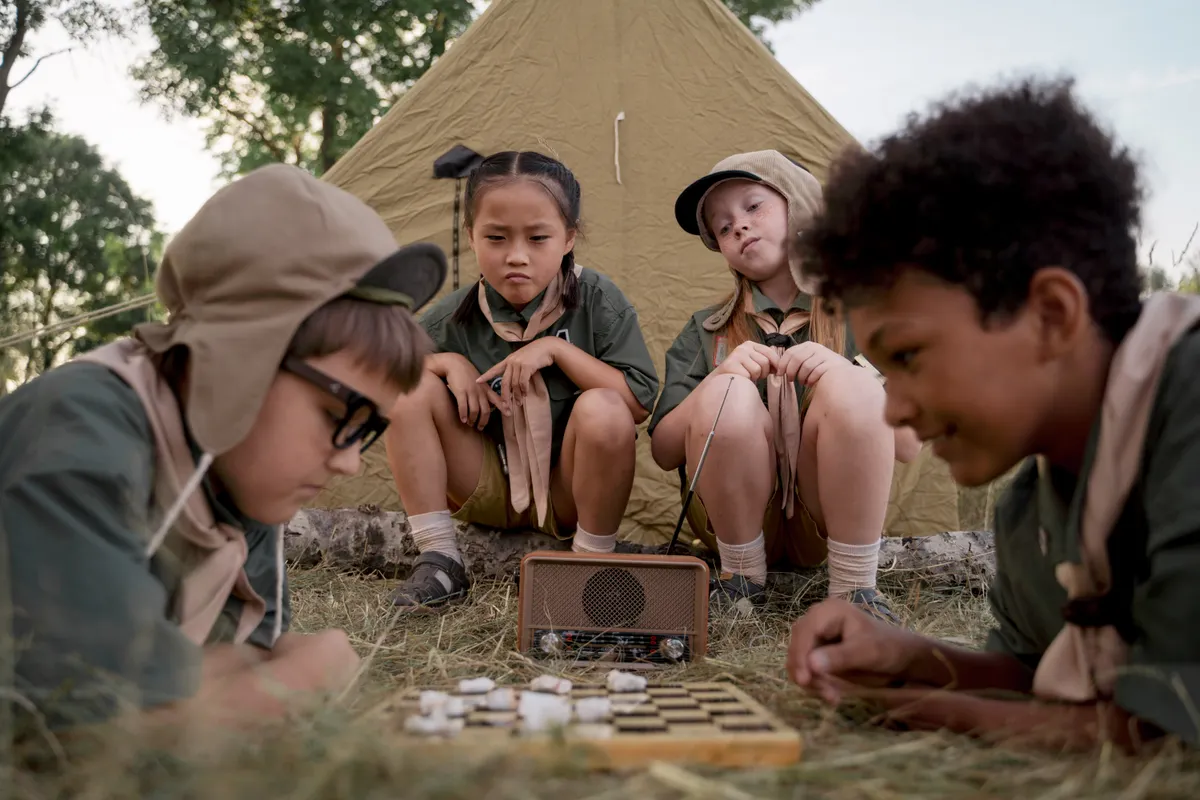
The family also joined Cub Scouts, which Romary describes as one of the most effective routes to building community. Scouting America’s Cub Scouts programme is open to both boys and girls, with an emphasis on outdoor activities, learning projects, and community service; families participate together in camping and other activities. Spending weekends at camp with other parents and children, Romary found, builds the kind of trust that casual acquaintance cannot.
Keeping Roots Alive Across the Distance
Parallel to building community in Florida, the family works deliberately to keep their daughter connected to both sides of her heritage. Every summer, Romary takes her to France for a month; afterwards, the girl travels to New Mexico with her father for two weeks. Because neither parent can take the full summer off, they spend that period apart.
The trips serve a clear purpose: bonding with grandparents, cousins, and extended family, building relationships in person rather than relying solely on screens. Romary acknowledges that this rhythm will be harder to sustain once her daughter reaches her teenage years, so the family prioritises it now. For the winter holidays, if work schedules allow, the three travel together to either France or New Mexico.
Between visits, weekly video calls keep contact ticking over, though Romary notes her daughter does not particularly enjoy communicating that way and the calls stay brief. The family compensates with another approach: storytelling. Both parents share memories from their own childhoods regularly, and relatives feature often in everyday conversation. Romary also speaks French to her daughter as much as possible, both to preserve easy communication with her family in France and to reinforce her daughter’s dual identity.
The result, as Romary frames it, is a child who understands that people who care for her exist at significant distances as well as on her doorstep. The logistical scaffolding (the scout troop, the parent network, the annual trips) is what makes that truth liveable rather than merely theoretical.
The next test will come when adolescence makes month-long summer stays feel less appealing to their daughter than they do now. How the family adapts that annual rhythm will determine whether the transatlantic bonds they have spent nine years building stay intact through the years when they matter most.