

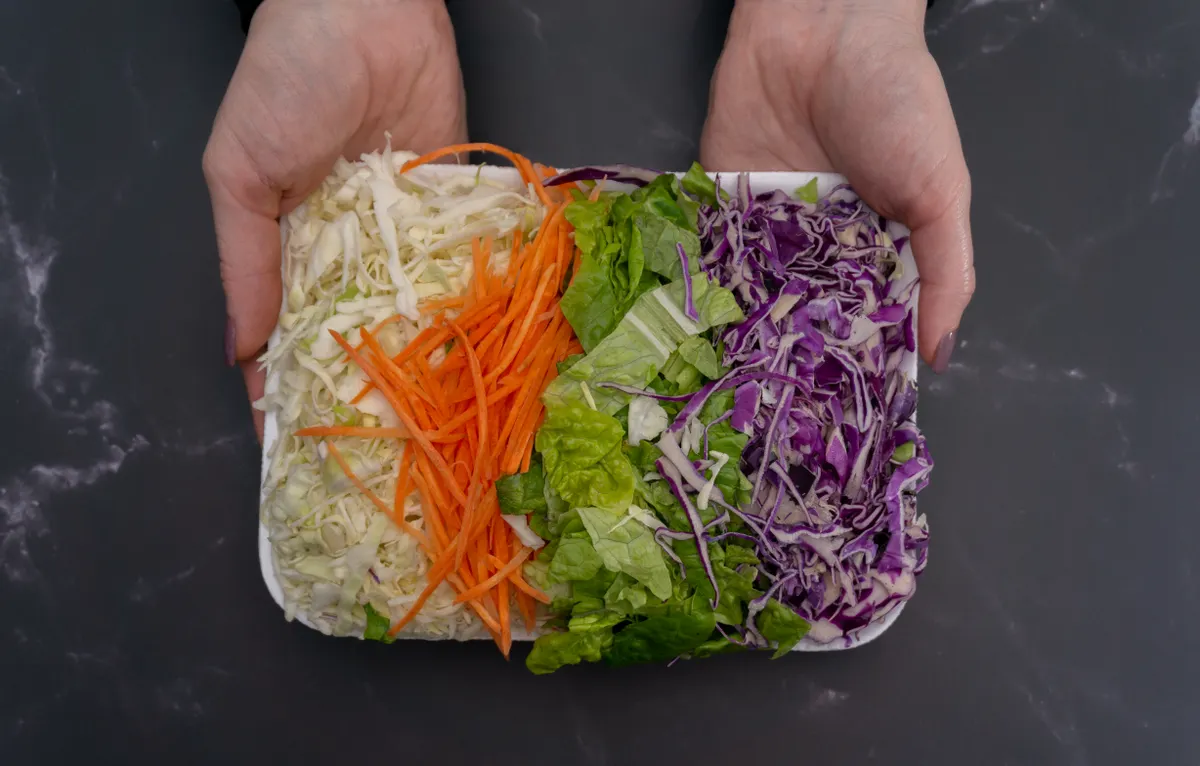
A Cyclospora outbreak linked to iceberg lettuce from Taylor Farms de Mexico has spread across nine US states, with federal regulators confirming the source just as a product recall came into force, overturning earlier suggestions that investigators had yet to identify the cause.
The US Food and Drug Administration (FDA) and the Centers for Disease Control and Prevention identified shredded iceberg lettuce grown in central Mexico as the vehicle of infection. Taylor Farms de Mexico initiated a recall on 17 July 2026 covering Marketside-brand products sold at Walmart: ‘Iceberg Salad’ in 12-oz and 24-oz sizes, and ‘Shredded Lettuce’ in 8-oz and 16-oz sizes, with Best if Used By dates running from 18 July to 3 August 2026.
Consumers who purchased these products at Walmart should check the label dates and discard any affected packs immediately.
What the Cyclospora Outbreak Iceberg Lettuce Recall Covers
Taco Bell confirmed to the FDA that, as of 17 July 2026, it was no longer sourcing lettuce from Taylor Farms de Mexico. A sign photographed at a Taco Bell drive-thru and reported by Allrecipes read: ‘We are currently unable to sell Lettuce, Cilantro, Onion, Pico de Gallo, and Guacamole due to a nationwide recall.’ Allrecipes also reported that the outbreak had sickened more than 1,200 people, with cases continuing to rise.
In previous years, Cyclospora illnesses in the United States have also been associated with raspberries, basil, cilantro, snow peas, green onions, and mesclun lettuce. Health officials continue to advise caution around those foods as the broader investigation proceeds.
How to Reduce Your Risk From Cyclospora
Washing produce thoroughly, removing outer leaves where possible, is standard advice, but it is worth understanding its limits. Evidence indicates that rinsing or scrubbing fresh fruits and vegetables is not sufficient to eliminate Cyclospora entirely, because the parasite is sticky and resistant to water alone.
Cooking is a more reliable option. Cyclospora cannot survive in food that has reached an internal temperature of at least 158 degrees Fahrenheit, so lightly heating vegetables that would normally be eaten raw is an effective precaution during an active outbreak.
Standard kitchen hygiene remains essential regardless. That means washing hands with soap and water before and after handling fresh produce, and regularly cleaning chopping boards and utensils to avoid cross-contamination.
Cyclosporiasis usually causes watery diarrhoea with frequent, and sometimes explosive, bowel movements. Other symptoms include loss of appetite, weight loss, stomach cramps, bloating, gas, nausea, fatigue, vomiting, body aches, headaches, a low-grade fever, and other flu-like symptoms. Crucially, symptoms typically only appear about a week after exposure, which makes it harder to trace the food source responsible for a given infection.
Not everyone who is infected develops symptoms. Those who do and seek medical attention may not be tested for cyclosporiasis, because diagnosis is expensive and requires multiple stool samples collected over several days. That means the true number of cases is likely much higher than official tallies suggest, as Katelyn Jetelina, assistant professor adjunct of epidemiology at Yale School of Public Health, noted in her public health newsletter, Your Local Epidemiologist, on 11 July. Severe cases can be treated with antibiotics.
The scale of monitoring in the United States reflects how seriously public health agencies treat the pathogen. Cyclosporiasis is a nationally notifiable disease, reportable in 47 states, the District of Columbia, and New York City, according to CDC surveillance data. The CDC monitors laboratory-confirmed cases year-round to detect clusters linked to a common food source, which is how the current outbreak was connected to the Taylor Farms supply chain.
The immediate priority for consumers is to check any shredded iceberg lettuce or pre-packaged salad bought at Walmart against the recalled Best if Used By dates. Anyone who has eaten recalled product and develops gastrointestinal symptoms in the coming week should contact a healthcare provider and mention the possible Cyclospora exposure, so that appropriate testing can be considered.