

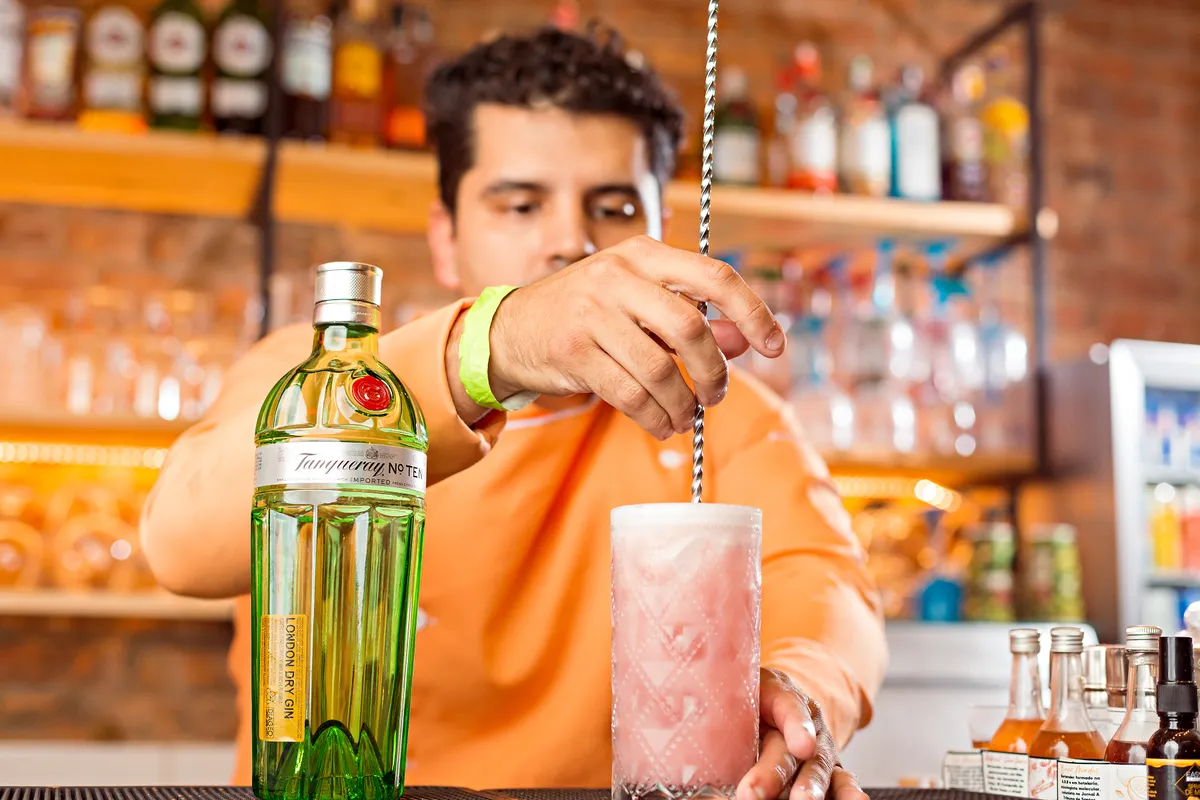
Emily Anderson, a contributing writer for Business Insider, has laid out the bartender customer pet peeves she has gathered across more than a decade behind the bar, from cash-waving regulars to guests who trail dirty glasses around the room as they mingle.
The ten bartender customer pet peeves range from attention-grabbing habits that slow every order down to courtesies most drinkers probably never consider. The list was first published in January 2023 and updated in July 2026.
The bartender customer pet peeves that grind service to a halt
Anderson’s biggest frustration is also the most common: customers trying to catch the bartender’s attention by waving cash, calling out their name, or gesturing while the bartender is busy elsewhere. Her guidance is blunt. Standing at the bar without a drink is signal enough; if that feels insufficient, eye contact and a nod will do the job.
Indecision at the point of ordering is another frequent irritant. Anderson urges customers to use any waiting time to decide on a drink, rather than pivoting mid-order to ask their group. In a crowded bar, that pause costs everyone behind them.
Ordering ‘another one’ without specifying what that one is draws similar criticism. The bartender may not remember the previous drink, or the customer may be confusing one member of staff with another working the same counter. Stating the order clearly removes the ambiguity.
Cocktail customisation comes in for criticism too. Ordering drinks as listed keeps things moving, particularly at busy periods when modifications can get lost and an unfamiliar tweaked recipe may simply end up sent back.
Broad menu questions are a related irritant, though Anderson draws a distinction. Asking ‘What pilsners do you have?’ or ‘What gins are you stocking?’ is perfectly reasonable and helps narrow options. Asking a bartender to list everything on offer is not.
Tips, tabs, and the economics of the job
Tipping comes in for particular emphasis. Anderson is direct: compliments do not pay the bills, and customers who think they have been served the best margarita in town should show it with a generous tip.
The U.S. Bureau of Labor Statistics classifies bartending within food preparation and serving occupations, and its pay data helps explain why the tip conversation matters. The median hourly wage for bartenders stood at $16.12 in May 2024, per the BLS Occupational Outlook Handbook, with the lowest-paid tenth earning under $9.58 an hour and the highest-paid tenth clearing more than $34.58.
A SpotOn survey of more than 1,000 U.S. restaurant industry workers, conducted in March 2024, found that 51% of tipped staff believe customers do not fully understand how tips factor into their wages, a result drawn from across the restaurant sector rather than bartenders alone.
The drinking-places sector is the largest single employer of bartenders. BLS Occupational Employment Statistics for May 2023 put employment in that category at 182,100, representing 44.21% of all bartender jobs, with a mean hourly wage of $16.64.
On tab management, Anderson advises giving a last name rather than a first when asked what name the tab is under. The bar almost certainly has more than one Brandon.
IDs, music, and spatial courtesy
Several other bartender customer pet peeves centre on basic respect for the role’s boundaries and the legal responsibilities that come with it. On ID checks, Anderson is blunt: the backstory behind why a customer does not have their identification is irrelevant. No bartender will risk their job or legal trouble for it.
Music is another clear boundary. Unless there is a jukebox, customers should not ask the bartender to change the track, play a request, or adjust the volume. The bartender is not a DJ.
Spatial courtesy rounds out the list. Anderson asks customers not to lean across multiple seats, leave rubbish on the floor, or trail empties behind them as they move around the room. Bringing an empty glass back to the bar on the next round saves the bartender a clearing trip and keeps service moving for everyone else.
A profession in growth, under the same pressures
The profession is expanding regardless of the friction Anderson describes. Bartender employment is projected to grow 6% between 2024 and 2034, from 756,700 jobs to an estimated 801,500, outpacing the average growth rate across all occupations, per BLS projections.
Whether those future bars run smoothly will depend, in part, on whether the person at the counter has settled on a drink before they open their mouth.