

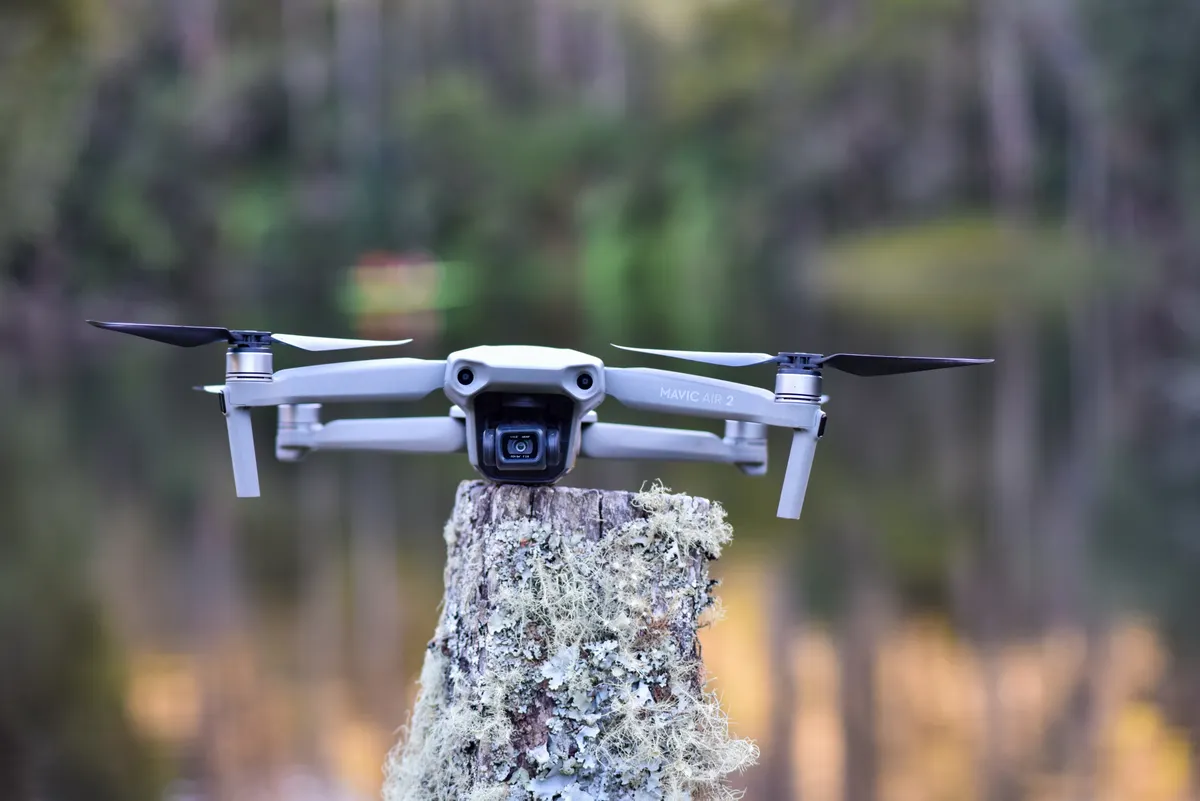
The Ukraine special operations kill zone is expanding so rapidly that elite operators are being sent on more frequent infiltration missions behind enemy lines, with some areas of the front now saturated by drones for up to 50 kilometres in either direction, according to an operator in the 4th Ranger Regiment speaking to Business Insider.
‘The number of missions has increased over the past year,’ the operator, identified by his call sign ‘Gur’, told Business Insider. Gur serves as second-in-command of a small unit and spoke on the condition that his full name not be used for security reasons.
A Kill Zone That Keeps Growing
Ukrainian soldiers and officials have long described the front line as a kill zone: a corridor so saturated with drones that troops and vehicles move at serious risk. Drones now account for roughly 90% of all battlefield strikes, and the corridor typically extends 10 to 20 kilometres from the line of contact in either direction.
That corridor is widening. Davyd Aloian, deputy secretary of Ukraine’s National Security and Defense Council, has said the kill zone in some sectors has reached 50 kilometres, describing it as ‘a kill zone of drones, it’s a dead zone,’ Business Insider reported. Robert ‘Magyar’ Brovdi, Commander of Ukraine’s Unmanned Systems Forces, said in May 2026 that the depth had already reached 25 km or more on both sides of the front, with the concentration of strike systems making any troop movement or logistics hazardous, Ukrainska Pravda reported.
Institute for the Study of War analysts have noted the kill zone has halted large-scale manoeuvres on both sides: neither Russia nor Ukraine has been able to mass infantry or heavy equipment within 30 kilometres of the front line to achieve an operational breakthrough.
Gur attributed the widening zone to the proliferation of first-person-view (FPV) drones, cheap quadcopters fitted with explosives for precision strikes. As the zone expands, larger formations become untenable, and small infiltration teams become the primary instrument.
Ukraine Special Operations Kill Zone Tactics: In, Destroy, Out
‘We might be tasked with destroying one particular enemy position. We go in, destroy it, and come back out,’ Gur said, per a translation of his remarks. ‘That might take two days, four days, or a week. We don’t necessarily have to stay in the area for a fixed amount of time.’
To manage the increased tempo, units rotate teams through missions, allowing soldiers periods to rest, train, and prepare before the next deployment.
The 4th Ranger Regiment has seen direct action on these missions. In February 2026, Ukraine’s Special Operations Forces published video of a successful raid by the regiment on a Russian position; Russian troops refused an offer to surrender, two were killed, and the operatives conducted a tactical withdrawal, Ukrainska Pravda reported.
The kill zone dynamic is not one-sided. Russian forces have adopted similar infiltration tactics, sending teams of two to four soldiers into Ukrainian-held territory to sow disruption. A senior Ukrainian defence official told Business Insider in late 2025 that small Russian teams were exploiting bad weather to slip through gaps. When they do, units like Gur’s get tasked to respond.
‘They’re using our tactics as well,’ Gur said. ‘They infiltrate in groups of two to four soldiers, and they can make their way into our rear areas. Then that becomes another task for us. We have to go in and eliminate them.’
‘Basically,’ he added, ‘the Russians are our task.’
Robots Take Over Where Soldiers Cannot Go
The same drone threat that is reshaping infiltration tactics has also forced a transformation in logistics. Ukrainian special operators have started using ground robots to move supplies and evacuate casualties near the front lines, tasks that have become too dangerous for soldiers on foot.
The scale of the shift is significant across the broader Ukrainian force. Ukrainian units carried out over 66,000 missions using ground robotic systems since the start of 2026, Ukrainska Pravda reported. Ukraine’s Ministry of Defence has contracted more than 22,000 ground robots since the beginning of the year, nearly twice as many as during the whole of the previous year. Units have ordered ground robots worth almost UAH 1.9 billion (approximately $42.5 million) through the Brave1 Market procurement marketplace. The robots are capable of transporting loads of around 200 to 300 kg.
According to an officer in Ukraine’s ground force Department for the Development of Ground Control Systems for Unmanned Systems, 47% of unmanned ground vehicle missions have involved delivering supplies or evacuating soldiers, The Strategist (ASPI) reported.
‘War creates its own conditions. FPV drones appeared, so we have to react to that,’ Gur said. ‘We have to adapt somehow if we want to survive and keep operating.’
The practical test of that adaptation comes whenever the kill zone grows another kilometre wider, and commanders reach for their smallest, most mobile units to cover ground that armour and infantry no longer can.