

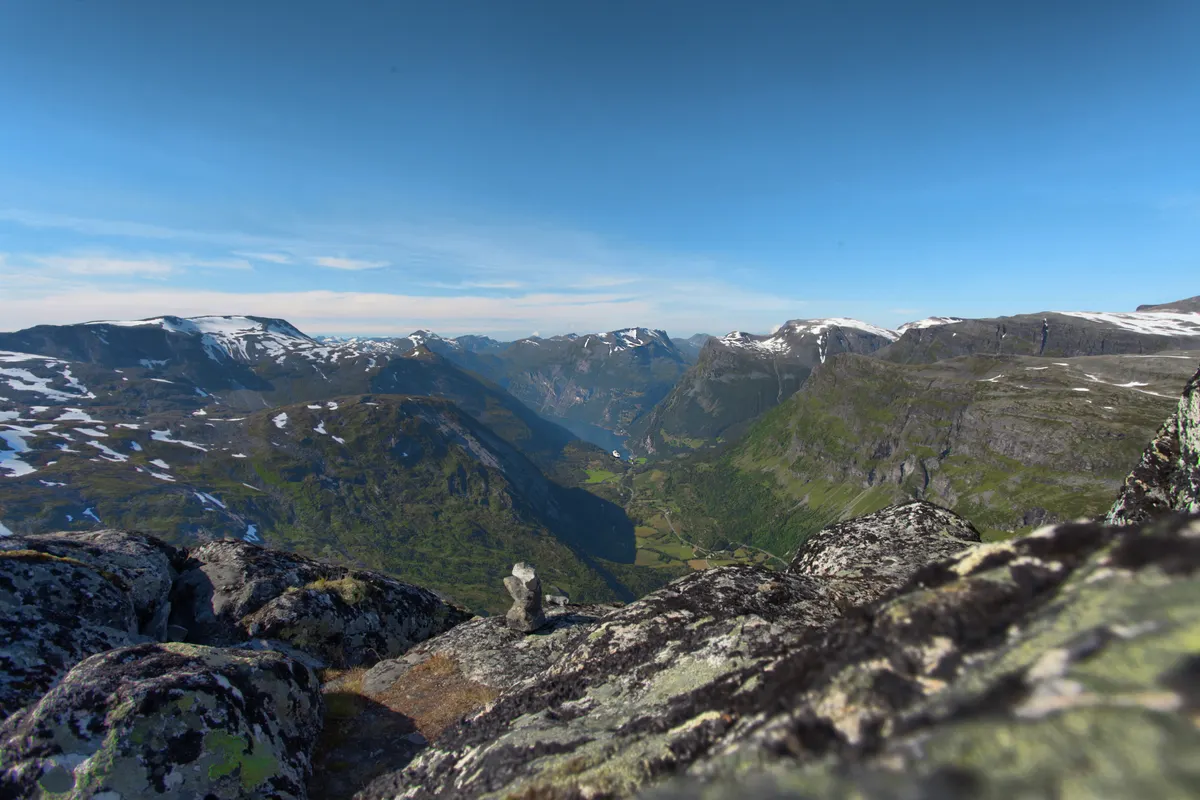
A coolcation in Trondheim changed the way travel writer Megan Carnegie thinks about summer holidays, and the data suggest she is far from alone. Bookings for cooler European destinations, including Scandinavia, Iceland, Denmark, Finland, and Sweden, surged 263% year over year for summer 2025, according to Luxury Travel Advisor, citing the luxury travel network Virtuoso.
Carnegie had spent most previous summers chasing the Mediterranean sun. When London hit a record 95°F in June, she booked a four-day trip to Norway’s third-largest city instead.
Why a Coolcation in Trondheim Keeps Surprising Visitors
The city sits roughly 300 miles north of Oslo, just south of the Arctic Circle, and in midsummer it barely gets dark. Carnegie arrived on 17 June, days before the summer solstice, and found herself walking out of a candlelit basement restaurant at around 11pm into blue skies and full sunshine.
That perpetual light shaped the whole visit. Bars and restaurants stay busy late into the evening; blackout curtains are a practical necessity. Temperatures hovered around 66°F throughout her stay, a relief after the heat of London.
Compact and walkable, Trondheim rewards slower exploration. A walking tour took Carnegie past the Trondheim Folkebibliotek, a public library built into the ruins of a 12th-century church, and the café Sellanraa. Norway’s coffee culture runs deep: Norwegians are the world’s second-largest per-capita coffee consumers, after Finland.
The centrepiece of the trip was Nidaros Cathedral, a vast Gothic structure whose main Steinmeyer organ was built in 1930 and restored between 2012 and 2014 by Kuhn Organ Builders of Männedorf, Switzerland. The instrument has 9,600 pipes; Nidaros Cathedral’s own website lists 127 voices across seven works divided between four manuals and a pedal, making it one of the largest church organs in Scandinavia. The façade, carved with saints, apostles, bishops, and Old Testament figures, includes a statue holding a basket of decapitated heads, a remnant of the city’s Viking past.
Carnegie also booked a session at a self-service sauna on Trondheimsfjorden, Norway’s third-longest fjord, where she alternated between a wood-fired sauna and plunges into the cold seawater as a cruise ship pulled in.
The Coolcation Trend: Numbers Behind the Shift
The appetite for cooler escapes is measurable and growing. The 2025 Virtuoso Luxe Report, published on 6 November 2024 and drawing on travel advisors across 58 countries, lists Norway, Iceland, and Antarctica among the destinations rising fastest in demand. Antarctica climbed from fifth place the prior year to second on the list, driven by expanding cruise options and growing demand for cold-weather travel.
A separate Virtuoso report from fall 2024 found that during summer 2024, travel to cooler climates in northern Europe and Canada was up 44% overall, while visits to warmer destinations including Italy, Greece, and France slightly decreased, according to a PR Newswire release.
Search behaviour tells a similar story. Trip.com Group data, reported by the Global Sustainable Tourism Council, shows a 74% year-on-year increase in searches for cooler destinations and coolcations since the start of 2025. In the June-to-August window of 2024, search volume for such trips was up 237% compared to the same period the prior year.
For Carnegie, the numbers reflect something she felt firsthand. The cooler air relaxed her; the endless daylight freed her from the usual holiday calculation of how to spend limited sunshine hours. She came home having learned something about the city rather than simply having rested in it.
With summers in many cities growing hotter and less predictable, the question for travellers conditioned to chase warmth is whether Trondheim, or somewhere like it, might become their default rather than their experiment.