


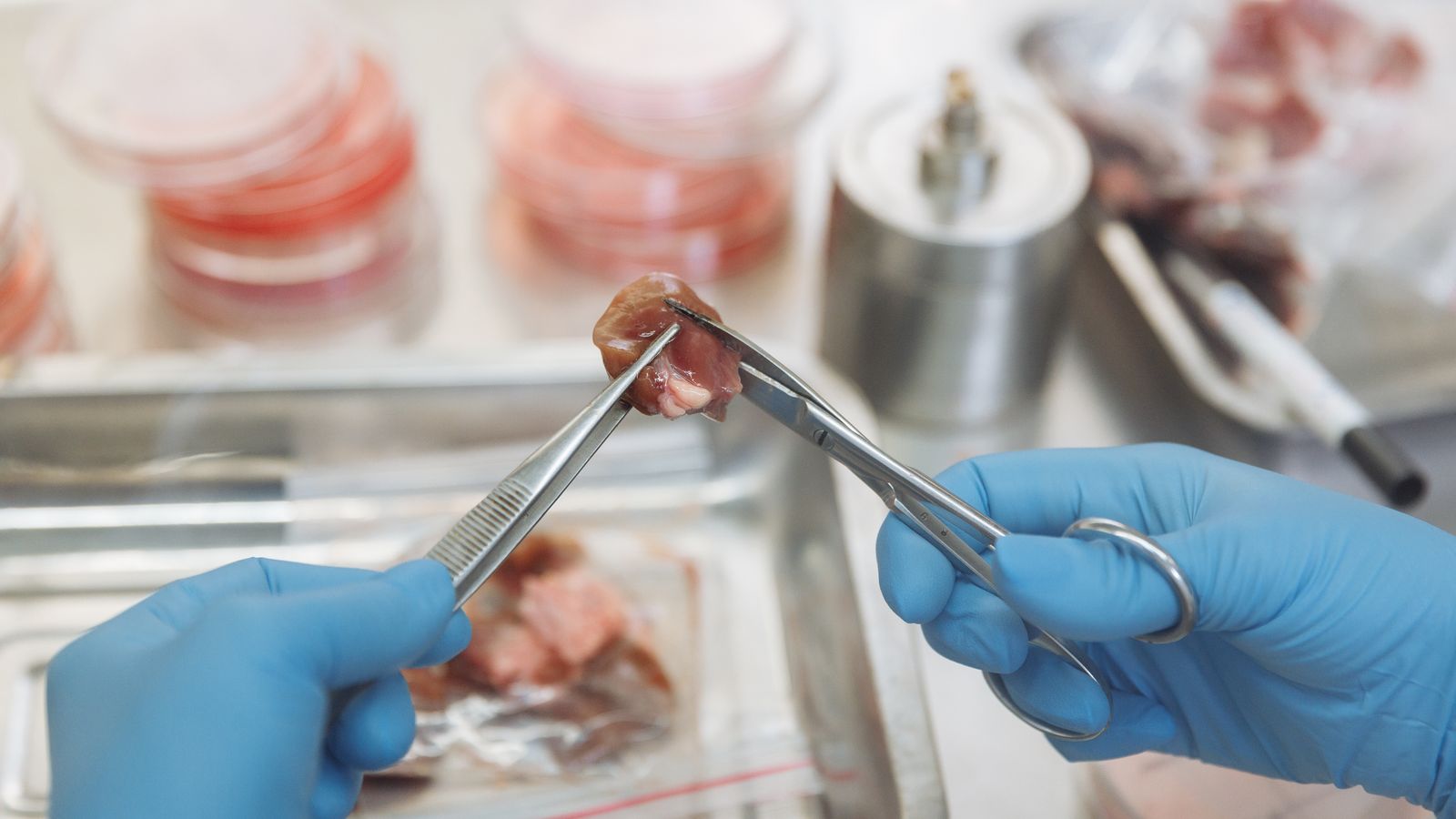
The Food Standards Agency and Food Standards Scotland published guidance on Thursday setting out the steps for exporting cell-cultivated products from Great Britain to non-EU countries.
The guidance draws export requirements from HM Revenue and Customs, the Animal and Plant Health Agency (APHA), the Department for Business, Innovation, Science and Trade and Defra into a single process map.
It covers checking whether the destination country allows the product, confirming GB establishment requirements, export health certification, customs declarations, cold chain management, labelling and documentation.
Dr Thomas Vincent, Deputy Director of the Sandbox and Innovation at the FSA, said businesses had told the agency that understanding the cross-government export process was a priority. He said the market for cell-cultivated food was “growing internationally” and that the guidance would help companies understand what they need to do to reach new markets.
The process map is explicit about its limits. Cell-cultivated products do not have internationally recognised sanitary and phytosanitary classifications or established export certification arrangements, so there are no standard export certificate templates for them, unlike many traditional animal-derived products.
Export applications are therefore likely to be assessed case by case, and may require engagement with the competent authorities of the destination country to establish import, certification and market access requirements.
Following the process does not guarantee that a business will be able to export, that certification will be available, or that the destination country will approve the import. The guidance also says export pathways are still being developed and tested, so some steps may change.
Vincent said market access depends on the laws and import conditions of each country and the decisions of its authorities. The guidance, he said, makes the process easier for new businesses and start-ups to understand but “does not guarantee market access will be achieved or replace the current route to export”.
Depending on the destination, placing a product on the market may require a novel food authorisation or another form of pre-market approval. The guidance says compliance with UK law does not create a right to export.
Businesses are told to work with the importer in the destination country to establish whether cell-cultivated products can be imported and how that country classifies them.
Where market access has not been established, they can contact the APHA Centre for International Trade, which can advise whether government-to-government engagement is needed.
Formal negotiations on import requirements are generally conducted between the competent authorities of the exporting and importing countries, although businesses may start requests for market access.
Production sites in GB must be registered with the local authority as food businesses. Destination countries may separately require a site to be registered, listed or approved for export.
The guidance applies to England, Scotland and Wales. Businesses in Northern Ireland are told to seek advice because different requirements may apply under the Windsor Framework.
Part of a sandbox running to February 2027
In GB, products made from animal cells are treated as products of animal origin for regulatory purposes.
The FSA and FSS set out that position in December 2025, and a further position in July 2026 on hygiene requirements treats harvested cell biomass as processed products of animal origin or composite products.
The export guidance is the latest output of the Cell-Cultivated Products Sandbox Programme, which launched in February 2025 and runs until February 2027. An earlier package from the programme covered regulatory authorisation and the assessment of growth media components and toxicology.
Cell-cultivated products must be authorised before they can be sold in GB. The FSA and FSS were awarded £1.6 million by the Department for Science, Innovation and Technology to examine how the products are made and assess their safety.
The FSA said feedback from industry will help refine the export guidance as the pathways are tested.