

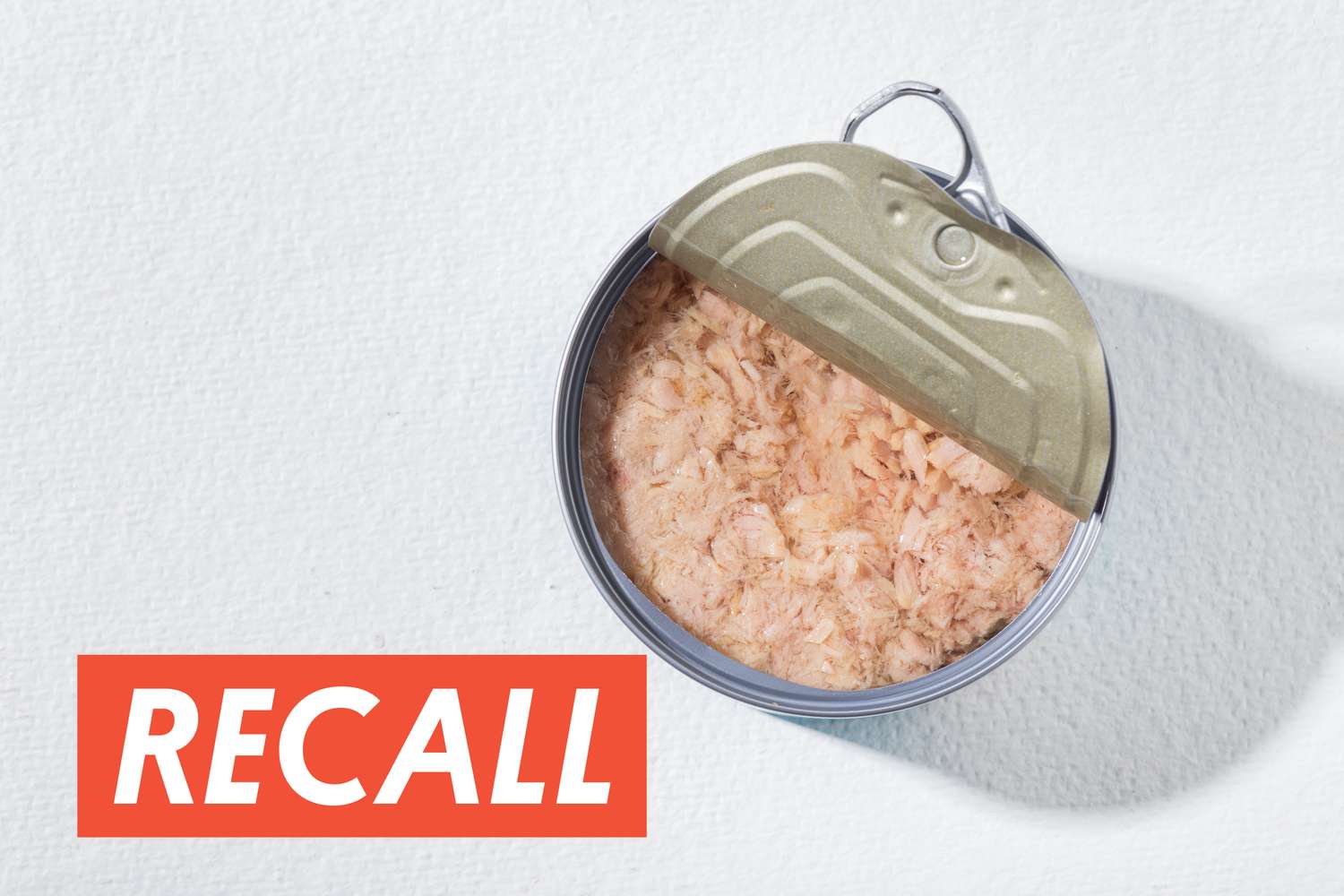
We have a subliminal faith in the items that adorn our pantry shelves. We think that time-stamped tuna cans that are conveniently sealed, stacked neatly, and long-lasting are reliable and safe. However, things that seem safe can occasionally turn out to be very brittle.
In January 2026, Tri-Union Seafoods released a significant update: due to a regrettable distribution error, a number of canned tuna items that had been recalled almost a year earlier had returned to the market. Although the problem wasn’t brand-new, its resurgence may be even more hazardous. Cans that were supposed to be carefully isolated ended up in houses by accident.
| opic | Canned Tuna Recall (Updated January 2026) |
|---|---|
| Company | Tri-Union Seafoods |
| Affected Brands | Trader Joe’s, Genova, Van Camp’s, H-E-B |
| Recall Reason | Manufacturing defect in pull-tab lids |
| Health Risk | Clostridium botulinum (causes botulism) |
| Original Recall Date | February 2025 |
| Updated Recall Date | January 16, 2026 |
| Key Issue | Quarantined cans mistakenly distributed |
| Shelf Dates to Check | “Best if used by” Dec 2027 – Jan 2028 |
| What to Do | Return for refund, discard, or contact company |
| Reference |
The core of the issue is a flaw in some “easy open” lids, which may seem insignificant but might jeopardize the can’s seal. This flaw might eventually let air in, which would create the perfect environment for a certain type of bacteria to proliferate. Despite being invisible, Clostridium botulinum produces one of the worst known poisons. Botulism doesn’t make a big show of itself. It doesn’t appear rotten or have an unpleasant odor. However, if ingested, it can result in respiratory problems, paralysis of the muscles, and sadly, even death.
The risk had been identified in the initial recall in February 2025. It was given out of what the business called “an abundance of caution” and covered several brands, including Trader Joe’s, Genova, Van Camp’s, and H-E-B. This term, which is frequently used in business announcements, can come across as both comforting and somewhat meaningless. However, it conveys the idea that it’s better to be safe than sorry.
The logistics, not the science, altered in January 2026. Stock that ought to have stayed parked was inadvertently dispatched by a third-party distributor. These were previous flaws that had been uncovered and were now in the hands of customers, not brand-new ones. Although it was a logistical error rather than a manufacturing one, the same outcome occurred.
There is no more pertinent timing. The “best if used by” dates on a large number of the impacted cans extended beyond early 2028. Despite their apparent durability, once the seal has been broken, the contents could still be dangerous. That’s a long time for uncertainty to persist.
Genova Yellowfin Tuna in Olive Oil, 4-pack of 5-ounce cans (UPC: 4800073265) and its variant with extra virgin olive oil and sea salt (UPC: 4800013275) were among the products that were flagged. They’re not alone, though. A number of Van Camp SKUs, H-E-B’s store label, and Trader Joe’s house-branded cans are also impacted. The whole list includes both single and multi-pack cans, which are frequently purchased due to their ease and price.
Half out of prudence, half out of curiosity, I found myself looking again in the back of my own cupboard. Finding out how simple it is for a supposed secure product to evade detection and get through the net is unnerving. That instant—a quick flicker of hesitation, a look at a barcode—felt strangely personal. I came to see that safety is frequently predicated on the idea that someone else is keeping a careful eye on things.
The FDA and Tri-Union have attempted to make the response as consumer-friendly as possible by utilizing public recall systems. At the time of purchase, complete refunds are offered. Customers can also get a retrieval kit and a replacement coupon by getting in touch with the business directly. Particularly explicit are the instructions, which stress that no recalled goods should be consumed, even if the can appears to be in good condition.
However, the larger problem extends beyond these particular items. It serves as a reminder of how readily mistakes can happen in the post-recall chain of custody as well as in production. Layers of outsourcing are a part of supply chains for many businesses. Blind spots may result from that structure, despite its potential for great efficiency. A shipment gone missing. A box with the wrong label. A manual quarantine is superseded by an automatic inventory decision.
The error was not malicious in this instance. It was a follow-through failure, a kind of unspoken error that might have gone unnoticed until it did.
The response has been measured and suitably cautious from the standpoint of public health. However, the story’s human side persists. When a product on the list has already been consumed, what do people do? How many people are unaware that there is a recall? These challenging-to-quantify issues highlight the significance of proactive communication in addition to procedural precision.
Regions and store kinds are represented among the brand names. Shipments went to California chains like Safeway and Vons, Giant Foods in Virginia and Maryland, and Meijer outlets throughout the Midwest. This geographical dispersion greatly expands the potential impact of this problem. These are well-known, nationwide brands rather than niche ones.
Years ago, canned green beans were involved in one of the more eerily comparable occurrences. Seal failure was the similar core cause of that recall. Even though it didn’t garner much attention, it subtly changed how certain businesses tested their packing techniques. The similarities act as a reminder that an entire industry can be affected by the lessons learned from a single recall.
In recent years, there has been a noticeable improvement in product traceability. These days, UPC numbers are used as safety indicators in addition to being checkout tools. Nevertheless, they force users to interact, read, search, and occasionally act upon information they were unaware they required.
That’s arguably the episode’s most nuanced lesson. Safety is preserved as well as manufactured. And trust—between manufacturers, retailers, regulators, and the people loading their carts at 5 p.m. on a Tuesday—is just as important to that maintenance as engineering.
There are currently no known illnesses connected to this particular shipment error. That’s encouraging as well as fortunate. It implies that timing and awareness might have saved what would have been a much more dire situation.
However, it also highlights the need for silent watchfulness to prevent such incidents. Tuna in a can is meant to be uninteresting. predictable. incredibly dependable. If only to ensure that it doesn’t happen again, it’s important to pay notice when that contract is broken, even if it’s only a little.