

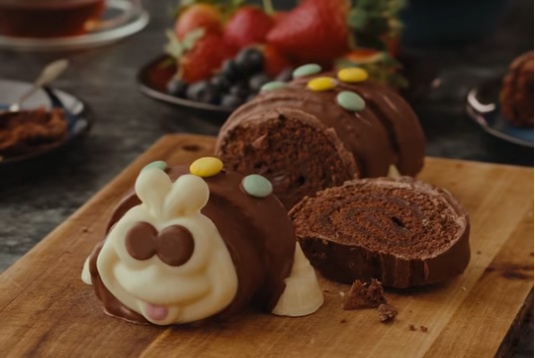
Certain cakes are returned to customers rather than simply ending up on shelves. M&S wasn’t just introducing a product when it introduced the gluten-free version of its famous Colin the Caterpillar; it was also reviving a custom that many people had been denied for many years. Birthday festivities have all too frequently been marred by compromises or substitutions, especially for people with celiac illness or gluten intolerance. This time, there’s nothing to replace it—just a rolled sponge filled with chocolate, reminiscence, and inclusivity.
It wasn’t a random marketing decision to introduce a gluten-free Colin. According to M&S, it was the most popular item on their social media channels. Retailers rarely ignore that kind of demand, especially one as brand-conscious as Marks & Spencer, which has been expressed repeatedly over years. What makes this release unique, though, is how precisely it was executed. Instead of reducing the thrill of the cake with reduced portions or flavor compromises, they matched it feature for feature, component for ingredient.
Gluten-Free Colin the Caterpillar – Product Snapshot
| Detail | Information |
|---|---|
| Product Name | Made Without Wheat Gluten-Free Colin the Caterpillar |
| Brand | Marks & Spencer |
| Launch Date | January 28, 2026 |
| Category | Celebration Cake (Gluten-Free) |
| Core Ingredients | Chocolate sponge, chocolate buttercream, milk chocolate coating |
| Special Features | White chocolate face, sugar-coated decorations, no compromise on size or taste |
| Target Audience | Coeliac and gluten-intolerant customers |
| Customer Sentiment | Exceptionally positive; widely anticipated based on M&S social feedback |
Families with a variety of dietary requirements will especially benefit from the outcome. Rich chocolate sponge, silky chocolate buttercream, a smooth milk chocolate covering, and that distinctive white chocolate face all remain part of the cake’s festive structure. It’s all Colin, but it’s prepared without wheat. It’s full participation, not a workaround, for people who avoid gluten.
Social media sites have been ablaze with intensely personal responses in recent days. One Reddit user admitted, “This is the first time I’ve regretted leaving the UK 15 years ago.” “I can actually have a big cake for my birthday this year hehe,” added another, more bluntly. These aren’t only reviews of products. They are proclamations of joy that has been regained.
M&S was able to generate something emotionally impactful by using incredibly effective food design and careful customer listening. Photos of the gluten-free version of Colin cake are being shared by parents whose kids never had one as kids, claiming that it “finally feels like a proper birthday.” For one kid with celiac disease, it’s more than just a cake; it’s something she’s seen at other gatherings for years but was unable to partake in. She also gets to blow out the candles on a Colin cake this time.
M&S is promoting equitable visibility by placing the product on the “Made Without” aisle, giving it a prominent place in stores rather than tucking it away in a gluten-free section. People are encouraged to see the gluten-free Colin as an official chapter in Colin’s long-running story rather than as a subsidiary version thanks to this clever positioning. That conveys a subtle but incredibly potent message: welcoming everyone to the center of the table is what inclusion is all about, not creating room on the periphery.
It brought to mind a birthday celebration I went to in 2019 where a child discreetly took a fruit salad in lieu of the customary cake because they couldn’t eat it. He gave a courteous grin, but he was unaware of how obvious it was that there was no cake on his plate. This debut feels more than timely—it feels essential, given the resurgence of that memory.
The fact that M&S refused to do what many other businesses might have been tempted to do—make a “mini” version or raise the price—is also very inventive. The size and price of the gluten-free Colin are same to those of the original, which is quite reasonable given that specialty foods frequently have exorbitant labels. Just that choice alone shows a dedication to accessibility and justice that merits praise.
M&S has produced a product that feels genuine and unified by preserving parity between versions. Customers’ emotional rewards are important, but so is the business reasoning. It’s a clever, highly effective approach to bring an already legendary product line into new homes, not merely an act of kindness.
In terms of dietary diversity, this cake subtly establishes a new benchmark. People are not asked to settle or provide an explanation. It merely provides what others have previously obtained. This type of equity is important in sponge and sugar, not in policy.
Biting into Colin’s cheeky white chocolate smile is more than just a taste experience for devoted admirers. It’s about family slicing customs that are strangely competitive, workplace festivities, and childhood recollections. Thousands of people have been able to rekindle a tradition they believed had been lost by recreating that experience without the gluten. Additionally, M&S had already heard them, so they didn’t need to ask twice.
As the number of people with celiac disease and gluten sensitivity increases, especially among younger customers, mainstream items that take into account dietary realities will become less of a novelty and more of a need. Few, however, will do it in such a memorable way. Few will create something that seems to have been intended for universal sharing from the beginning.
M&S did more than simply introduce a product; they listened carefully and responded thoughtfully. They restored something that was absent from tea-time treats, office parties, and birthday celebrations. Colin was returned to them.