

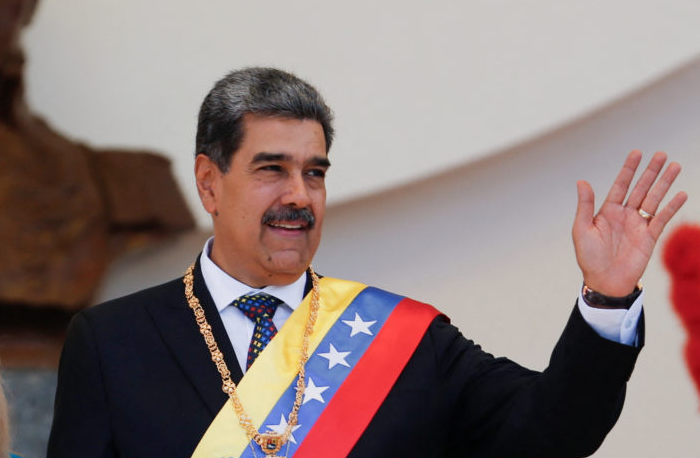
From the driver’s seat of a Caracas bus to the presidential palace, Nicolás Maduro’s trip reads less like a polished political biography and more like a fragmented mirror of Venezuelan society. His background as a labor organizer appeared almost amazingly grounded for someone who would ultimately hold one of Latin America’s most controversial presidencies. There was something strikingly unpolished about his early days—no fancy law school degrees, just trade union grit and a familiarity with the everyday grind of Venezuelan workers.
As Chávez’s inner circle narrowed, Maduro’s loyalty promoted him fast. He was well-established in government positions by the early 2000s. Each title—legislator, foreign minister, vice president—seemed to confirm his ideological conformity with the socialist model that Chávez popularized. Then came 2013, and with it, the weight of succession. After Chávez passed away, he inherited not only a nation but also a collapsing economy that was collapsing due to years of poor leadership and reliance on oil exports. He won by the slimmest of margins.
Nicolás Maduro – Personal and Political Overview
| Category | Information |
|---|---|
| Full Name | Nicolás Maduro Moros |
| Year of Birth | 1962 |
| Country | Venezuela |
| Early Life | Bus driver and union organizer in Caracas |
| Political Rise | National Assembly member (2000), Foreign Minister, Vice President |
| Presidency | Took office in 2013 after Hugo Chávez’s death |
| Major Challenges | Hyperinflation, shortages, mass emigration, global sanctions |
| Estimated Net Worth | $2 million (unverified public estimate) |
| Arrest | Captured in 2026, charged in U.S. for federal crimes |
| Credible Source |
Maduro’s presidency veered quickly into crisis management. Hyperinflation began to spread like a slow-moving wildfire. The shelves were cleared. Blackouts spread. Medicine became scarce. Families packed up and fled. Millions. Young individuals left entire neighborhoods in quest of better economic opportunities elsewhere.
In this regard, Maduro’s estimated net worth of $2 million is quite intriguing. It’s not lavish, at least by worldwide political standards. For a man accused by many governments of consolidating authoritarian control and allegedly siphoning national wealth, the reported sum feels surprisingly affordable.
Still, stats rarely tell the real story. Venezuelan institutions weren’t exactly known for their transparency during his years in office. Financial declarations were rare, and assets were typically disguised behind layers of bureaucracy, loyalists, or overseas shell corporations. Even with international sanctions targeting members of his government, direct linkages to lavish personal riches have remained tough to show publicly.
What that $2 million does suggest, perhaps, is a planned middle ground—just enough to provide security, but not enough to garner the kind of attention that would require wider international inquiries. It’s possible he merely lived within modest means. Equally likely is the notion that wealth was entrenched elsewhere—disguised, deferred, or distributed outside his own name.
International media, particularly in the past few years, typically characterized Maduro as a power-hungry person eager to bend institutions and alter constitutions. However, such headlines hardly ever stopped to inquire about his true level of wealth. That omission becomes increasingly crucial. What leaders earn—or seem to earn—becomes a sign of trust or betrayal in a country crumbling under its own economic weight.
By early 2026, the story turned abruptly. Maduro was apprehended by a U.S. military operation and transported to New York, where he was accused of federal offenses pertaining to the trafficking of weapons and drugs. It was a dramatic, some would say surreal, collapse of power. For a sitting president to end up in American custody is an uncommon scenario, made more strange by the decades of anti-U.S. vitriol he has wielded.
I remember seeing recordings of his early speeches—his voice gravelly, his tone familiar, like a man used to mobilizing striking workers more than polished diplomats. Before his cadence hardened into defiance, there was something especially genuine about it.
From a purely financial lens, Maduro’s projected net wealth lies midway between suspicion and credibility. It neither validates the darkest concerns of institutional thievery, nor does it justify him as incorruptible. Instead, it lingers in ambiguity, casting a long shadow across a shattered nation still searching for a way ahead.
The Venezuelan people, exceptionally resilient, have long recognized that riches can be unseen. Corruption isn’t always diamond-studded watches and overseas houses. It’s access at times. Control. The ability to shelter allies from legal consequences or to extend contracts without monitoring. Value in various spheres often translates into influence rather than money.
Even so, focusing on financial worth alone risks oversimplifying. The collapse of Venezuela under Maduro wasn’t driven by one man’s bank account. It was molded by global oil interdependence, shifting geopolitics, currency policies, and cascading institutional failure. Even if his personal finances are but a small part of a much bigger tragedy, they provide insight into what leadership was like at one of the most turbulent times in the region.
What’s especially interesting about the $2 million figure is that it reminds us of the limits of political storytelling. Saviors are rarely monetarily clean, and villains are rarely cartoonishly affluent. Leaders like Maduro don’t fit neatly within moral binaries. Their legacies are layered—sometimes harsh, sometimes conflicting, and often unresolved.
For a nation still grappling with issues of justice and rehabilitation, this moment of financial introspection, sparked by a single figure, is strangely healing. Maduro’s alleged wealth is neither something to be envied or excused. It’s about tracing how power leaves behind financial fingerprints, some apparent, some faint, but all deserving of investigation.