

Keziah Manluctao left her automation consulting job in 2021 to make Filipino-inspired ice cream. By October that year, she’d launched Araw. Now she’s secured physical retail space at Borough Yards—part of a six-brand cohort moving into white-box units on Dirty Lane East this spring.
The three-month residencies mark a deliberate shift.
Curate Real Estate, which manages the London Bridge destination, has partnered with retail consultancy Someday Studios to create what it’s calling a structured pop-up platform. The model targets emerging brands that have momentum but lack access to bricks-and-mortar space—brands that, according to Someday Studios co-founder Becky Jones, face leases “too long, the model too rigid, no option to test or experiment.”
“The best emerging brands are too often locked out of physical space,” Jones said. “We’re excited to be part of changing that at Borough Yards. For brands, this means a platform to launch and grow in one of the city’s most iconic neighbourhoods. For visitors, it means an ever-evolving content mix, with something new, worth discovering, and worth coming back for.”
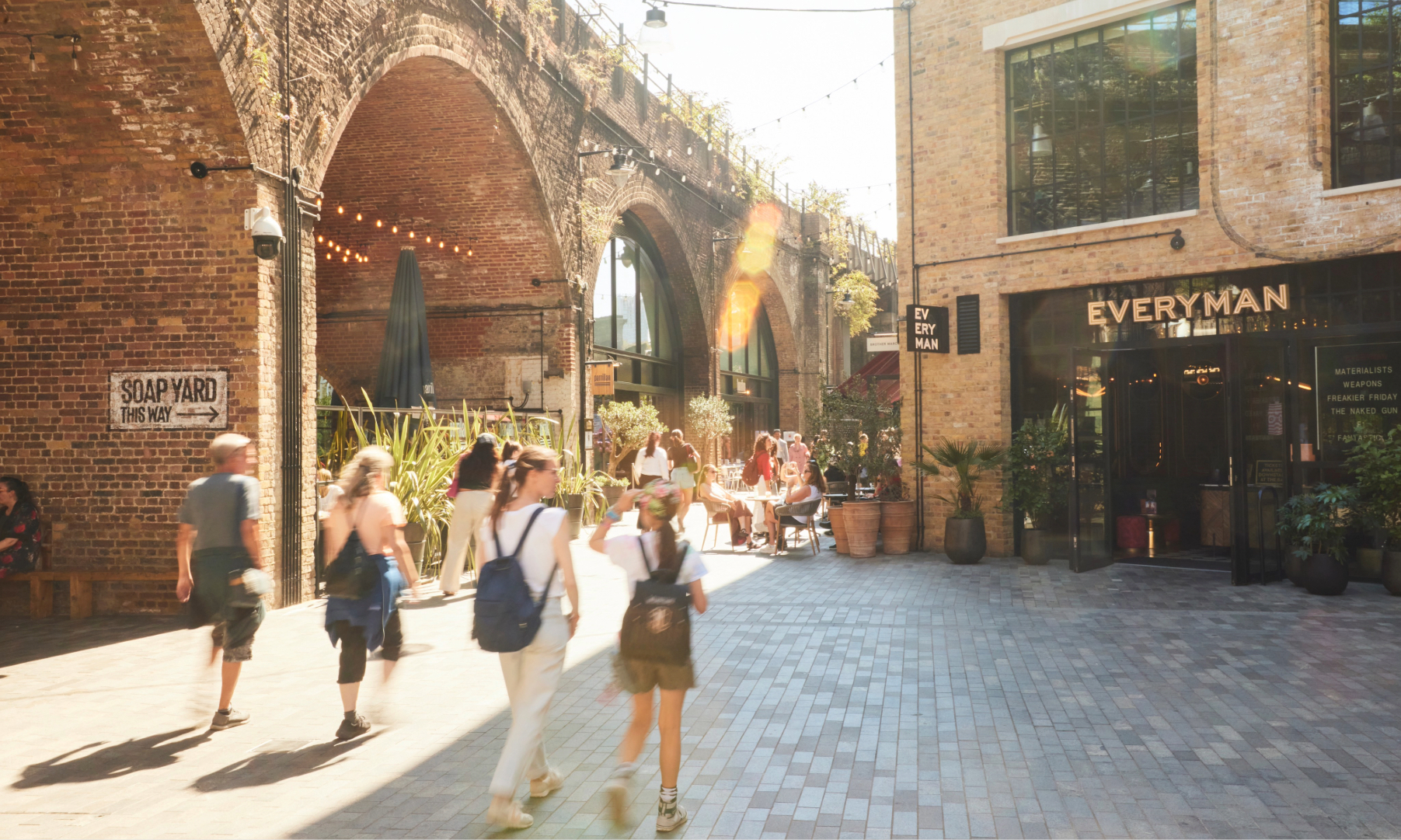
The programme will occupy six to eight units along Dirty Lane East, nestled among Borough Yards’ existing 50-plus shops, restaurants and venues including Everyman Cinema and Michelin Bib Gourmand-awarded Akara. Each residency lasts three months, with brands rotating through the space to keep the mix fresh.
Alongside Araw, the first cohort includes Southwark-based running apparel brand Acid Running, which launched in 2022 and has built a following around what it calls “countercultural” aesthetics and an ethos that embraces struggle. The Cirkel, a resale platform founded in 2022 that’s already cycled 50,000 items back into circulation, will open its second physical store. Runlimited, an experience-focused running retailer, joins with its first location south of the river, offering gait analysis and weekly community runs.
Interiors brand The Roost and sustainable gift shop Forget Me Not & Green complete the lineup.
The move reflects broader tension in retail property. Landlords struggle with vacant units. Independent brands struggle with upfront costs, long-term commitments and inflexible lease structures. Pop-up platforms have emerged across London—from Coal Drops Yard to Boxpark—as one response, though models vary wildly in curation, support and duration.
Borough Yards’ version includes enhanced signage, coordinated social media promotion and what Curate Real Estate describes as “hands-on guidance on merchandising.” The asset manager has set criteria: brands must align with the destination’s cultural positioning, demonstrate business traction and bring what it calls “credible momentum.”
That selectivity matters. Unlike purely meanwhile-use approaches that fill space temporarily, Curate Real Estate frames the platform as part of a longer repositioning strategy for Borough Yards—one that leans into culture-led programming and independent retail rather than high-street chains.
Rebeca Guzman Vidal, co-founder at Curate Real Estate, made that explicit.
“This new pop-up platform is a key step in our long-term strategy to activate Borough Yards in a way that feels fresh, relevant and distinctly independent,” she said. “As consumer attitudes to retail evolve, by giving emerging brands the opportunity to take up space in the scheme, we’re enriching our existing strong mix and offering visitors more reasons to shop, work and spend time here. From art installations to cultural takeovers, our bespoke approach to asset management is designed to strengthen Borough Yards’ position as destination that directly responds to evolving customer needs. This programme launch marks the next evolution of that vision.”
The pop-up platform sits within a wider activation calendar. Borough Yards has previously hosted artist Philip Colbert’s ‘Lobster Yards’ takeover and the Salad Days independent makers market. Coming up: an interactive light installation in Soap Yard, a London Fashion Week activation and another artist-led site takeover scheduled for spring.
For Curate Real Estate, which has worked on repositioning major London estates including The Knightsbridge Estate and St. Christopher’s Place, the approach represents a bet that flexible, curated retail creates more value than traditional long-term leases to unknown tenants. For Someday Studios—whose founders Aoife Byrne and Becky Jones bring 25 years of combined experience launching stores globally—Borough Yards becomes a testbed for what they’ve been advocating: giving independent brands “bigger opportunities.”
The consultancy already runs the Meanwhile On project with Westminster City Council, placing independent brands in prime spaces across Regent Street, Oxford Street and Bond Street. Borough Yards extends that model to a privately managed mixed-use destination.
What happens after three months remains open. Some brands may transition to permanent leases. Others will rotate out, replaced by a new cohort. The platform operates on the assumption that constant evolution—new faces, new products, new reasons to visit—creates more pull than static tenancy.
Whether that calculus works depends partly on execution, partly on whether visitors return often enough to notice the changes, and partly on whether emerging brands can convert a three-month window into lasting customer relationships.
For now, six brands have moved in. Araw will serve Pandan Onde Onde ice cream and Vietnamese Coffee Malted Brownie. Acid Running will stock its fashion-forward running gear. The Cirkel will offer curated resale womenswear. The Roost will display furniture alongside its interior design visualiser tool.
By summer, the mix could look completely different. That’s the premise.