

Every few years, a specific type of legal document appears in federal court and subtly alters American policy in ways that are rarely reported in real time. One of those cases might be the lawsuit sponsored by California against the broad tariffs imposed by the Trump administration. Trade policy disputes between Sacramento and Washington are uncommon.
Given that more than twenty other states have joined its complaint, the fact that it has now done so raises the possibility that there is more going on than just a straightforward political disagreement. The issue is structured like a constitutional conflict, and the outcome of the court’s decision might change American trade policy for decades.
| Topic Snapshot | Details |
|---|---|
| Subject | California-led legal challenge to broad federal tariffs |
| Lead Plaintiff | State of California, joined by over 20 other states including New York |
| Lead Officials | Attorney General Rob Bonta and Governor Gavin Newsom |
| Defendant | Trump administration |
| Statutes Challenged | International Emergency Economic Powers Act (IEEPA) and Section 122 of the Trade Act of 1974 |
| Core Legal Argument | Tariff power belongs to Congress, not the President under emergency powers |
| Affected Imports | Goods from China, Mexico, and Canada |
| Most Exposed California Industries | Agriculture, technology, retail logistics |
| Estimated Industry Losses | Multibillion-dollar exposure across major California sectors |
| Recent Judicial Backdrop | A Supreme Court ruling earlier struck down a different but similar tariff mechanism |
| Public Stake | Consumer prices, trade certainty, and constitutional balance of power |
Despite the complexity of the legal technicalities, the fundamental premise is straightforward. Attorney General Rob Bonta and Governor Gavin Newsom of California argue that the president does not have the unilateral right to impose tariffs of the size and scope that are now in effect. Section 122 of the Trade Act of 1974 and the International Emergency Economic Powers Act, or IEEPA, have been cited by the administration as being sufficiently flexible to support levies that affect almost all imported goods.
California, along with New York and other states, contends that this goes well beyond what Congress first approved. They contend that Congress has the authority to control international trade under the Constitution. Declarations of emergency do not take precedence over that.
The lawsuit has weight because of the financial stakes. In the months after the most recent round of tariffs, China, Mexico, and Canada have imposed retaliatory taxes on California’s agriculture sector, which exports billions of dollars’ worth of fruit, dairy, wine, and almonds. The cost of imported semiconductors and consumer goods has increased for Bay Area-based IT enterprises.
Softer container volumes have been recorded by logistics companies at the Port of Long Beach, which is an early indication that supply chains are discreetly rerouting. Speaking with state business executives, it seems that the tariffs are causing more harm than the political rhetoric acknowledges. In a manner never possible with courteous letters to legislative offices, the case brings such expenses into the courtroom.
In this case, the judicial context is crucial. The administration’s use of a different but related tariff mechanism was overturned by the Supreme Court earlier this year, indicating that at least some justices have doubts about the executive branch’s extensive trade jurisdiction. It has to be seen if this suspicion also applies to IEEPA-based initiatives. Attorneys for the government will contend that the statute grants the president broad authority during declared emergencies. California’s attorneys will contend that what is essentially regular trade policy is being justified by the emergency framing. Reasonable judges might find themselves on opposing sides of the genuinely contentious boundary between the two.
It’s difficult to ignore how uncommon it is for a state to spearhead such a trade coalition. Historically, states have mostly stayed out of the legal battle over trade, even when it negatively impacted their economies. The extent of California’s exposure is reflected, at least in part, in its readiness to take on the issue. On its own, the state’s economy ranks fifth in the world. The total harm to California’s industries might surpass the harm to the whole trade portfolios of several smaller nations if the tariffs remain at their current levels for an additional two years. Newsom and Bonta have determined that the expense of remaining silent is greater than the expense of filing a lawsuit.
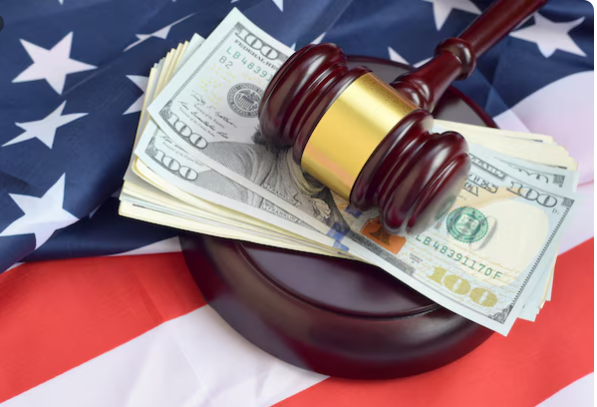
Naturally, there is a political component to everything. Trade policy is now being formally added to the list of twelve issues on which California and Washington have been at conflict for years. The lawsuit, according to some detractors, is partially performative and intended to set Newsom up for a future presidential campaign. That probably has some truth to it. However, a politically driven lawsuit can still result in significant legal precedent, and regardless of who filed it, the constitutional issues highlighted would still be significant.
There would be serious repercussions if California were to prevail, even in part. A significant foreign policy tool would be taken away from the government. Unilaterally imposed tariffs would either be reduced or reorganized to conform to a more restrictive legislative framework. The use of emergency powers as a tactic for trade negotiations would be restricted for future presidents, regardless of party.
Congress, which is now disengaged from the majority of trade issues, may surprise regain control. A different, more difficult question is whether Congress would truly exercise that authority responsibly.
The precedent would be reversed if California were to lose. The already significant presidential power over trade policy would become even more. Future administrations would acquire the deeply ingrained belief that almost any trade action could be justified by a proclamation of national emergency.
The litigation would become a footnote in the larger narrative of executive power in the early twenty-first century, the tariffs themselves would persist, and the impacted industries would adjust.
As of right now, the lawsuit is proceeding through the courts at the usual glacial pace. Both parties’ attorneys are aware of the stakes. Businesses are preparing for either result. Answers will eventually be provided by the calendar. And somewhere in a conference room in Sacramento, the legal team that developed this case is waiting for the moment when constitutional theory and the real-world issue of who in America actually gets to establish trade regulations collide.