

Detroit is one of those cities that experience flight disruptions more intensely than the national headlines would indicate. Nearly everyone in southeast Michigan simply refers to Detroit Metropolitan Wayne County Airport, or DTW, as the type of facility that centers more than just travel. It serves as the foundation for local business, familial ties to Texas and Florida, and a large portion of the tourism industry that depends on air travel. Spirit Airlines had quietly become the second-largest airline at DTW in recent years, and its liquidation has caused just the kind of disruption Detroit had been expecting without quite putting it out there.
Even before you enter the McNamara Terminal and see the empty Spirit gates, the numbers clearly convey a message. Spirit handled about 1.7 million passengers annually through DTW, making up over 11% of the airport’s overall market share. As a result, it was surpassed only by Delta Air Lines, which has operated its hub out of Detroit for many years. Spirit’s influence was not limited to its high passenger numbers. It was focused in the low-cost leisure sector, which is the portion of the airport’s traffic that fills hotels in Fort Lauderdale, Orlando, Tampa, and the Caribbean island locations that have become a staple of Detroit’s middle-class travel schedule. The cost of a Michigan family visiting a Florida theme park has increased dramatically in the absence of those flights.
The impacts of the immediate fare have not been subtle. When looking for nonstop tickets from DTW to classic Spirit destinations, travelers are discovering that the itineraries are increasingly only offered with one stop rather than direct flights, and that a ticket that was $89 six months ago is now $200. In markets where Spirit previously exerted competitive pressure, Delta’s prices have increased. This is precisely what airline pricing models would anticipate in the absence of a low-cost competitor. Here, the economics are not enigmatic. The remaining airlines no longer have to worry about being undercut when a low-cost carrier with a significant regional presence vanishes, and ticket prices go toward what the market would absorb rather than what competition would otherwise compel.
The reduction of passenger revenue is not the only issue the Wayne County Airport Authority is currently dealing with. Through gate fees, landing fees, and associated operating charges, Spirit contributed about 7% of DTW’s operating revenue. An airport authority that has been extensively investing in ground transportation upgrades and terminal expansions has a huge hole in its budget. One of the more uncomfortable assets on the authority’s books is the Spirit-occupied hangar in the Evans Terminal, a roughly nine-figure building constructed especially to serve Spirit’s expanding operations at the airport. It will be challenging to find another carrier willing to take over that infrastructure, and the longer it remains idle, the more it shows up on the financial accounts as a stranded asset.
In some respects, the aspect of the story that is most likely important to the area but does not often make the news is the local employment effect. At DTW, Spirit employed a sizable number of maintenance workers, customer support agents, and ground crew. Many of those positions earned good middle-class pay and didn’t require four-year degrees; these kinds of jobs have been declining for the past 20 years throughout most of metropolitan Detroit. From caterers to security service providers, Spirit’s suppliers have had their own setbacks. The overall impact on employment within the larger DTW supplier network has been estimated to be in the high hundreds, and the impacts on the nearby hotel sector are still being analyzed.
It’s important to consider the larger airline business backdrop because it helps to understand why Spirit’s demise has caused such concentrated suffering at DTW rather than being more fairly distributed throughout the American aviation sector. For a number of years, the ultra-low-cost market in the United States has been consolidating. Following the Department of Justice’s 2024 blocking of Frontier and Spirit’s unsuccessful merger attempt, Spirit filed for bankruptcy and underwent full liquidation in late 2025. Spirit’s brief wooing by JetBlue had ended earlier.
In 2026, there are fewer companies, less route coverage, and much less competitive bite in the ultra-low-cost market, which used to offer strong pricing discipline against the legacy carriers. Compared to airports where Spirit’s presence was more incidental, Detroit, which had profited from Spirit’s particular regional strategy, has been more severely affected.
Both Frontier Airlines and Allegiant Air have expressed interest in growing their presence in Detroit, although neither has made specific intentions to take over Spirit’s entire route network. Allegiant’s business model relies on flights from small cities to leisure destinations, which may not always align with DTW’s traffic profile, while Frontier’s network strategy has been more concerned with expanding current hubs than creating new ones.
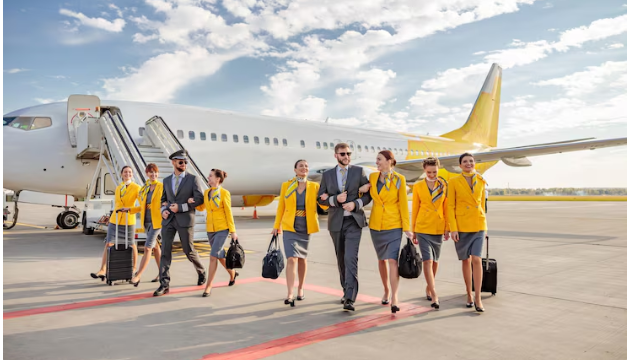
Although Sun Country Airlines’ network capacity is constrained, the airline has been highlighted in industry studies as a potential partial substitute on a few particular routes. The combination implies that no single airline is likely to be able to fill the void left by Spirit. A patchwork of smaller carriers and Delta itself modifying its capacity to grab some of the abandoned demand are more likely to satisfy it, albeit slowly and incompletely.
The practical effects are already showing up for the typical Michigan visitor in the shape of lengthier travel times and increased costs. For the same route, a family that used to pay $400 round-trip for a ticket from Detroit to Orlando could now have to pay $700 or more. A link through Atlanta or Charlotte may now be included in trips that used to take five hours, including security and boarding. The convenience that an ultra-low-cost carrier offered has essentially been eliminated from the menu, especially for travelers on a tight budget who would not otherwise be able to afford to fly. For medium-distance travel that used to require flying, driving is becoming a more common option.
The Wayne County Airport Authority’s ability to promote the vacant hangar and gate space, how aggressively new carriers move to fill the open slots, and Delta’s strategic response to its newly less competitive home market will all determine DTW’s future. None of these solutions will be available right away. Boardrooms at airlines make adjustments more quickly than airports do. There will likely be fewer routes, higher costs, and a discernible strain on the local travel industry in Detroit during the next two to three years. Unfortunately, the city has already learned to handle this kind of gradual, unpleasant transition in other sectors and situations. The most recent example is aviation.