
The natural diamond market split has hardened into something structural, with analysts warning that the industry faces a fundamental reckoning rather than a cyclical downturn, and the latest consumer data suggests the divide between affordable lab-grown stones and premium natural gems is widening further.
The Diamond Standard Index, which tracks investment-grade diamond prices, cratered to its lowest-ever level this spring, with prices down 68% from their 2011 peak. Global demand for natural diamond jewellery was flat in 2025, following three straight years of decline, according to data from De Beers Group.
Yet the picture is more complex than simple decline. The De Beers 2026 Diamond Report found that American women spent an average of $4,063 on a natural diamond in 2025, up 25% from $3,242 in 2023, a sign that those still buying natural stones are spending considerably more per purchase, even as the overall acquisition rate remains low at 9%.
The Natural Diamond Market Split in Practice
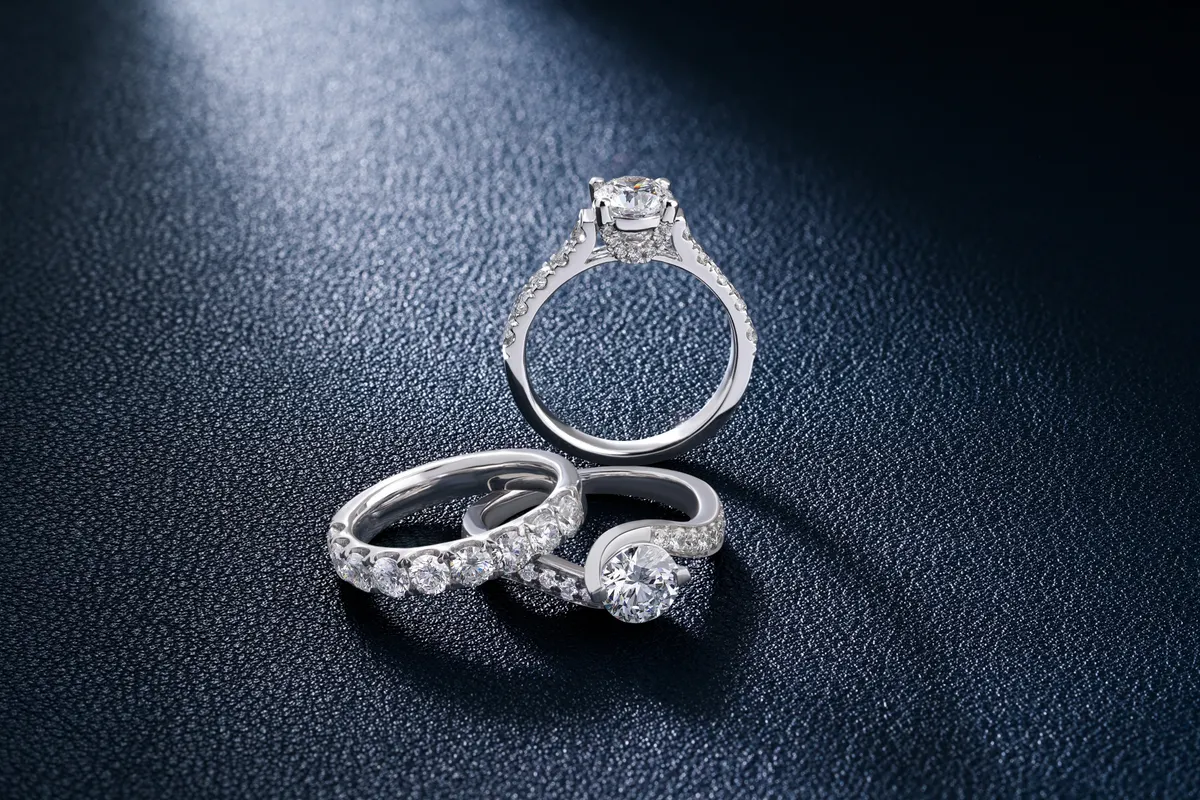
Lab-grown diamonds made up 61% of engagement ring purchases in 2025, a 239% increase on 2020 levels, according to a survey by wedding platform The Knot covering almost 10,500 couples. A separate analysis by Rapaport, also citing The Knot, found the average lab-grown engagement ring cost $4,300 and weighed around 2 carats, compared with $7,000 and 1.6 carats for a natural-diamond ring. Some 40% of buyers said it was important that their stone be lab-grown, with The Knot attributing the shift to ‘economic pragmatism and evolving values.’
The price gap driving those choices is stark. CNBC, citing analyst Paul Zimnisky’s proprietary data, reported that an unbranded, round, 1-carat lab-grown diamond averaged $845 in the first quarter of 2025. Zimnisky noted that lab-grown diamonds can generally sell for around one-tenth the price of a comparable natural stone.
Dan Mano, chief executive of diamond analytics firm Rapaport, said the market is fracturing by category. ‘The diamond market is increasingly bifurcated,’ he said. ‘The broader picture remains challenging and continues to vary significantly by category.’
Large natural diamonds are the most resilient segment. Stones between 2.5 and 2.74 carats were the fastest-growing category in 2025, with sales rising 19%, according to Tenoris data. Sales of diamonds 1.99 carats and below generally contracted over the same period. Zimnisky estimated that elongated shapes (ovals and marquise cuts) had seen around a 25% price increase over the last several years, with those stones typically selling for well in excess of $10,000. ‘There is definitely a sort of K-shaped recovery happening,’ he said.
Edahn Golan, a diamond analyst and managing partner at Tenoris, pointed to another pocket of resilience: off-colour stones. Unit sales of half-carat brown diamonds rose around 200% year-over-year in May, Golan said, citing Tenoris data. Marketed under names such as ‘champagne,’ ‘cognac,’ and ‘chocolate,’ these stones are being repositioned as distinctive rather than defective. ‘They don’t call it brown. They give it all sorts of very cute marketing names,’ Golan said.
Revenue Holds Up, but Not Evenly
Overall US jewellery market revenue rose 5.6% in 2025, driven by higher average spending per item rather than a broad expansion in buyers, according to Tenoris. Average spending per diamond jewellery item rose more than 10% to $2,739. Even so, US retailers’ combined revenue from natural and lab-grown diamonds fell 3% over the year.
IDEX Online reported that 2024 was the first year lab-grown diamonds surpassed natural stones in engagement ring share, with lab-grown accounting for 52% that year before climbing to 61% in 2025.
The natural diamond market split is being compounded by forces beyond lab-grown competition. China, one of the world’s largest diamond markets, saw its personal luxury goods sector contract by as much as 5% last year, according to consultancy Bain & Company. Marriage rates are declining: around 47% of US households consisted of married couples last year, down from 66% roughly half a century ago, according to Census data. Rough diamond trading conditions throughout 2025 were further hampered by geopolitical tensions, tariff disruptions, and elevated gold prices raising jewellery input costs, according to Rapaport’s coverage of De Beers’ 2025 results.
‘The industry has been hit on all fronts,’ Zimnisky said. Lab-grown stones have done a lot of work ‘devaluing’ people’s perception of what a diamond is worth, he added.
Joshua Freedman, a senior diamond analyst at Rapaport, argued the decline amounts to something more than a market correction. ‘I think people have come to the conclusion that it’s not just a cyclical downturn. It’s a more fundamental crisis going on in the diamond industry,’ he said.
Zimnisky sees a potential counterforce building: the sheer ubiquity of lab-grown rings may be restoring the allure of the natural stone. ‘People are starting to want the real thing again,’ he said. Whether that sentiment translates into demand will depend on whether middle-class buyers return to natural stones, and the 2026 engagement season will offer the first real test.