

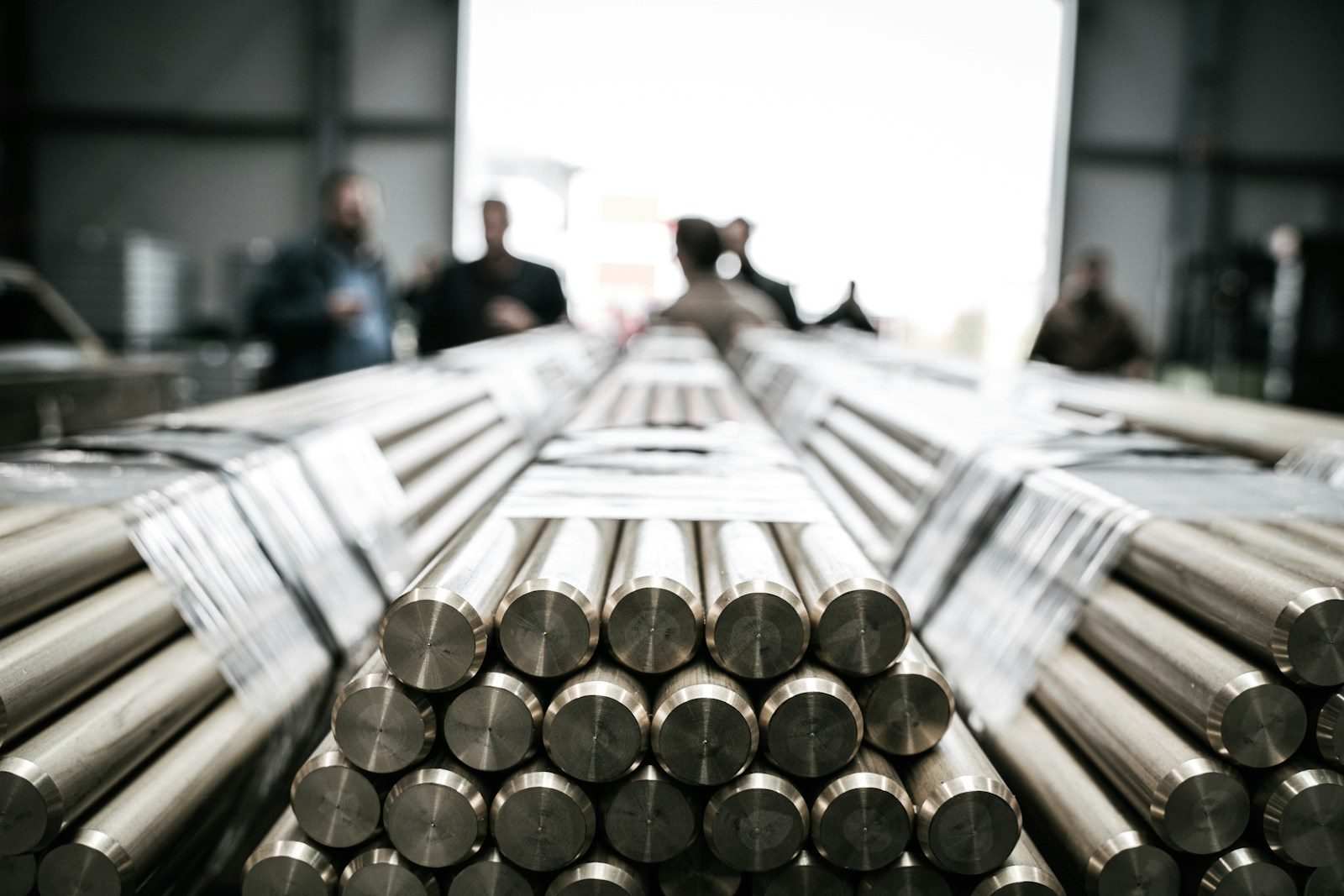
Most metals fail quietly. A little rust here, some pitting there — and by the time you notice, the damage is done. 316 stainless steel was engineered specifically to avoid that fate.
It’s an austenitic stainless steel grade, and it shows up everywhere from hospital operating theatres to offshore drilling platforms. The reason? Its resistance to corrosion is genuinely impressive, especially in the kinds of wet, salty, chemically aggressive environments that chew through lesser metals in months.
But let’s back up and look at what actually makes it tick.
What’s Inside It
At its core, 316 stainless steel contains iron, chromium, and nickel — same as plenty of other stainless grades. The differentiator is molybdenum.
That single addition changes the game. Molybdenum reinforces the thin oxide layer that forms naturally on the steel’s surface, the invisible barrier that stops rust and chemical attack from taking hold. Without it, standard stainless can pit and degrade surprisingly fast when exposed to saltwater or industrial cleaning agents.
This is why engineers reach for 316 over the more common 304 grade when conditions get serious.
What It Actually Does Well
Corrosion resistance. This is the headline feature. Coastal infrastructure, chemical processing pipes, medical instruments — 316 stainless holds up in all of them. Components keep their appearance and structural integrity far longer, even with minimal maintenance.
Mechanical strength. It doesn’t just resist rust; it handles load. Good tensile strength across a wide temperature range, solid resistance to deformation. That combination makes it useful for structural work and precision parts alike.
That said — it’s not the hardest stainless steel available. If your application demands extreme hardness above all else, there are better options out there.
Where It Shines (And Where It Doesn’t)
The real-world advantages of 316 stainless steel stack up fast:
- Resists rust reliably in wet and humid conditions
- Handles saltwater exposure without rapid surface breakdown
- Compatible with a broad range of industrial chemicals
- Cleans easily — genuinely useful in food production and pharmaceutical settings
- Performs well at both low and elevated temperatures
In food processing and healthcare, that last point about cleaning matters as much as corrosion resistance. Hygienic surfaces aren’t optional in those industries; they’re regulatory requirements.
Here’s where it gets less straightforward, though: cost. The molybdenum content and higher nickel levels make 316 stainless meaningfully more expensive than 304 or other general-purpose grades. In dry indoor environments — a shelving unit in a warehouse, say — that premium buys you almost nothing.
Other trade-offs worth knowing:
- Slightly harder to machine than lower-grade steels
- Welded joints need careful treatment to maintain corrosion resistance in the weld zone
- Can be genuine overkill in low-risk settings
It’s a performance material. Spec it accordingly.
Where You’ll Find It
The industries that rely on 316 stainless steel most heavily are exactly what you’d expect — the ones where failure is expensive or dangerous:
Marine and offshore. Saltwater is relentless. Fittings, deck hardware, structural components on offshore platforms — 316 handles the constant chloride exposure better than almost any other cost-effective option.
Chemical processing. Tanks, piping systems, reactor vessels. Equipment here gets hit with acids and aggressive cleaning agents on a regular basis. 316 doesn’t flinch.
Medical and surgical. Instruments, implants, surgical trays. Corrosion resistance plus cleanability plus biocompatibility — it checks the boxes.
Food production. Processing machinery, storage containers, prep surfaces. Hygiene standards in food manufacturing are strict, and 316 makes compliance easier.
Architecture. Outdoor cladding, railings, fixtures exposed to rain and pollution. It holds its finish where other metals would stain or pit within a few years.
Choosing It Wisely
The decision to use 316 stainless steel comes down to three questions: How aggressive is the environment? How accessible is the component for maintenance? And how long does it need to last?
If all three answers point toward demanding conditions, limited access, and long service life — it’s probably the right call.
Fabrication matters here too. Welding 316 is straightforward enough, but the heat-affected zones need attention. In particularly harsh environments, post-weld cleaning or passivation treatment helps preserve the corrosion resistance you paid for.
Where Things Are Heading
Demand for 316 stainless steel is growing. Organisations increasingly favour materials that last rather than components they’ll replace every few years — driven partly by sustainability targets, partly by maintenance cost pressure.
There’s also a smarter approach emerging to material selection: using 316 only where its properties are genuinely needed, and specifying more economical grades for lower-stress areas within the same project. It sounds obvious, but plenty of engineers have historically defaulted to 316 everywhere just to be safe.
Manufacturing advances are helping too. Better machining techniques and surface finishing options are making 316 easier to work with in complex designs, broadening its application range without driving up fabrication costs.
316 stainless steel won’t be right for every job. But in the environments it was built for — corrosive, demanding, high-stakes — it’s hard to beat. The upfront cost is higher. The long-term performance usually justifies it.