

The Austin housing market crash has carved a painful path for homeowners who bought at the peak, with asking prices across the metro now 14.8% below their 2022 high and nearly four in five homes that sold that year worth less than their purchase price today, according to Realtor.com’s July 2025 Housing Market Trends Report.
Ryan McPherson is among those counting the cost. In the spring of 2022, the surgeon and his wife bid $20,000 above the asking price on a four-bedroom in a new east Austin development, stretching the total to $615,000. The prevailing wisdom at the time was simple: ‘Everybody that I worked with, they kept saying Austin only goes up,’ he says.
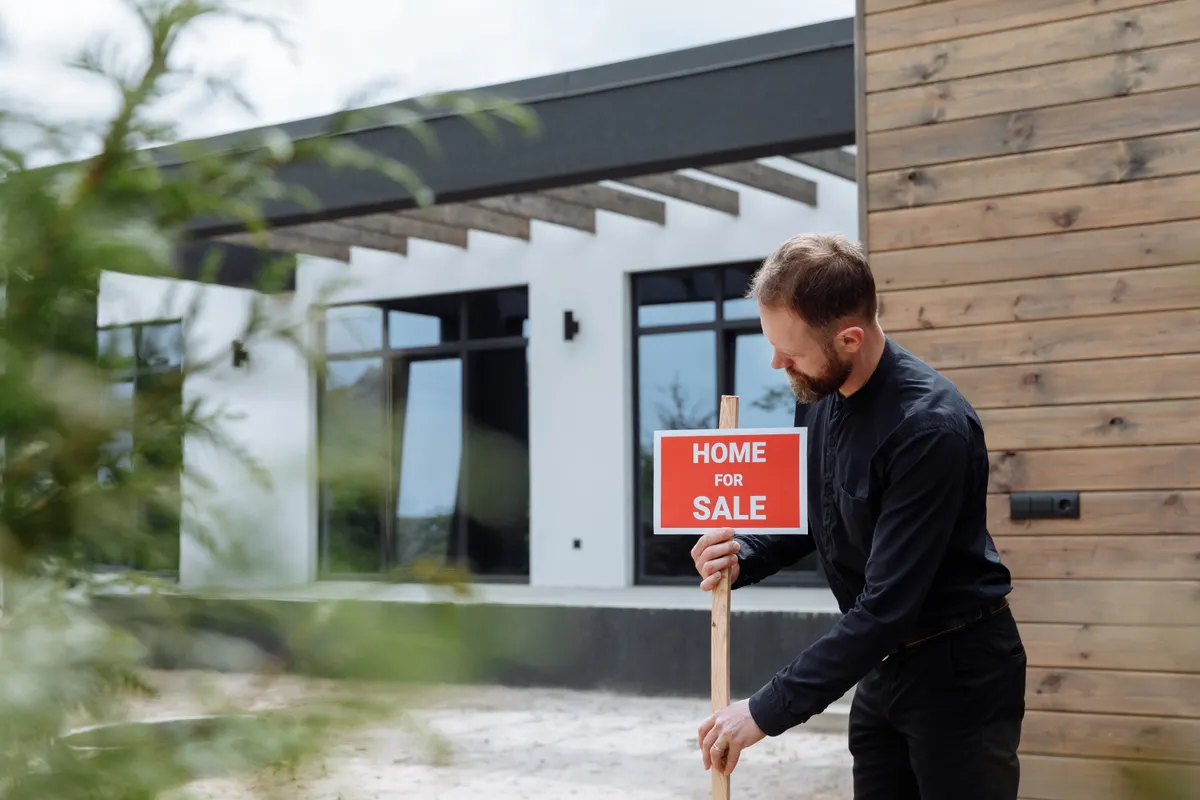
It did not. McPherson has since moved back to his hometown of Phoenix. He is now preparing to list the Austin home at a loss, with an experienced local agent estimating it could sell for somewhere between $420,000 and $450,000, a roughly 30% haircut. Even that, McPherson suspects, may be optimistic. ‘I’m not going to keep trying to wait this out and pray that there’s a turnaround, because it’s not coming right now,’ he says. ‘I’d rather just stop losing sleep over it.’
How the Austin Housing Market Crash Unfolded
The seeds of the correction were sown during the pandemic. Between 2020 and 2022, Austin’s population swelled by 5.3%, or more than 120,000 people, making it the fastest-growing large metro in the country, per census data. Mortgage rates near record lows and the rise of remote working made the city an attractive alternative to expensive coastal hubs. By August 2021, asking prices were up more than 36% year over year. The typical Austin home cost more than $465,000 by the time prices peaked the following spring, roughly 50% above where they had stood three years earlier.
Developers responded to surging demand. Between April 2020 and July 2025, the Austin area’s housing supply grew by more than 20%, adding roughly 211,000 units, according to census estimates. Then, beginning in March 2022, the Federal Reserve raised interest rates sharply. Mortgage rates jumped from below 3% to the 5–6% range between December 2021 and July 2022. Demand evaporated almost overnight.
‘Everything was going into multiple offers, and then it really just stopped,’ says Lindsay Neuren, an Austin real estate agent. ‘That really spooked the market.’
The bulk of those newly built homes landed on the market precisely as buyers retreated. Joel Berner, an Austin-based senior economist for Realtor.com, describes the city’s trajectory as an inverted Nike swoosh: a quick price surge followed by a long, slow drift downward. In July 2025, the Austin metro’s median list price stood at $510,950, down 4.9% year over year and well below the 2022 peak, per the Realtor.com August 2025 buyer’s market report. Since August 2022, the median list price has fallen 13.2%, with list prices per square foot down a further 3.5% year over year.
Inventory tells a similar story. Austin’s active listings in July 2025 sat 59.7% above pre-pandemic levels, the second-largest surplus among the 50 largest US metros, behind only Denver at 73.1% above pre-pandemic levels, Realtor.com data show. Roughly 12,700 Austin-area homes were sitting on the market that month, compared with about 8,000 at the same point in 2019.
Sellers Caught Between Builders and a Soft Rental Market
The rental market has offered little refuge. Austin’s citywide median rent was $1,975 per month in the latest available data, reflecting a 5.95% year-over-year decline and a 19.39% fall over three years, according to Realtor.com’s Travis County housing data. Median days on market stood at 66, up 25% over three years.
McPherson experienced the rental trap directly. He rented out his home for $2,500 a month in June 2025, well short of his $4,000 monthly outlay for the mortgage and other expenses. With those tenants now gone, he faces a market that has only softened further as nearby homebuilders continue adding stock.
Builders hold a structural advantage that private sellers cannot easily match. Their in-house lenders can offer rate buydowns, making new-build mortgages cheaper than anything a resale seller can arrange. ‘Very, very hard for resale homes to compete,’ Neuren says.
The 79% of 2022 Austin-area buyers now sitting on paper losses are not evenly distributed. Distress is concentrated in suburbs and new developments where construction continues. In contrast, Realtor.com research identifies ZIP code 78739, covering the Circle C and Shady Hollow neighbourhoods, as the metro’s hottest area in the first half of 2025, with a median listing price of $829,450 and homes selling in 33 days, nearly three weeks faster than the national norm. Established suburbs with good schools and limited resale supply continue to attract multiple offers.
Meanwhile, Austin’s affordability score has begun to recover. Realtor.com puts it at 0.60 as of June 2025, up from 0.51 a year earlier, driven partly by a 4.5% decline in the median listing price to $499,000. The US Census Bureau puts Austin city’s population at just over 1 million as of July 2025, underscoring that the underlying demand story has not collapsed.
Pending sales in June were up 11% year over year, and price reductions are becoming less frequent as sellers reset their expectations. ‘Sellers have just been slowly adjusting to meet buyers,’ Berner says. Housing research firm Zonda expects prices to recover over the longer term, pointing to Austin’s demographics and employer base as durable foundations. For those who cannot wait that long, the calculus is grimmer. ‘Life taught me an expensive lesson,’ McPherson says. ‘Hopefully, I don’t repeat these mistakes.’