

Longtime Tolkien enthusiasts and tactile builders alike are drawn to this set because of more than just the shimmering angles of the dark helm or the sleek black base it rests on. Launching on March 1, the LEGO Sauron Helmet is more than just a collectible—it’s a multi-layered homage to film, mythology, and design. With 538 parts and a thirteen-inch height, it is spectacular on a shelf but still affordable and manageable in terms of build time.
LEGO has been subtly developing its fantasy brands for years, progressing from lighthearted references to full-fledged architectural homages. The scale and ambition of the Rivendell and Barad-dûr sets, which were priced for aficionados willing to spend hundreds of dollars, attracted attention. However, the classic, sleek, and surprisingly reasonably priced helmet series also provides access opportunities. This package feels high-end without being exclusive at $69.99.
Key Details — LEGO Sauron Helmet Set (11373)
| Detail | Information |
|---|---|
| Set Name | LEGO Icons: The Lord of the Rings – Sauron’s Helmet |
| Set Number | 10333 |
| Pieces | 538 |
| Dimensions (H x W x D) | 13 in x 5 in x 5 in (33 cm x 13 cm x 13 cm) |
| Price | $69.99 USD |
| Release Date | March 1, 2026 (Aragorn’s canonical birthday) |
| Age Recommendation | 18+ (Adult Builders) |
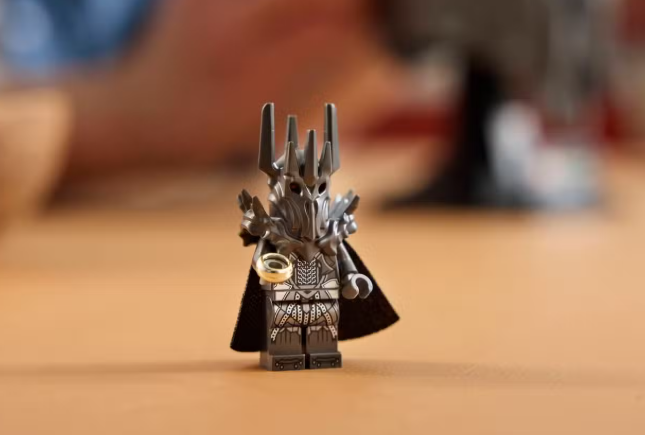
| Included Extras | Display Stand with Plaque, Sauron Minifigure with The One Ring |
| Purchase Link |
Here, the craftsmanship leans toward menace and symmetry. Jagged and controlled, spires rise like a steel crown, evoking Sauron’s terrifying armor as shown in Peter Jackson’s film. It’s definitely dark, but not oppressively so. A layer of delight is added by the choice to include a minifigure of a small Sauron holding The One Ring, giving the impression that Mordor has its own merchandising department. It’s the type of wink that LEGO excels at.
It’s remarkable how adult enthusiasts have embraced these bust-style structures as design pieces as well as toys. They work almost like pop-culture sculptures, whether they are tucked away behind game consoles and headphones or placed next to an art book on a coffee table. They have decorative and expressive purposes in addition to being just nostalgic.
I’ve seen that more collectors, particularly those in their 30s and 40s, have been discussing sets like this as mood pieces in recent months. This type of spatial storytelling involves your shelf revealing something about your reading habits, loyalty, or even your sense of drama. This black, angular, and melancholy helmet says a lot without using any words.
Through their partnership with Warner Bros., LEGO has given fans access to a wider range of storytelling options. This helmet falls somewhere between a display model and a lore artifact, whereas smaller BrickHeadz models like Frodo or Legolas are more suited to younger builders or casual fans. Although it is manageable due to its small footprint, the detail and silhouette give it presence.
Additionally, presence counts. Especially considering how much iconography is used in fantasy series, such as the map of Middle-earth, Aragorn’s sword, or Sauron’s eye. Memory is anchored by these symbols. They give stories that have abstract form. Bricks are now given shape by them.
The design team at LEGO is able to create a remarkably organic effect from rigid parts by utilizing creative part utilization, such as layered plates, hidden Technic pins, and inclined slopes. The helmet’s composition conveys intimidation rather than merely imitating armor. It is quite successful at evoking tone in addition to being structurally astute.
A clever marketing ploy that turns March 1 into a mini fandom holiday is the set’s arrival on what ardent fans will know to be Aragorn’s birthday. At that point, letting it go feels less like a coincidence and more like a gesture—one of those little, fulfilling alignments that can only be found in compulsive storytelling.
Building the LEGO TIE Fighter helmet two winters ago brought back memories of its precision and careful repetition. After a hard day, I found myself drawn in by the quiet and clicking pattern, which had a relaxing quality. A comparable haven is promised by the Sauron Helmet: a project that anchors time rather than merely kills it.
Timing is strategic for LEGO. Given that Barad-dûr costs about $460, the business need a comparable product that was both approachable and significant. That gap is filled by this helmet. It’s for the fan who wants to live in Middle-earth but can’t afford a mortgage.
Adult LEGO construction increased during the epidemic, serving as both a diversion and a kind of healing. Sets like these carry on that tradition by providing real, screen-free immersion. Making Sauron’s helmet feels more like a process than a game.
The collection strikes a balance between ease and complexity through well-considered design decisions. The helmet develops as a sequence of revelations rather than being overwhelming in any one area. Attention is rewarded at each stage. Every viewpoint evokes admiration.
The emotional contrast in this scene is really inventive; the set is both ominous and oddly charming. That Sauron minifig? He’s almost adorable, holding his ring like a child who’s discovered a cookie. It serves as a reminder that even villains become less dangerous in small.
The Lord of the Rings series from LEGO maintains a careful balance between inventiveness and devotion. Instead of bombarding fans with content, they have carefully chosen it, tying new releases to iconic buildings, legendary items, and beloved characters. This restraint seems deliberate and remarkably successful.
Sets like this will be physical touchpoints when new audiences come to know Tolkien through streaming projects and remakes in the years to come. They are mementos rather than merely goods. Fiction that you can handle, put together, and proudly display.