

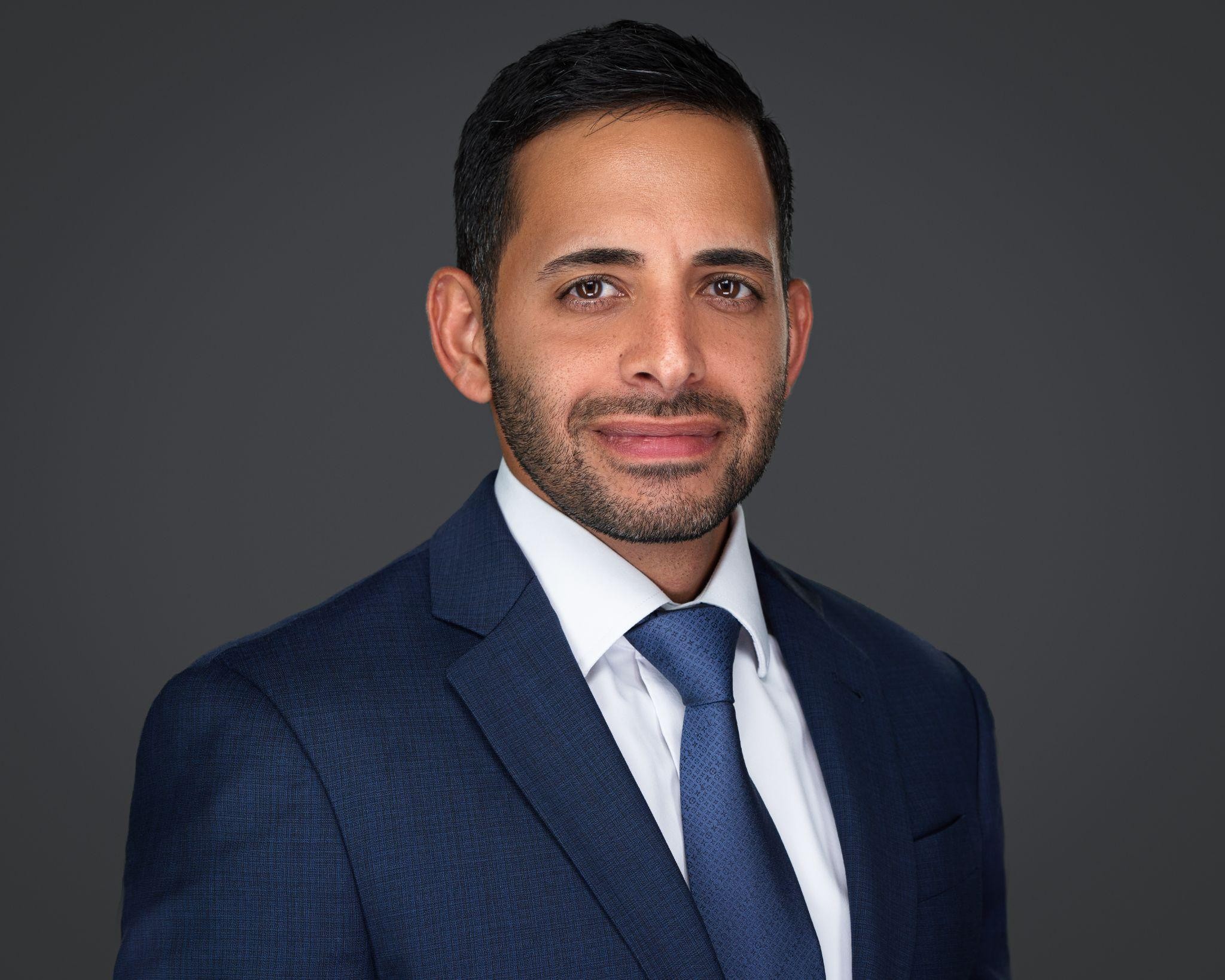
Most business consultants arrive at the profession through finance, accounting, or a stint at a major firm. Nicholas Mukhtar took a different route. Before advising CEOs and family offices on operational efficiency, he ran a nonprofit that transformed Detroit parks into community health centers, earned dual master’s degrees from Johns Hopkins University as a Bloomberg Fellow, and consulted for congressional leaders on public health policy.
That background shows up in how he approaches corporate problems. Where other consultants might default to cost-cutting or restructuring, Mukhtar tends to frame challenges through a public health lens: prevention over treatment, systems over symptoms, and scalability built from the start. His client roster at Tera Strategies, the Fort Lauderdale-based firm he founded, includes family offices, wealth management practices, and business owners seeking help with digital transformation and streamlined operations.
From Medicine to Prevention
Nicholas Mukhtar grew up in Metro Detroit. He began college at the University of Dayton on a full academic scholarship as a Chaminade Scholar, then transferred to Wayne State University when his mother’s battle with cancer required him to be closer to family. He finished his bachelor’s degree in 2013 and, rather than continue down the medical track he had been pursuing, shifted course entirely.
A 2018 profile in Parks & Recreation Magazine described the turning point: “As Nicholas Mukhtar was finishing his medical degree in Detroit, he began to see a different side of healthcare. Rather than follow the career path of a surgeon, focusing on treating people once they became sick, he decided he’d create systems change at the community level and focus on prevention.”
That shift came after he read through the Affordable Care Act and its emphasis on the U.S. Surgeon General’s National Prevention Strategy. Mukhtar recognized that clinical medicine addressed problems downstream; population-level prevention could reduce the volume of problems reaching clinicians at all.
Just one year after graduating from Wayne State, he founded Healthy Detroit, a 501(c)(3) nonprofit dedicated to building what he called “a culture of healthy, active living” across the city. His approach was unconventional: rather than opening clinics or hiring doctors, he partnered with Detroit’s Parks & Recreation Department to transform public parks into wellness hubs.
The Bloomberg Fellowship and Systems Thinking
Healthy Detroit’s HealthPark initiative launched in July 2014. Parks across Detroit became one-stop wellness centers offering free fitness classes, health screenings, nutritional programs, and connections to social services. Mukhtar explained the logic at the time: “We chose city parks as our vehicle for building a culture of health because it’s the one piece of a community that has no barriers or limitations.”
That philosophy—finding delivery mechanisms without barriers—would later inform his corporate consulting work. But first came graduate school.
While serving as CEO of Healthy Detroit, Nicholas Mukhtar enrolled at Johns Hopkins University as a Bloomberg Fellow. He completed dual master’s degrees in Public Policy and Public Health by 2017. Bloomberg Philanthropies funded the fellowship with a $300 million gift in 2016, creating a pipeline that awards full-tuition scholarships to professionals tackling urgent health issues across the country. Fellows are embedded within their organizations during training and commit to applying their new skills for at least one year after graduation.
Public health programs at Johns Hopkins assume that population-level problems require cross-disciplinary thinking. Fellows study epidemiology alongside policy analysis, learning to trace how upstream decisions create downstream health outcomes. For Mukhtar, who had already built a nonprofit from scratch, the curriculum offered frameworks to articulate what he had been doing intuitively.
Healthy Detroit’s growth validated those frameworks. Under Mukhtar’s leadership, the organization raised over $100 million in funding and reached an annual operating budget of roughly $15 million by 2017. That same year, the American Public Health Association named Healthy Detroit the National Public Health Organization of the Year—a recognition typically reserved for established institutions rather than startups led by someone in his early thirties.
National attention followed. Healthy Detroit was one of only three organizations featured in the U.S. Surgeon General’s 2014 Report to the President and Congress on the National Prevention Strategy. Mukhtar also received the Playmakers Changemaker of the Year award in 2015 for his work driving community health improvements.
What made these achievements possible, according to Mukhtar, was treating the nonprofit like a system rather than a collection of programs. Each HealthPark followed the same model: residents received biometric assessments, were connected to partner services through an on-site virtual network, and carried a “Healthy Detroit Passport” that tracked their engagement and rewarded participation. Passport data collected aggregate information while empowering individuals to monitor their own progress.
Replicability mattered as much as initial impact. A program that worked in one park but couldn’t be duplicated across the city would have limited reach. Nicholas Mukhtar designed Healthy Detroit’s infrastructure with scale in mind from day one—a habit he would carry into private-sector consulting.
From Nonprofit Leadership to Corporate Advisory
Nicholas Mukhtar stepped away from Healthy Detroit after nearly seven years as Founder and CEO, transitioning the organization into a public-private partnership with the City of Detroit and Wayne County. His next move took him to Washington, D.C., where he founded Healthy Communities, a boutique consulting firm focused on public policy.
His client list reflected the network he built during the Bloomberg Fellowship and Healthy Detroit years. Mukhtar advised Speaker of the House Paul Ryan, contributed to the White House’s Office of American Innovation, and worked with Senators Rand Paul and Tim Scott on health policy matters. Other clients included the City of Austin, Texas; Wayne State University; and Orlando Health.
By 2019, he had broadened his practice beyond public health. He founded Tera Strategies in Fort Lauderdale, Florida, applying the operational frameworks he developed in the nonprofit sector to corporate clients. His current roster includes family offices, wealth management practices, and business owners pursuing digital transformation and organizational development.
A focus on prevention-oriented thinking connects Healthy Detroit to Tera Strategies. Public health professionals are trained to ask why problems occur rather than simply treating their symptoms. Mukhtar applies similar logic to corporate dysfunction. When a company struggles with execution, he looks for upstream causes: unclear decision-making authority, systems designed for a smaller scale, or priorities that fragment rather than focus leadership attention.
“It is important to stress that successful partnerships must have mutual benefits for all parties, and these benefits must be explicit and transparent,” Mukhtar noted in his 2017 presentation at the National Recreation and Park Association Annual Conference. “Partnerships that are formed in which one side benefits and the other side does not are not sustainable and will not be successful.”
That principle—sustainability through mutual benefit—applies equally to vendor relationships, employee retention, and client engagements. Nicholas Mukhtar’s consulting work at Tera Strategies centers on building systems that function without constant intervention, much like the HealthPark model he designed to operate across multiple Detroit parks without requiring his personal oversight at each location.
His board memberships reinforce the connection between his public health roots and corporate present. He has served on the boards of Trinity Health System–Livonia, the Men’s Health Foundation, and Wayne State University School of Medicine’s External MPH Advisory Board. Detroit Mayor Mike Duggan appointed him to chair the Detroit Parks & Recreation Commission.
Few consultants can point to a Surgeon General’s report and an APHA award as credentials. For Nicholas Mukhtar, that background isn’t incidental to his advisory work—it shapes how he diagnoses problems, designs interventions, and measures success.