

More quickly than the tankers, the headlines changed. The rally had already started to wane by the time the majority of readers had finished processing the news of crude rising by almost 9% in a single stretch, with WTI clearing $81 and Brent edging toward $86. The futures screens flickered back toward something like calm, with a denial here and a rumor of a peace deal there. However, anyone who has previously observed these cycles is aware that the serenity is a deceptive aspect.
Looking through the data, it seems like markets have become too adept at forgetting things. Approximately 25% of the world’s seaborne oil and 5% of its LNG are still transported via the Strait of Hormuz. That hasn’t altered. For a short while, traders’ willingness to act as though it might not matter changed. The thin line between routine and chaos was evident when commercial ships began anchoring off the coast of the United Arab Emirates earlier this month in anticipation of clearer navigation through the Strait.
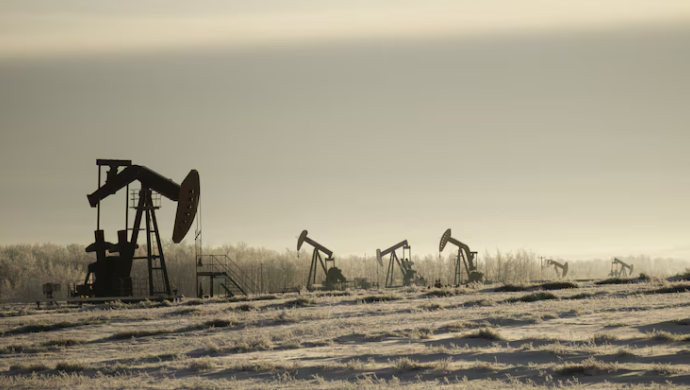
The majority of retail investors undervalue the transmission mechanism. An increase in crude does not remain within the energy aisle. Diesel, freight, and nearly everything that travels on a truck are all impacted. Refiners transfer expenses in a matter of days. Logistics companies come next. The supermarket shelf eventually catches up, and households begin to experience what economists refer to as second-round effects—a gradual tightening. It’s a quiet, almost unremarkable process until all of a sudden it’s not.
The rate-cut narrative has been subtly disintegrating for weeks because central bankers are aware of this. The topic of discussion has changed from when cuts occur to whether the path is gradual enough to withstand another shock. According to policymakers, they consider energy volatility. In actuality, they are unable to overlook recurring increases that could raise inflation expectations. Headline and core are inextricably linked when a household pays more at the pump for the third time in two years. All they can recall is the number.
The division is becoming evident in equity markets. Oilfield services and energy majors have received a bid that seems more than strategic. Long-duration tech, REITs, and the recently popular AI-adjacent names trading at uncomfortable multiples are examples of rate-sensitive corners that have been faltering. Instead of panic, which is in some ways a more persistent issue, bond yields have increased in a way that suggests inflation repricing. Panic subsides. Repricing usually endures.
The price charts appear more organized than the geopolitical landscape outside the trading floors. Although the last official figure Tehran released was in 2024, Chatham House analysts have noted that Iran’s own GDP could shrink by more than 10% under a protracted conflict. During the twelve-day conflict last summer, the economies of Israel and the Gulf took a 1% hit in the second quarter. Longer fights change those numbers in ways that are difficult to accurately model.
More than any one price point, the spike revealed how much of the global system still depends on a single, narrow waterway and the diplomatic climate surrounding it. Only when semiconductor manufacturers start making inquiries does the fact that Qatar produces about 40% of the world’s helium become noteworthy. Fertilizer inputs, nitrogen, ammonia—the list of hidden dependencies gets longer the closer you look. These chokepoints are often exposed in negative ways during crises.
The recent decline in crude may indicate a true de-escalation. It might also indicate a pause. In any case, the underlying framework has changed, and it is now more difficult to defend the cozy belief that energy shocks are a problem from the 1970s rather than the present than it was a month ago. As you watch this develop, you don’t get the impression that the market has found a solution. It is about a market that has once again decided to ignore it.