
An Iceland family trip organised as a surprise birthday gift for a 75-year-old grandmother has become one of those memories that resurfaces, nine years on, every time the family gathers. Writer Laura Leavitt recounts how seven relatives, spread across different cities, came together for four days of geysers, glaciers, and late-night card games, and why the trip still comes up at weekly dinners.
A Box of Balloons and a One-Way Ticket to Reykjavík
The idea began with an email from one of Leavitt’s husband’s cousins: pool resources, buy flights, and give ‘Nanny’ a trip to Iceland for her 75th birthday. Six family members eventually signed up to go with her. At the birthday party itself, a blowout bash complete with karaoke, Nanny was handed an enormous box stuffed with balloons and a small sign reading ‘You’re going to Iceland.’ Family members who could not travel contributed to the costs, spreading the gift beyond those actually on the plane.
Planning split naturally along interests. One cousin prioritised a remote hike to a hot-spring-fed outdoor pool. Others wanted glaciers and waterfalls. Leavitt wanted to tour a geothermal power plant. The group booked two rentals: a house near Reykjavík for the first half, then a light-filled property facing a glacier and surrounded by sheep pastures for the journey further inland. Two hire cars let different combinations of people set their own pace without the group fracturing entirely.
Planning the Iceland Family Trip Around Seven Very Different People
The Golden Circle anchored the itinerary. One stop was Þingvellir National Park, where the group stood on the Mid-Atlantic Rift, the only place on earth where this rift rises above sea level, according to Guide to Iceland. The North American and Eurasian tectonic plates meet here and pull apart at roughly 2.5 centimetres per year. The Þingvellir visitor centre houses an interactive exhibition called ‘Heart of Iceland’, which won two Red Dot Design awards in 2019 (one for information design and one for interface design and user experience) across approximately 10 interactive stations.
Another stop was the Kerið volcanic crater lake in the Grímsnes area. The crater sits 55 metres deep, stretches 170 metres wide and 270 metres across, and is formed from red volcanic rock estimated to be between 3,000 and 6,500 years old. No extreme hiking required: the scramble around the rim was manageable for the full group.
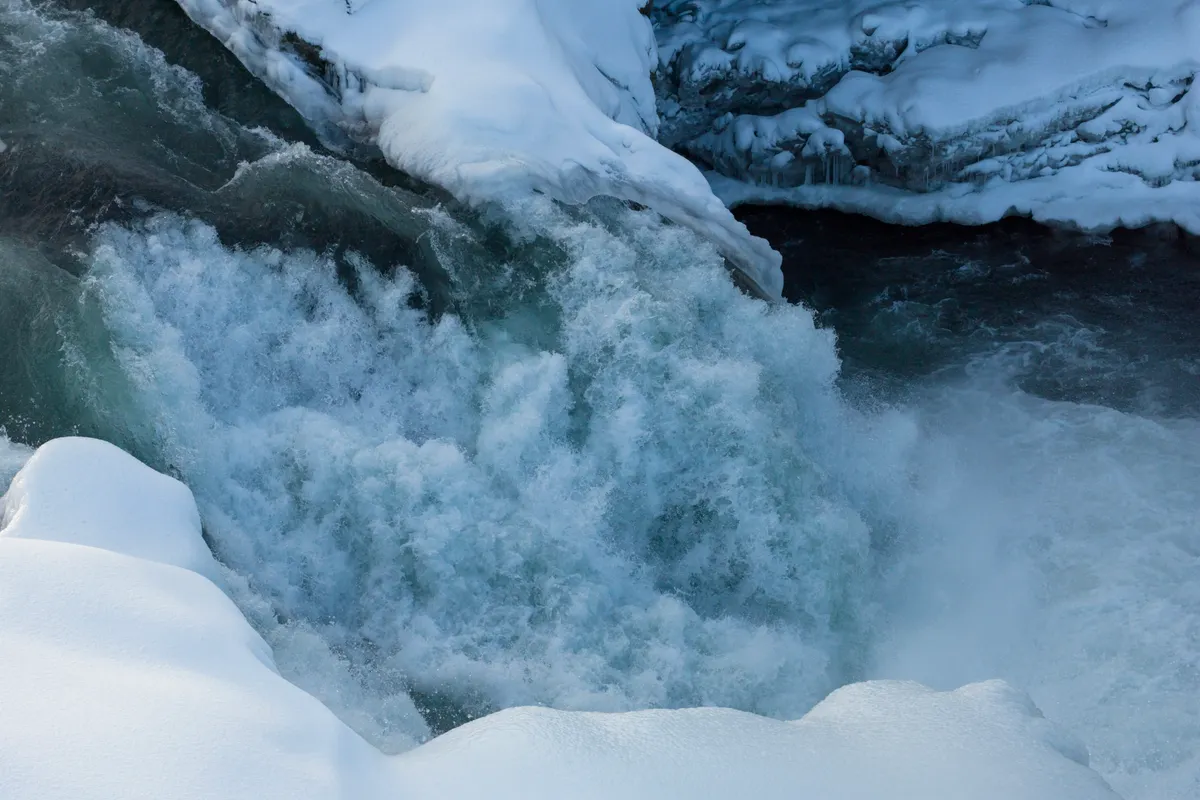
At Seljalandsfoss, the group found a waterfall they could walk behind. Guide to Iceland records it at 60 metres tall (approximately 197 feet), fed by glacial meltwater from the stratovolcano Eyjafjallajökull, dropping from cliffs that were once the ancient Icelandic coastline. The combination of accessible wonder and real scale made it a favourite.
What the Trip Actually Felt Like
Leavitt and her husband, both early risers, found a different local pastry shop each morning and brought back breakfast for the whole crew. That kind of small, spontaneous routine, repeated across four days, turned out to matter as much as the set-piece sights. The two-hour drives between Golden Circle stops became conversation, a chance for cousins who had lived in different cities for years to reconnect.
Nanny was surrounded throughout by people who had rearranged their schedules specifically to be there. The evenings drew the group back together: shared fish dishes, a first encounter with Brennivín (Iceland’s caraway-flavoured spirit), and cards until late.
Nine years on, the Iceland family trip surfaces regularly in the form of Nanny’s digital photo frame, cycling through images of lava rock, glacier views, and seven people grinning in waterproof jackets. The trip cost real money (flights, two hire cars, two rental properties, restaurant meals across four days) but Leavitt frames the expenditure plainly: it bought a memory that the whole family has been spending ever since.
For anyone weighing a similar group trip, the practical question is whether Nanny has a birthday coming up.