

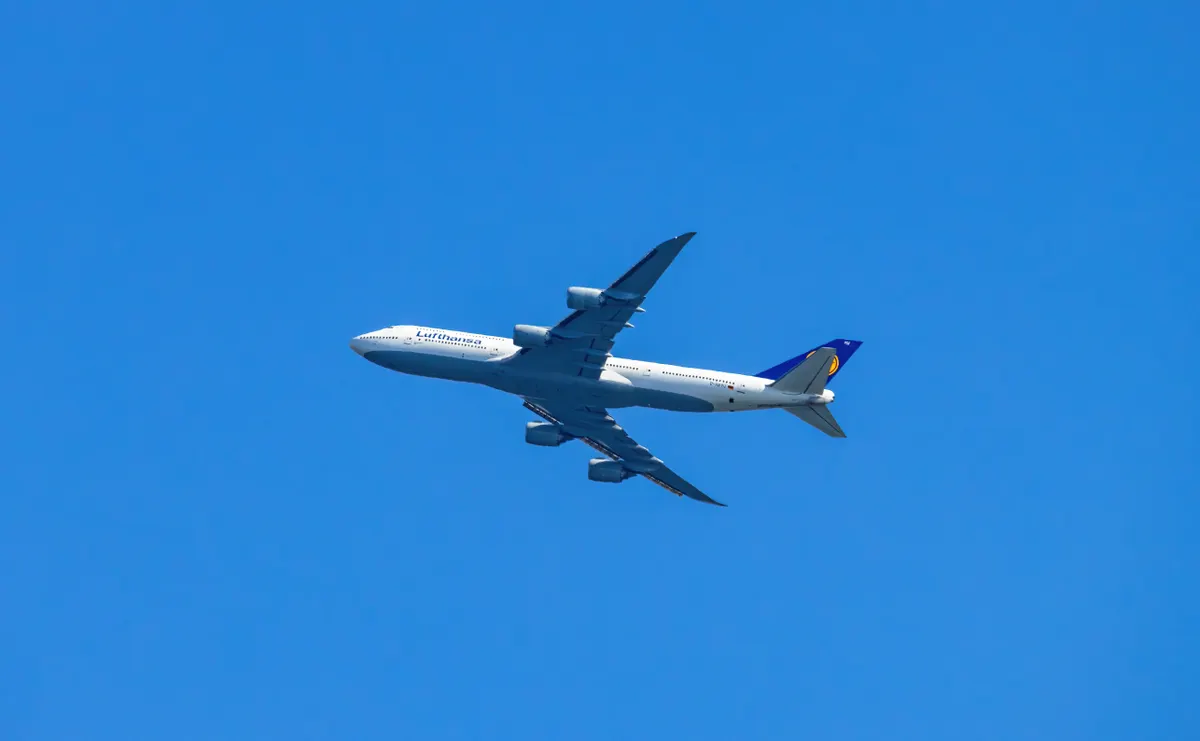
An A380 weather radar failure left a British Airways crew unable to safely navigate fast-developing storm cells over Central Africa last Saturday, forcing flight BA54 to turn back to Johannesburg after nearly seven hours in the air and ending where it began.
The flight departed Johannesburg bound for London Heathrow, a journey that typically takes around 10 and a half hours. It left more than five hours behind schedule, at 2:45 a.m. local time.
According to flight-tracking data from AeroXplorer, the aircraft flew north for roughly two hours before turning back over the Democratic Republic of the Congo. The specific aircraft was registration G-XLEJ, and the route crosses the equator, a region known for rapidly building cumulonimbus storm cells.
Weather Radar Fault That Crew Could Not Resolve
Aviation specialists at Simple Flying report that no troubleshooting efforts by the crew could resolve the weather radar malfunction, and that failure was the direct reason pilots decided to return rather than press on through the storm-prone corridor.
Online aviation enthusiasts intercepted a text message sent via the Aircraft Communications Addressing and Reporting System (ACARS) citing issues with the aircraft’s weather radar, a key safety system that allows pilots to detect and avoid severe weather.
‘We’re sorry for the inconvenience caused to customers after their aircraft returned to Johannesburg due to a technical issue,’ a British Airways spokesperson said. ‘Following the aircraft’s return, our teams provided overnight accommodation and support, and worked to minimise disruption.’
After turning back, the aircraft entered a holding pattern just north of Johannesburg. The A380 would have been carrying substantial fuel reserves for its long-haul journey, which pilots needed to reduce before landing. Flight-tracking data shows the aircraft flew in a circle for over two hours before it came in to land.
The Aircraft: A Quad-Engine Giant in the Middle of an Overhaul
BA54 was operated by an Airbus A380, the world’s largest passenger plane. British Airways currently operates a fleet of 12 A380-800s, each powered by four Rolls-Royce Trent 900 engines with a maximum range of 15,400 km, according to the British Airways media centre.
In British Airways’ current layout, the double-decker jet seats 469 passengers across four cabins: First, Club World, World Traveller Plus, and World Traveller, as confirmed on the carrier’s A380-800 fleet facts page.
That configuration is set to change. British Airways has begun a major overhaul of all 12 of its A380s, replacing the existing 469-seat layout with a new 421-seat arrangement designed to increase premium capacity and reduce economy seating. Aviation A2Z, citing the programme, reports that all aircraft are scheduled to be retrofitted by late 2026, though a separate social media source has cited end of 2027; Aviation A2Z’s figure is used here as the more authoritative trade-publication source. The overhaul work means several aircraft have already been grounded for refitting, according to Aviation A2Z.
The diversion adds to a period of operational complexity for the British Airways wide-body fleet at a time when its flagship aircraft type is being progressively taken out of service for cabin work.
For passengers on BA54, the immediate question is when a replacement service will depart. Airlines in this situation typically position a serviceable aircraft and crew, though the timing depends on availability at Johannesburg and the depth of the engineering investigation into the A380 weather radar failure. That investigation will determine whether G-XLEJ returns to service quickly or joins the queue of aircraft already undergoing work.