

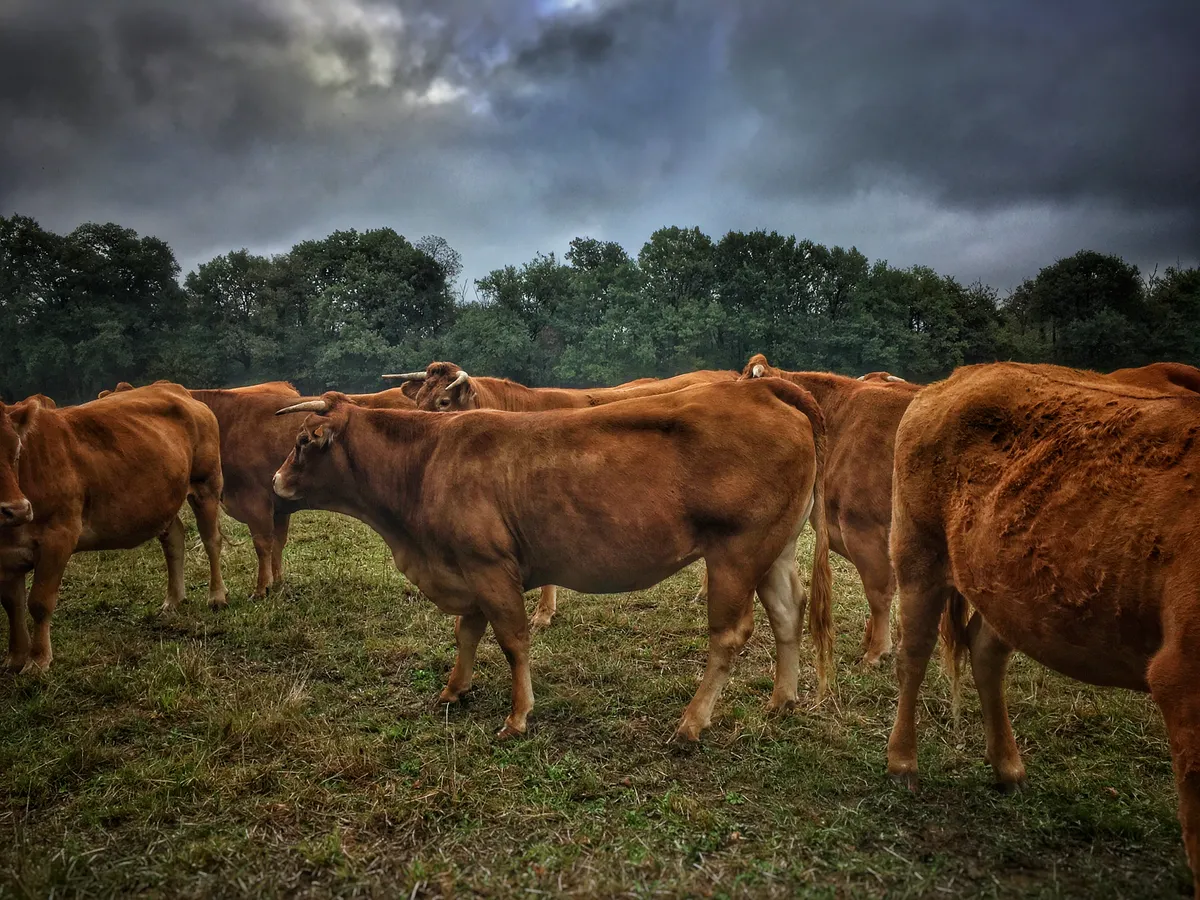
Masashi Nakamura is running a Wagyu farm in Kagoshima Prefecture that has been in his family for over 60 years, after walking away from IT work in Osaka and a web development course in Vancouver to take over his grandfather’s ageing operation in Satsuma.
Nakamura, now 29, moved back to Japan in late 2025 and handles daily operations while his grandfather steps back. He wakes at 6 in the morning to feed the cattle and clean the farm. His grandmother continues to care for the animals. The business does not yet generate enough income to hire workers.
From Server Rooms to Satsuma
The path was not direct. Nakamura graduated from a Japanese university with a degree in English language and communication, then took a job as an IT engineer in Osaka monitoring servers. After two years, he wanted to build digital products himself, so he moved to Vancouver to study web development. When that did not work out, he headed to Australia on a working holiday visa.
It was at a meat processing facility in Tasmania, in 2024, that the turning point came. He noticed the word ‘Wagyu’ on hanging beef carcasses. Having grown up in Japan, he had always taken the breed for granted. Seeing how highly people overseas regarded it shifted his perspective. Around the same time, he learned his grandfather planned to sell the remaining cattle and close the farm.
When Nakamura told his grandfather he wanted to take over, his grandfather was surprised and worried he would not be able to make a living from farming. He supported the decision anyway.
Why a Wagyu Farm in Kagoshima Is Worth Saving
The prefecture Nakamura has returned to is Japan’s dominant force in Wagyu production. Wagyu Handbook notes that Kagoshima accounts for roughly 20% of Japan’s total Wagyu output, with over 330,000 head of Japanese Black cattle, more than five times the roughly 60,000 head kept in Hyogo Prefecture, home of Kobe beef.
That standing was confirmed on the competition circuit. Kagoshima beef took the overall championship at the Wagyu Olympics in both 2017 and 2022, defeating every other prefecture in Japan’s most rigorous cattle competition, according to the Wagyu Handbook.
The breed’s dominance is a product of history. The Discover Kagoshima Official Travel Guide records that cattle in the prefecture were originally kept as draft animals for ploughing fields and pulling wagons. In the 1950s, as agricultural machinery spread, breeding shifted away from working cattle, and stud bulls were managed by public and private organisations to support a transition to beef production. The animals Nakamura tends are descendants of that transformation.
Across Japan, the Wagyu category is narrow by definition. ScienceDirect cites data from Japan’s Ministry of Agriculture, Forestry and Fisheries showing only four breeds qualify as Wagyu, and Japanese Black constitutes over 97% of beef cattle in Japan. Kagoshima cattle are raised for 28 to 30 months, with the final 15 to 18 months on a grain-based diet of corn, barley, rice straw, and proprietary blends designed to maximise intramuscular fat.
The wider agricultural picture gives Nakamura’s prefectural choice further context. Data cited in a 2024 MAFF white paper and reported by Nippon.com put Kagoshima’s agricultural output at ¥540 billion in 2023, second only to Hokkaido among all Japanese prefectures. Wagyu is central to that figure.
Internationally, the product commands growing attention. The value of Japanese beef exports rose from JPY 3.4 billion in 2010 to JPY 24.7 billion in 2018, driven by demand in China, Hong Kong, South Korea, and the United States, according to Food Navigator Asia.
Building a Different Kind of Farm Business
Nakamura is not aiming to scale headcount. He has watched the cycle that large herd operations can create, balancing cattle numbers with rice farming and pushing operators to their limits. His model is built around diversifying income rather than expanding the herd.
He currently earns income through part-time work at an artificial insemination centre, shifts at a neighbouring Wagyu farm, online donations via Buy Me a Coffee, and paid Instagram subscriptions where he posts behind-the-scenes videos of farm life. He is also developing a farm management application and plans to build a farmstay.
The pay cut is real. He earns less than half what he made as a starting IT engineer. He describes the trade-off plainly: IT work brought mental stress; farming brings physical and financial pressure, and because the animals are living, there is no day off.
His IT background and language skills are the edge he is betting on, running the kind of operation his grandfather could not have built and working in a prefecture that has already proven, twice at the Wagyu Olympics, that it produces the best cattle in Japan. Whether a farmstay and a management app can generate enough to keep the herd growing will be the test of that wager.