
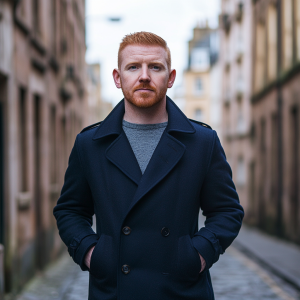

Fei-Fei Li has described her leadership of World Labs as that of a demanding parent, saying the age gap between herself and her team has put her firmly in a ‘tiger mom’ role at the spatial AI company she co-founded in 2024.
‘I’m by far the most senior in the company,’ Li told Bloomberg in an interview released on Wednesday. ‘From my co-founders to my engineers, and researchers, and scientists, they’re so talented, but they’re also young.’
‘I do feel like a mom,’ she added. ‘And oftentimes I feel like a tiger mom. I do run this shop as, I would say, high standard.’
Li is widely known in the field as the creator of ImageNet and is often referred to as the ‘Godmother of AI.’ She is also a professor at Stanford University. The term ‘tiger mom’ was popularised by Yale Law School professor Amy Chua in her 2011 memoir, Battle Hymn of the Tiger Mother, describing a highly demanding parenting style focused on discipline and high achievement.
Fei-Fei Li and World Labs: from 20 employees to a billion-dollar raise
World Labs emerged from stealth in September 2024 with a $230 million seed round that valued the company at $1 billion, led by Andreessen Horowitz. At that point the company had just 20 employees, according to Bloomberg reporting. Li’s co-founders are Justin Johnson, Christoph Lassner, and Ben Mildenhall, each described on the World Labs About page as a world-renowned technologist in machine learning, generative AI, computer vision, and graphics.
The company announced a further $1 billion funding round on 18 February 2026, with investors including AMD, Autodesk, Emerson Collective, Fidelity Management & Research Company, NVIDIA, Sea, and Andreessen Horowitz, according to the Reuters report republished by SRN News. Among those investors, Autodesk committed $200 million, with the partnership initially focused on entertainment use cases and an AI research collaboration; Autodesk’s newsroom stated that data sharing is not part of the agreement. Reports at the time suggested the round was being negotiated at a valuation of approximately $5 billion, though the company did not publicly confirm a post-round figure.
The capital has funded a rapid product push. World Labs released its first product, Marble, publicly in late 2025. Marble lets users create spatially cohesive, high-fidelity, persistent 3D worlds from images, video, or text. A second model, Atlas, described as an omni world model for spatial intelligence that generates, reconstructs, and simulates 3D environments from text, image, and video prompts, followed on 1 September 2026, according to the World Labs blog. The company also acquired robotics-focused startup SceniX, with the deal announced on 21 July 2026 and aimed at advancing spatial intelligence for robotics.
Mentoring mode and the limits of founder authority
Li’s management philosophy extends beyond internal standards. In a 2025 podcast she said that when speaking with job candidates, she often found herself in what she called ‘mentoring mode’ rather than recruitment mode, encouraging young people to focus on mission, passion, and impact rather than the fine details of career decisions.
‘Sometimes I do want to encourage young people to focus on what’s important because I find myself constantly in mentoring mode when I talk to job candidates,’ she said. ‘Not necessarily recruiting, but just in mentoring mode.’
She also drew a firm line against what she called a ‘God complex’ in founders and senior executives. ‘As a CEO, as an entrepreneur, our founding premise is we are here to contribute to society and to empower people,’ she said. ‘I don’t think having a God complex is constructive, and I wouldn’t want to do that myself.’
The backdrop to Li’s leadership philosophy is a sector moving fast. Funding flowing into physical AI models broadly surged from $1.4 billion in 2024 to $6.9 billion in 2025, according to CB Insights research cited by the Chiang Rai Times. World Labs, backed by an investor list spanning chipmakers, design software firms, and venture capital, has positioned itself at the centre of that wave with its spatial intelligence focus. The company’s trajectory from a 20-person seed-stage outfit to a multi-product firm with major strategic partnerships sets up the next test: whether Marble and Atlas can translate the funding and the founder’s exacting standards into commercial scale.