

Contributed content: this article was written by a third-party contributor and does not necessarily reflect the views of News Anyway. Editorial and Advertising Policy
Most drivers only think about a car breakers yard when they need a part. A failed gearbox, damaged headlight or expensive electrical fault can quickly turn an ordinary repair into a difficult financial decision. But behind every used BMW part listed for sale is a process that starts long before the component reaches a shelf or an online listing.
At MT Auto Parts, a family-run BMW car breaker based in Thurnscoe, South Yorkshire, vehicles are dismantled to recover usable original car parts for reuse. The process is not simply a case of taking a damaged BMW apart and selling whatever comes off it. For vehicles that are formally treated as end-of-life vehicles, environmental rules govern how they are accepted, stored, depolluted and dismantled, with particular requirements around hazardous fluids, components and waste handling.
Understanding what happens inside a modern BMW breakers yard also explains why the used-parts industry plays a much bigger role in keeping vehicles on the road than many drivers realise.
Where Do the BMWs Come From?
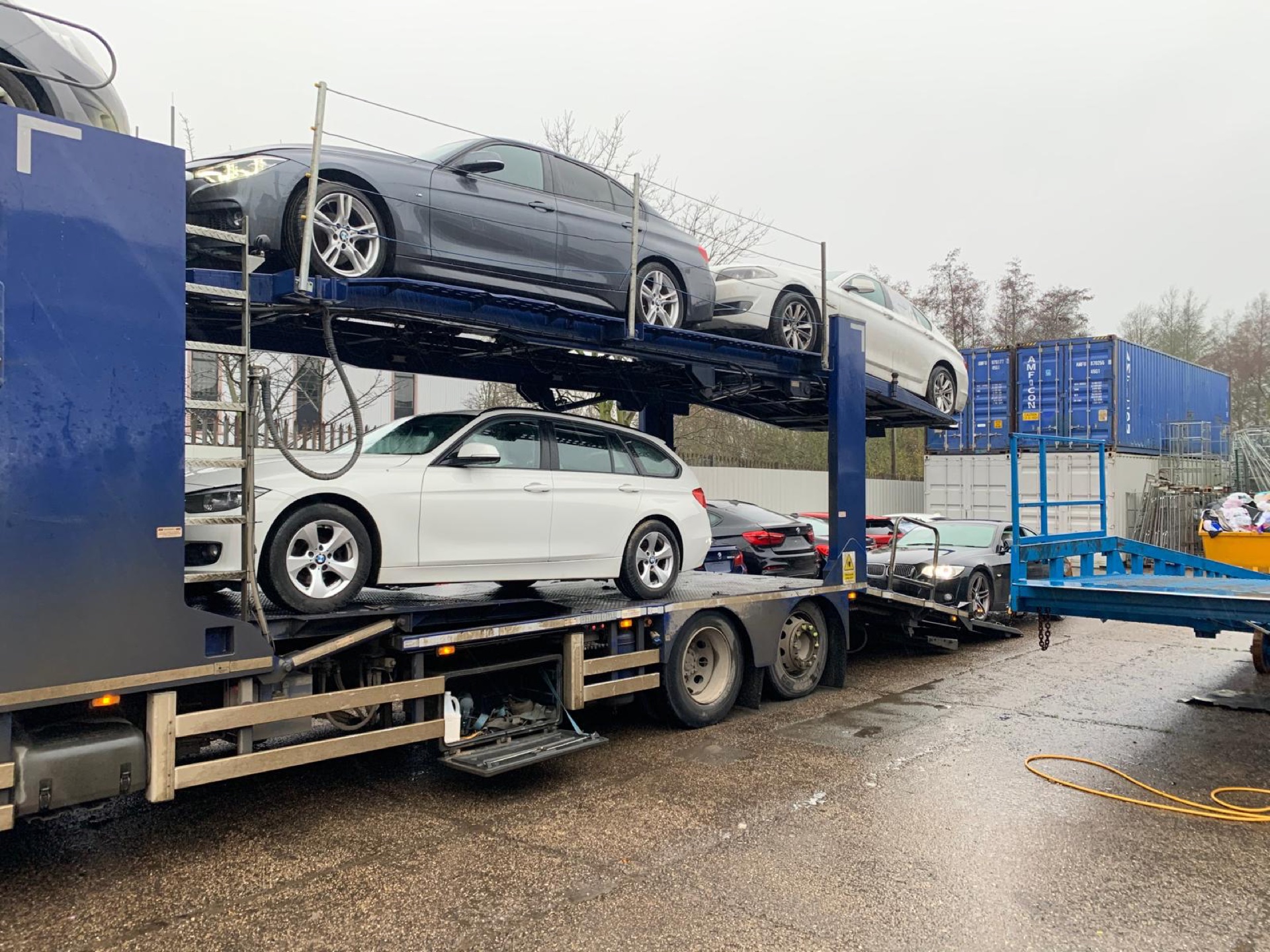
The image of a breakers yard filled exclusively with old, rusting cars does not reflect the full picture. Vehicles can enter the dismantling sector for many different reasons, including accident damage, mechanical failure, age, mileage or the economics of repairing them.
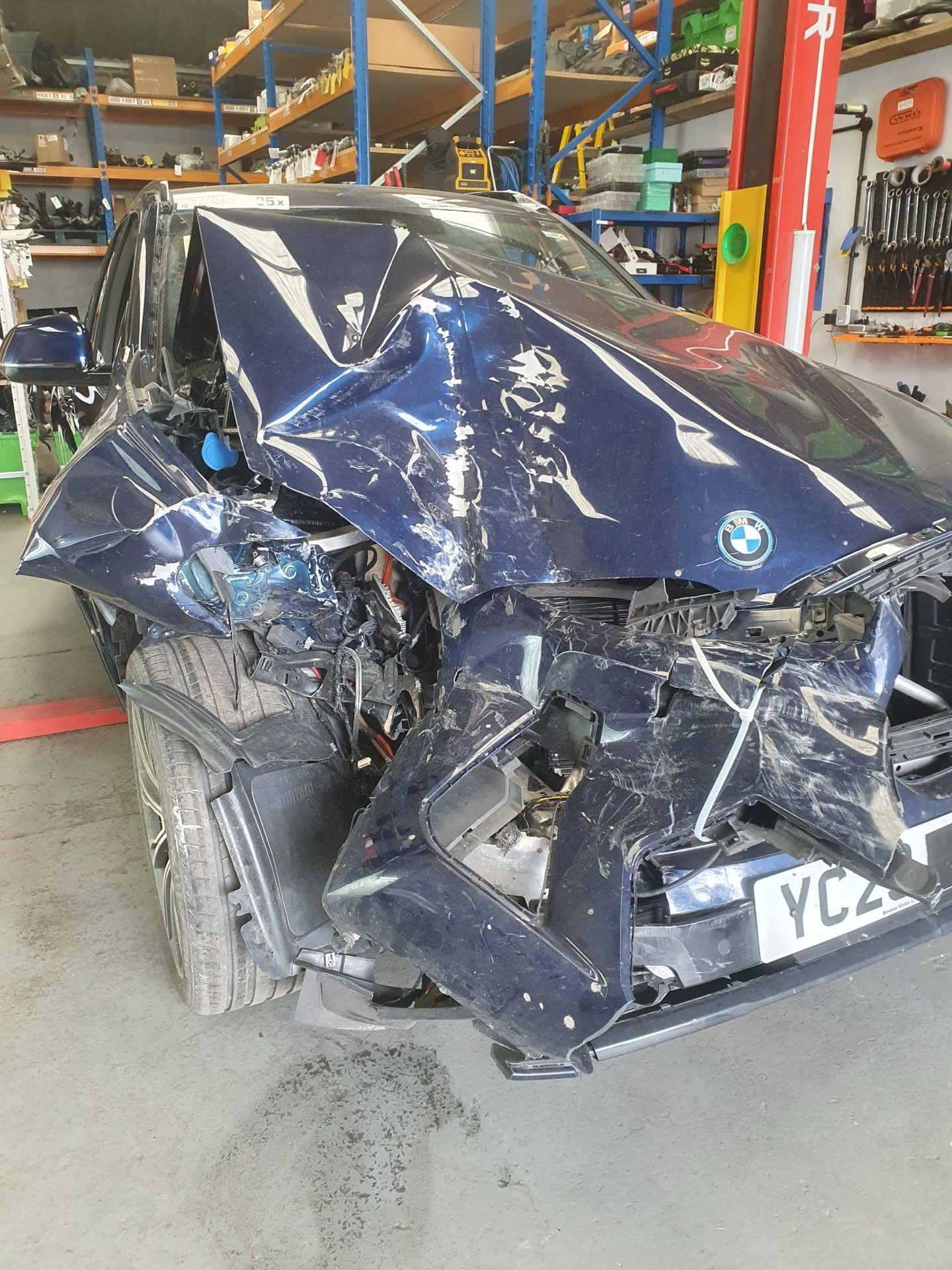
An insurance write-off is a good example. A BMW can be declared uneconomical to repair even when many of its individual components remain usable. Significant body damage may affect the value of the complete vehicle without necessarily damaging the engine, gearbox, interior, wheels, lights or numerous electrical components.
There is an important distinction, however. An insurance write-off is not automatically an end-of-life vehicle. Some vehicles categorised as write-offs can be repaired and returned to the road, while others are ultimately treated as ELVs and enter the regulated treatment system. GOV.UK states that an authorised treatment facility can decide whether an accepted vehicle is completely scrapped or, where appropriate, repaired and sold.
For a specialist BMW dismantler, the condition of individual components is therefore important. One damaged vehicle can contain dozens of parts that may still have useful life left in them.
What Happens When an End-of-Life Vehicle Arrives?
Once a vehicle is formally accepted as an ELV, the process is subject to environmental controls. In England, facilities that store and treat ELVs need the appropriate environmental permit, while the Environment Agency sets requirements covering areas such as vehicle storage, depollution, dismantling and the management of recovered materials.
The facility also needs to establish what it is receiving and whether the vehicle is suitable for its site and treatment process. Current Environment Agency guidance calls for information about the source and nature of the ELV, its hazardous properties and other relevant details before acceptance. This is designed to ensure that operators only accept vehicles they can safely store, depollute and dismantle.
That matters because an undepolluted ELV is treated as hazardous waste in England and Wales. Fluids and components removed from the vehicle have to be handled in a way that prevents pollution and protects workers and the surrounding environment.
Depollution Comes Before the Vehicle Becomes a Parts Source
One of the least visible parts of the process is depollution. Before an ELV can move through the treatment process, hazardous substances and potentially polluting fluids have to be removed and managed correctly.
Environment Agency guidance sets out a structured depollution sequence covering preliminary safety checks, removal of fluids and other items, and the safe removal or deployment of airbags. Engine oil, for example, is among the first fluids addressed during the process, while other fluids and components are transferred to suitable storage once removed.
The facility also needs to consider hazards specific to the vehicle. These can include damaged batteries, fuel systems, airbags, refrigerants and other components that may present environmental, fire or safety risks. The appropriate procedure can also vary according to the type and condition of the vehicle.
This is why a professional BMW dismantling operation involves considerably more than simply lifting a car onto a ramp and removing parts. There is a regulated process behind the treatment of vehicles that have formally entered the end-of-life system.
What Happens to the Vehicle’s Fluids and Hazardous Components?
Oil, coolant, fuel, brake fluid and other potentially hazardous materials cannot simply be allowed to drain onto the ground. Current Environment Agency guidance requires facilities to use appropriate infrastructure and storage arrangements to prevent contamination.
Depollution areas need impermeable surfaces and sealed drainage, while removed oils, fluids and contaminated components must be stored appropriately. The guidance specifically notes that oil-contaminated parts such as engines and gearboxes require suitable storage arrangements to prevent pollution.
The same principle applies to components that present other hazards. Batteries, airbags, refrigerants and fuel systems all require appropriate handling, with the precise treatment depending on the vehicle and the facility’s permitted processes.
For the customer who eventually buys a used BMW gearbox or engine, much of this work remains invisible. By the time the component appears in a parts catalogue, the vehicle has already passed through a series of treatment and handling stages.
What Happens to the Usable BMW Parts?
Once the vehicle has been safely treated, attention turns to the components that may have a second life.
This is where the role of a specialist BMW dismantler becomes particularly important. Instead of reducing the entire vehicle to scrap material, suitable components can be recovered for reuse. Depending on the vehicle, this can include engines, gearboxes, body panels, headlights, alloy wheels, suspension components, interior parts and electrical modules.
Not every component will be suitable for resale. Some may be damaged, excessively worn or unsuitable for reuse. Others may be valuable precisely because the surrounding vehicle was damaged while the component itself remained intact.
The Environment Agency’s current guidance specifically requires facilities to provide suitable storage for parts removed from ELVs that are destined for reuse, helping prevent damage to those components after removal.
That distinction is important. A professional dismantling operation is not simply trying to remove as many parts as possible. It is deciding which components can realistically be recovered and reused and how they should be handled afterwards.
How a BMW Part Becomes Stock
Once a usable component has been removed, identification becomes just as important as physical condition. BMW has used many different engines, transmissions, electronic systems and component revisions across its model range, so the model name alone is often not enough to establish compatibility.
MT Auto Parts specialises in BMWs from 2012 onwards, covering F, G and U generations. Its parts operation uses BMW-specific information to help identify components and match them to customer requirements. For buyers, the BMW part number and vehicle VIN can be particularly useful when establishing whether a used component is suitable for their specific vehicle.
This matters because two BMWs of the same model and year can still have differences in engine specification, equipment or component revisions. A part that looks identical in a photograph may not necessarily be the correct replacement.
For that reason, good used BMW parts cataloguing is about more than taking a photograph and writing a description. The component needs to be identified accurately so that the customer has the best possible chance of receiving the correct part.
Engines and Gearboxes Need Extra Attention
Some of the most valuable components recovered from BMWs are also among the ones that require the greatest amount of information from a buyer.
A replacement BMW engine, for example, needs to be matched by engine family and specification rather than simply by the badge on the boot. Mileage, donor vehicle information, engine code and compatibility can all be relevant when deciding whether a particular unit is appropriate.
The same applies to automatic and manual gearboxes. BMW has used numerous transmissions across its model range, and apparently similar vehicles can have different gearbox specifications.
This is why a specialist supplier can be useful when sourcing a major mechanical component. MT Auto Parts supplies used BMW engines and gearboxes and advises customers to provide the relevant vehicle information, including the VIN where necessary, so that compatibility can be checked before purchase.
What About Body Panels and Electrical Parts?
The same principles apply to smaller components, although the checks can be different. A used BMW body panel is primarily assessed for physical condition, colour, damage and suitability for the vehicle. A headlight or electronic module, meanwhile, may require much closer attention to the exact part number and specification. Electrical components can be particularly complicated because fitting the correct physical component does not necessarily mean the job is complete. Some BMW modules may require coding or programming after installation, depending on the component and vehicle. This is why photographs and descriptions are useful but should not replace proper compatibility checks. The more vehicle-specific the component, the more important the exact part number becomes.
Where the Certificate of Destruction Fits In
There is also an important administrative part of the process when a vehicle is completely scrapped. An Authorised Treatment Facility can issue a Certificate of Destruction through the DVLA’s system for vehicles covered by the relevant process. The certificate confirms that the vehicle has been processed as an end-of-life vehicle and permanently closes the vehicle record with the DVLA. GOV.UK advises vehicle owners to retain the certificate because it provides evidence that the vehicle has been handed to an authorised facility and is no longer their responsibility as a vehicle on the road. Not every vehicle arriving at an authorised facility will necessarily receive a Certificate of Destruction. If an ATF decides to repair and sell a vehicle rather than completely scrap it, GOV.UK states that a CoD is not issued.
What Happens to the Rest of the BMW?
Once reusable components have been removed, the remaining vehicle still has value as a collection of materials. The UK’s ELV framework includes recovery and recycling targets for manufacturers and the treatment network. Current GOV.UK guidance sets targets of 95% recovery and 85% recycling by average vehicle weight. The remaining shell and other materials can therefore enter further recycling and recovery processes rather than simply being treated as general waste. The Environment Agency’s guidance requires the vehicle to be fully depolluted before crushing, baling or shredding. This is one of the reasons the modern vehicle dismantling industry looks very different from the traditional image of a scrapyard. Reusable components, metals and other materials can all have different destinations depending on their condition and composition.
The Environmental Side of Reusing BMW Parts
The environmental argument for used parts is relatively straightforward. If a functioning component can be recovered from an existing vehicle and reused in another, there is less immediate need to manufacture a replacement component from new materials.
That does not mean every used part is automatically the greener choice in every circumstance. Manufacturing, transportation, refurbishment and the condition of the component all matter. However, the principle of keeping usable components in circulation fits within the wider waste hierarchy and the UK’s approach to vehicle recovery and recycling. The UK Government’s waste prevention programme also recognises the role of the second-hand car and car-parts market in keeping vehicles maintained and extending the useful life of existing resources.
For a BMW owner, that environmental benefit is also very practical. A replacement engine, gearbox, headlight or body panel that can be recovered from another vehicle may help keep an existing car on the road rather than making the entire vehicle uneconomical to repair.
From Damaged BMW to Useful Part
By the time a used BMW part appears online, the original vehicle may be almost forgotten. For the customer, it is simply a gearbox, headlight, door, engine or electronic component needed to get a car back on the road. Behind that listing, however, there can be a much longer chain: the vehicle is accepted, assessed, stored and, where it is an ELV, depolluted; suitable components are removed; parts intended for reuse are stored appropriately; the vehicle is processed further; and materials that cannot be reused are directed towards recycling or recovery. That process is particularly important for specialist BMW dismantlers because the value of the business is not simply in the metal left at the end. It is in identifying which original components still have a useful second life.
The Quiet Role of the BMW Breakers Yard
The next time a BMW owner buys a used gearbox, headlight or engine, the part may have come from a vehicle that was once considered too damaged or uneconomical to keep on the road.
That does not mean the entire vehicle had reached the end of its usefulness. In many cases, individual components can continue serving other BMWs long after their original donor vehicle has left the road.
MT Auto Parts, a BMW auto breaker based in Thurnscoe, South Yorkshire, operates within this specialist BMW parts market, focusing on vehicles from 2012 onwards and supplying original used auto parts across the UK. Its stock includes engines, gearboxes, body panels, headlights, suspension, alloy wheels, interiors and electrical parts, giving customers another option when a brand-new replacement is not the only practical route.
The wider industry is much more structured than the traditional image of a scrapyard suggests. For end-of-life vehicles, environmental permits, depollution requirements, waste controls, recovery targets and DVLA processes all form part of the system.
And ultimately, that system serves a simple purpose: to make sure that when a BMW reaches the end of its life as a complete vehicle, as much of it as reasonably possible can still be put to use.