
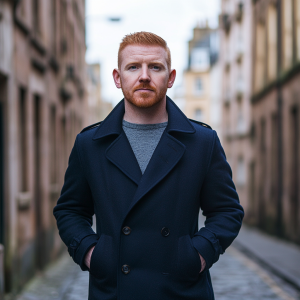
An open-source AI watermark remover built by tech entrepreneur Guillaume Meyer has drawn more than 2 million impressions on X after Anthropic announced plans to embed invisible watermarks in text generated by its Claude models.
Meyer, who splits his time between Paris and Los Angeles and is the founder of e-commerce AI company Memo, published the first version of the tool on GitHub within roughly five hours of beginning his research into how AI watermarking works. A second post about the project on 11 August sent it viral across X and LinkedIn.
Anthropic’s Watermark Rollout, Explained
Anthropic’s move was not made in isolation. The company signed the EU AI Act’s Article 50(2) Code of Practice on Transparency of AI-Generated Content in July 2026, joining around 190 signatories in total, according to Anthropic’s watermark announcement. The watermarking applies globally, not only in Europe.
Under Anthropic’s own rollout schedule, all Claude models released after 2 August 2026 include text watermarking automatically. Older models are due to receive watermarks by 2 December 2026. For Claude Opus 5 specifically, watermarking becomes gradually available on cloud partner surfaces from 14 September 2026, with full availability expected within one week of that date.
The watermark is applied at the model level. As TechCrunch reported, Anthropic has stated: ‘Watermarking will be applied at the model level, which means it will be present no matter which Claude product or surface the text comes from.’ The company adds that watermarks are also applied when Claude models are accessed via AWS, Google Cloud, or Microsoft Foundry, though file provenance metadata may differ between those platforms.
For files, Anthropic uses the C2PA open standard for provenance marking. A detection API is in private preview, available to organisations such as regulators, law enforcement, media outlets, fact-checkers, independent researchers, educational institutions, and EU civil society groups, as well as enterprises needing to verify watermarking for their own compliance.
How the AI Watermark Remover Works
Meyer built the tool after concluding that the underlying technique creates risks for ordinary users. Text watermarks rely on statistical patterns in word choices. His remover checks for a watermark, generates slight variations of the text while preserving meaning, then checks again and repeats the process until the watermark is no longer detected. The same logic is applied to images by rewriting pixels rather than words.
The repository documentation shows that the tool targets three layers: invisible Unicode marks, statistical text watermarks via rewrite, and C2PA, EXIF, XMP, and container metadata across a wide range of file types including PNG, JPEG, WebP, SVG, PDF, DOCX, and HTML. It covers watermarks associated with Claude, Gemini’s SynthID-class system, OpenAI provenance marks, and open-model sampling marks.
Meyer was able to move quickly because he had prior experience assembling multiple open-source AI models in a previous startup. The architecture, he explained, was already familiar to him even though the original purpose was entirely different.
The repository had accumulated 22,200 stars and 2,600 forks on GitHub and is licensed under the MIT Licence. It is described as ‘a privacy-first app that strips AI watermarks from content you own.’
Meyer’s central objection is not to content attribution as a concept but to the statistical method behind text watermarking. His example: he uses Grammarly throughout his working day to proofread and correct grammar, and Grammarly itself uses AI. Under a system that flags statistically patterned text, his own professionally edited work would carry an AI label even though he wrote it.
He says 99.9% of the messages he has received are supportive. The remaining 0.1%, in his words, argue he is enabling people to obscure AI-generated content, a charge he disputes by pointing to the repository’s stated purpose: personal content and educational use, not impersonation or content theft.
Meyer acknowledges the tool is not finished. Adjustments will be needed when Anthropic releases its detection tools more widely, and he expects months of further development. He is also weighing whether the project could become a commercial product, though he says he has not yet decided how or when.
The next test for the tool comes on 14 September, when Anthropic begins rolling out watermarking to Claude Opus 5 across cloud partner platforms.