

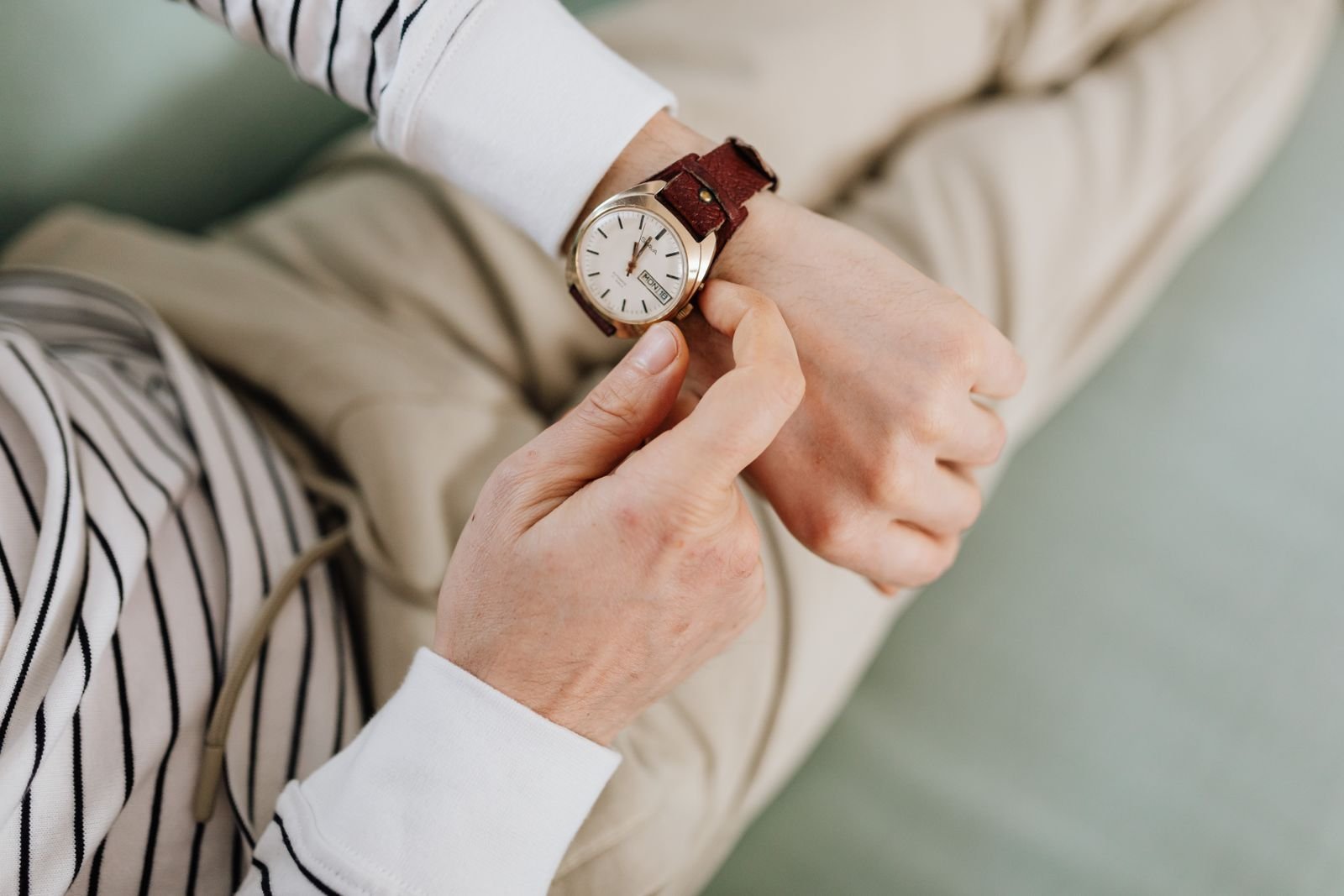
Britons searched more than twice as often for how to change the time on a watch as on an oven around last year’s autumn clock change, according to research by Wristler, a European online marketplace for luxury watches.
The company’s analysis of Google search data found around 184,000 UK searches in October 2025 about setting the time on a watch, compared with around 78,000 about the oven. The research was published ahead of this weekend, when the clocks go back again.
When the clocks change
The clocks in the UK go back one hour at 2am on Sunday 25 October, according to GOV.UK. The change ends British Summer Time, the period from the last Sunday in March when clocks are an hour ahead to give more daylight in the evenings, and returns the country to Greenwich Mean Time. The clocks will next go forward at 1am on the last Sunday in March.
Wristler noted that phones and laptops update themselves, whereas the watch on a wrist often has to be changed by hand.
Casio and Bosch top the brands
According to Wristler, the searches are driven mainly by digital watches with buttons and by ovens that have their own clock. The company said a much-searched brand was “above all a widely owned brand”.
Counting each brand’s top query, the most-searched brands in October were Casio watches and Bosch ovens, with 3,600 searches each, followed by G-Shock watches with 1,900, and Neff ovens and Panasonic microwaves with 1,600 each.
Wristler found that the Bosch oven search was 3.6 times as common in the clock-change months as in a normal month. Its full findings, published on the company’s website, put searches about setting the clock on a microwave at around 11,000 and show smaller oven brands rising more sharply in proportion, with Zanussi oven searches at 9.3 times a normal month.
Smartwatches stay flat
Smartwatches behave differently. According to Wristler, searches about changing the time on an Apple Watch stay flat all year, with no rise around the clock change, because the watch takes its time from the phone.
Luxury watches are searched too, but less. Wristler said Rolex was searched around 1,000 times in October, and that those searches barely rise around the clock change. It is the digital watches that spike, the company said.
A wider rise in clock-change searches
The research also looked at searches about the clock change itself, such as “when do clocks go back”. According to Wristler, the four main clock-change queries rose from 530,200 in October 2022 to 955,600 in October 2025, an increase of 80 per cent.
Comparing 16 European countries, Wristler ranked the UK tenth, with 2,743 clock-change searches per 100,000 inhabitants. Italy, the Netherlands and Finland recorded the highest levels, according to the research.
Advice for mechanical watches
Timo Klinge, chief executive of Wristler, offered advice for owners of mechanical watches.
“On a mechanical watch, it’s best to move the time forward rather than back. A movement is designed to run in one direction, and while modern movements cope with it fine, winding forward is simply the careful choice. Also take care if your watch shows the date or day: don’t change the time between roughly 7pm and 6am, because in that window the date mechanism is engaged and you could put it under unnecessary strain,” he said.
How the research was done
Wristler analysed UK search volumes from Google Keyword Planner between September 2025 and August 2026, covering searches about setting the time on devices. The company said the figures are Google’s rounded estimates and that totals were deduplicated, so the same search in a different word order is counted once.
It noted that searches show demand for information rather than behaviour, and that the figures describe searches around the clock changes of the past year rather than the coming one. Wristler said its method and data are available on request.